Showing posts with label Retail Marketing. Show all posts

How To Succeed In The Delivery Industry

how to succeed delivery industry courier service package delivery business

You may be looking for potential business startup ideas, in which case this is a brilliant one. Or perhaps you have already decided that the courier and delivery industry would make a great investment. Either way, to make it big in this industry your company needs to follow a certain set of rules. Here, we run through the key qualities that your delivery service should possess, in order to stand out from the crowd. And remember, you need to consider getting courier insurance for your delivery vehicle, to make sure you are covered in every eventuality. 

Customer Service 

Just like with any business, customer service is paramount to achieving success. Your delivery drivers will need to be fully trained in how to expertly reflect the quality of your company with their own attitude and behavior. Just because the customer has ordered their product online, doesn’t mean they should be treated as though they are invisible when their items are delivered. The exchange between customer and delivery driver will be short but it should be professional, and any issues should be dealt with in an honest and respectful manner. 

Reliability 

One of the most important qualities your company should have, particularly in this industry, is reliability. Customers choose to shop online because it is convenient, so make sure you live up to this reputation. It is likely that your customer will have an event in mind that they would like their purchase to arrive in time for, so make sure you do not let them down when it comes to delivery times. The disappointment they feel will tarnish your reputation with them irrevocably. The key to running a reliable delivery firm is sticking closely to a realistic and well-organized delivery schedule. You also need the correct level of man power to support the number of orders you receive. 

Ease Of Use 

A good delivery service doesn’t just start when the item is out for delivery; it starts with the design of the online user interface. It needs to be simple and easy for customers to order through your website, with transparent terms of use to encourage their custom. You also need to provide an efficient customer support helpline in case anything goes wrong. 

Missing a delivery slot can be a major cause of stress for the customer; many people even book time off work to make sure they will be there for the estimated time of arrival, therefore, missing the slot can have big consequences for them. Therefore, having a helpful and efficient point of contact is crucial and will work towards rectifying any damage to your reputation that may have been caused by the mistake. 

Starting up a company in the courier or delivery industry can be a very lucrative idea however, just because there is minimal communication between customer and company, doesn’t mean they should not be treated the same as if there were. Delivery drivers need excellent customer service skills including professionalism. The service itself needs to be well-organized so that you can stick to estimated delivery schedules and therefore retain a reliable reputation. 

In this industry in particular, reliability is key. And finally, the ordering process needs to be simple and easy for the customer, with an efficient customer support center should anything go wrong. For more tips on starting a business, take a look at other articles on leanstartuplife.com.

Checklist For Building A Successful E-commerce Website

checklist successful e-commerce website store

Constructing a successful e-commerce website in today’s digital age needs more than just listing products and services online. Statista studies show that global e-commerce sales are projected to hit $4.1 trillion in 2024. Businesses should have a blend of strategic planning, robust technology, and insightful marketing to stand out in this crowded marketplace in 2025. 

Here is our comprehensive checklist that provides you with the 15 essential steps to create a thriving online store. Right from securing a memorable domain name to implementing cutting-edge SEO practices, each element is designed to enrich user experience and maximize sales. Thus, no matter if you are launching a new e-commerce venture or optimizing an existing one, these guidelines will help you deal with the complexities of digital commerce. They will help you in positioning your platform for success in the competitive digital zone. 

1. Secure Domain Name 

Getting the right domain name is the most important pointer in our checklist. You must have heard that the first impression is the last. Well, this saying fits perfectly in the e-commerce website development zone. You should work hard to set a strong mark by getting a reliable domain name. 

Go for a domain name that is concise and memorable. It should be a direct reflection of your brand identity. It should be easy to spell to prevent any confusion or misspellings when users are searching for your site. Also, do not use hyphens or numbers, as they can complicate the domain and make it harder for users to remember and type accurately. A well-chosen domain name enriches brand recall and contributes to a seamless brand experience. 

2. Reliable Hosting Provider 

The foundation of a successful e-commerce website is a reliable hosting provider. This provider should offer excellent uptime, which is ideally above 99.9%. It will help ensure that your website is always available to customers. Fast loading times are vital not only for user experience but also for SEO because page speed is an important ranking factor for Google. 

Look for hosting services that provide e-commerce-specific features. These features are SSL certificates, which secure the data exchange between the user and the server. They enhance trust by protecting customer transactions and data. 

3. User-Friendly Design 

A user-friendly design is important for keeping potential customers engaged and driving them toward making a purchase. Your website should feature a clean and navigable layout. This layout should be easy to use on both desktop and mobile devices. Responsiveness is another vital key, and your site should adjust seamlessly to different screen sizes and resolutions to provide a consistent experience across all devices. 

Good design practices include intuitive navigation and readable fonts and effective use of colors that reflect your brand. This approach helps reduce bounce rates and increase the time users spend on your site. 

4. Optimized Product Pages 

Product pages are exactly the places where conversions happen, and thus, they need high optimization. Each product page should include detailed descriptions. These descriptions must highlight the benefits and features of the product. Use high-quality images from multiple angles to give a comprehensive perspective of the product. 

Adding videos can further enhance engagement and customer confidence in their purchase decision. SEO also plays a crucial role, so you should integrate targeted keywords naturally within the product descriptions. Add keywords in titles to boost your page’s visibility in search results and bring more organic traffic to your site. 

5. Efficient Shopping Cart And Checkout Process 

An efficient shopping cart and a streamlined checkout process are important for converting browsers into buyers. Reduce the number of steps needed to complete a purchase. Then, ensure that the process is as intuitive as possible to reduce cart abandonment rates. 

Present multiple payment options such as credit cards, PayPal, and newer services like Apple Pay or Google Pay. They will help cater to the preferences of a diverse customer base. Implementing features such as guest checkout can also expedite the process. They can improve the overall user experience and further encourage purchases and customer satisfaction. 

6. SEO Best Practices 

Implementing on-page SEO is vital for enriching your website's visibility and search engine rankings. Start by crafting compelling meta descriptions for each page. These descriptions should briefly summarize the page content and include relevant keywords to boost its relevance in search results. Use alt tags for images, which not only aids in SEO but also improves accessibility. They help search engines understand what the photos depict. 

Structure your content with proper headers (H1, H2, etc.) to organize information hierarchically and thematically. This makes it easier for search engines to crawl and index your content. These practices help improve your site’s SEO and drive more organic traffic. Focus on on-page SEO, and also enhance your off-page SEO. Get credible backlinks through high-quality guest posts. Collaborate with influencers plus engage in forum discussions, and participate in relevant online communities. 

7. Mobile Optimization 

Over 50% of online shopping transactions take place on mobile devices, which makes having a mobile-optimized website non-negotiable. Mobile optimization is indeed one of the most notable e-commerce trends. Make sure that your website's design is responsive, which means that it should automatically adjust to fit the screen size of any device, whether it is a smartphone, tablet, or desktop. 

The mobile experience should also be defined and seamless. It must come with touch-friendly navigation and easily clickable buttons. Another feature to add while optimizing your websites for mobiles is optimized images that load quickly. Also, track the mobile user's journey from landing on your site to completing a purchase. Then, streamline the entire process to minimize any potential friction. 

8. Social Proof And Reviews 

Social proof in the form of customer reviews and testimonials plays an important role in creating trust and influencing buying decisions. Displaying genuine customer feedback on product pages can enhance credibility. It gives your potential buyers the confidence to proceed with their purchases. 

Encourage your customers to leave reviews by sending follow-up emails post-purchase. Also, offer incentives for reviewing products. Ratings and reviews serve as social proof. They can also provide insights into your product’s strengths and certain areas for improvement. 

9. Robust Security Measures 

Security is of great importance in e-commerce websites, portals and apps. Use HTTPS to safeguard the connection between your website and your users. Also, make sure that all data transmitted, such as personal info and payment details, is encrypted. Use data encryption practices to protect user data stored on your servers. 

Compliance with the Payment Card Industry Data Security Standard (PCI DSS) is further crucial for safety. It assists in handling credit card transactions and maintaining a secure e-commerce environment. These measures protect your customers, plus they also enrich your reputation as a credible online merchant. 

10. Analytics And SEO Tools 

Using tools like Google Analytics and Google Search Console provides you with critical data about how visitors interact with your website and how it performs in search results. Google Analytics helps you to track user behavior and conversion rates. It also helps track traffic sources by helping you to identify what works and what needs improvement. 

Google Search Console helps monitor website health in terms of indexing status and visibility issues. It also provides insights into the keywords driving traffic to your site. Using these tools helps refine your marketing strategies. It also optimizes your website for better performance and higher search rankings. 

11. Customer Support System 

Providing exceptional customer support is important for enriching customer satisfaction and promoting loyalty. An effective support system should include multiple channels. The elements of these channels can be live chat, email, and phone support to cater to different preferences. Live chat presents immediate assistance and is crucial for dealing with urgent inquiries or issues customers may face while shopping. 

Email support should be responsive and must have clear timelines for replies to make sure that the customers feel valued and heard. Phone support adds a personal touch and can be vital for resolving complex issues quickly. Integrating an FAQ section on your website can also help address common queries efficiently. It further reduces the load on live support channels. 

12. Marketing Strategies 

A comprehensive digital marketing plan is important for driving traffic and conversions. Email marketing is a powerful tool for engaging with customers directly. It helps promote new products, special offers, and content directly in their inboxes. Pay-per-click (PPC) advertising can drive targeted traffic to your site. It does this by placing ads on search engines and social media platforms. 

Customize your ads to match user search queries and demographics to optimize effectiveness. Social media engagement involves creating compelling content that encourages interaction and sharing. It can increase brand visibility and attract new customers organically. Incorporating these strategies provides a robust approach to digital marketing that can adjust to changes in consumer behavior and technology. 

13. Content Marketing 

Set up a blog section to create and share relevant content related to your products and services. It is an impactful yet very practical way to engage with your audience. This content can educate customers about your products and industry news. It keeps them updated on related topics while establishing your brand as a thought leader. 

Regularly updated blogs help improve SEO by incorporating keywords and generating fresh content. It enhances your site's visibility in search results. Moreover, well-crafted content can be shared across social media platforms to increase reach and engagement. It brings quality and organic traffic back to your website. 

14. Scalability For Growth 

It is essential to ensure that your platform and hosting are scalable enough as your e-commerce business grows. This refined scalability will help you handle increased traffic and sales without compromising performance. Get a potent hosting solution that delivers scalability options such as cloud hosting. This allows resources to be adjusted dynamically based on your site's demand. 

Make sure that your e-commerce platform can combine new features, deal with more extensive product inventories, and increase customer data without slowing down. Planning for growth also involves considering customer service capabilities and logistics. It further includes inventory management to support a larger operation. 

15. Legal Compliance 

Compliance with legal standards such as the General Data Protection Regulation (GDPR) is essential. It is especially important if you operate or sell to customers in Europe. GDPR allows businesses to protect the personal data and privacy of EU citizens for transactions that occur within EU member states. It includes providing clear privacy policies and terms of service. It also involves obtaining consent from customers regarding data processing activities. 

Make sure you meet all compliance requirements to build trust with customers and avoid potential legal issues. Regular reviews and updates of your policies as laws evolve are also pretty necessary. It will help you maintain compliance and protect your business and customers effectively. 

The Bottom Line 

Constructing a successful e-commerce website is a multifaceted endeavor. It demands attention to detail across various aspects of digital commerce. By following our detailed checklist, you can plan every phase of your e-commerce website development. You can also connect with a reliable e-commerce app development company to get a refined website or app for your operations. 

The ultimate goal should always be to create a seamless, secure, and satisfying shopping experience. This approach will attract customers and will also retain them in the long run. With the right tools and strategies in place, your e-commerce site can thrive in a dynamic digital marketplace. It will assist you in driving growth and fostering lasting customer relationships.

Starting A Clothing Business: Effective Strategies For Successful Marketing

how to start clothes business

Launching a clothing business is an exciting venture that blends creativity with entrepreneurship. However, in a competitive industry, effective marketing is essential to stand out and reach your target audience. This article explores key strategies to properly market your clothing business, including offering customization with custom patches, leveraging influencer marketing, and showcasing your products to distributors through professional photo books. 

Offering Customization With Custom Patches 

In a market saturated with mass-produced apparel, offering customization can set your clothing business apart. Incorporating custom patches allows customers to personalize their garments, adding unique flair and expressing individual style. This approach not only enhances customer satisfaction but also fosters brand loyalty. 

Many successful brands have embraced this strategy. For example, Levi's offers customizable denim jackets with patches and embroidery, and Converse allows customers to design their own sneakers with personalized elements. By providing customization options, you're tapping into a growing consumer desire for products that reflect personal identity. 

According to a study by Label Insight, 74% of consumers feel more loyal to brands that are transparent and offer personalized experiences. Offering custom patches is an effective way to meet this expectation and differentiate your brand from competitors. 

Marketing Strategies 

To further enhance your marketing efforts, consider implementing the following strategies: 

Social Media Engagement: Utilize platforms like Instagram, Facebook, and Pinterest to showcase your products, share behind-the-scenes content, and interact with customers. 

Email Marketing: Build an email list to send newsletters, promotional offers, and personalized recommendations. 

Content Creation: Start a blog or vlog to share fashion tips, industry insights, and stories about your brand. 

Participate In Fashion Events: Attend trade shows, pop-up shops, and local markets to network and gain exposure. 

Optimize For SEO: Improve your website's search engine ranking by using relevant keywords and creating quality content. 

According to Statista, 54% of consumers want to see more video content from brands they support. Diversifying your marketing channels helps you connect with customers in various ways, increasing engagement and loyalty. 

Leveraging Influencer Marketing 

Influencer marketing has become a powerful tool in the fashion industry. Collaborating with influencers who resonate with your brand's aesthetic can significantly expand your reach. Influencers can showcase your clothing to their followers, providing authentic endorsements that traditional advertising often lacks. 

To effectively leverage influencer marketing: 

Identify Relevant Influencers: Choose influencers whose audience aligns with your target market. 

Set Clear Objectives: Define what you hope to achieve, whether it is brand awareness, increased sales, or social media growth. 

Establish Authentic Partnerships: Work with influencers who genuinely appreciate your products to ensure sincere promotion. 

Track Performance Metrics: Use analytics to measure engagement, conversions, and return on investment. 

A report by Business Insider Intelligence predicts that influencer marketing ad spend will reach $15 billion by 2025, highlighting its growing significance. By strategically partnering with influencers, you can build credibility and connect with a wider audience. 

Showcasing Your Clothing With Photo Books 

Creating high-quality photo books of your clothing line is an excellent way to present your products to potential distributors and retailers. A professionally designed photo book can highlight the details, craftsmanship, and unique features of your garments, making a compelling case for inclusion on larger platforms. 

When assembling your photo book: 

Invest In Professional Photography: High-resolution images capture the essence of your designs. 

Tell A Story: Organize the photos to convey your brand's narrative and vision. 

Include Detailed Descriptions: Provide information about materials, sizing, and customization options. 

Highlight Bestsellers: Feature your most popular or distinctive items prominently. 

Add Contact Information: Make it easy for interested parties to reach out. 

Sending photo books to distributors demonstrates professionalism and commitment to quality. It can increase your chances of being featured on larger websites, expanding your market reach and boosting sales. 

Conclusion 

Starting and marketing a clothing business requires a blend of creativity, strategic planning, and understanding consumer desires. By offering customization with custom patches, you cater to the growing demand for personalized products. Leveraging influencer marketing connects you with broader audiences through trusted voices. Showcasing your clothing line with professional photo books opens doors to partnerships with distributors and retailers. 

Incorporating these strategies, along with a multifaceted marketing approach, positions your clothing business for success in a competitive industry. Stay attuned to market trends, remain authentic to your brand's vision, and continuously engage with your audience to build lasting relationships and a strong market presence.

From Visibility To Viability: How Signs Affect Business Success

business signs visibility signage viability

In an era where consumer attention is increasingly fleeting, the significance of visual branding has never been more critical. Signage, as a primary element of visual identity, plays a pivotal role in transforming a business from a mere presence to a notable entity in the competitive market. 

This article explores the profound impact that well-considered, strategically placed signs have on business success. 

The Psychological Impact Of Signage 

Ever wondered why you feel a pull towards certain stores or cafes, even from a distance? It is not magic; it is the power of effective signage. When designed with savvy, signs do more than just announce your location; they speak volumes to the subconscious of potential customers. 

Consider the psychological wizardry of colors: warm hues invite coziness and excitement, while cool tones promise professionalism and calm. The shape and size of signage also play into this visual dialogue, with sleek, modern designs suggesting innovation and traditional shapes evoking trustworthiness and reliability. It is not just a sign; it is a silent salesman working 24/7 to convey your brand's message and essence. 

In the fast-paced digital age, where visual content reigns supreme, the strategic use of signs can significantly boost your brand's visibility, setting the stage for enhanced consumer engagement and, ultimately, business success. 

Visibility And Brand Recognition 

A cleverly placed sign does more than catch the eye; it is the heartbeat of brand recognition. Think about the golden arches of McDonald's or the simplistic elegance of Apple's logo. These companies have mastered the art of sign placement, ensuring visibility from highways to high streets. 

It is all about location, location, location. A storefront sign that is visible from the main road or an eye-catching billboard on a well-trafficked route can elevate a brand from background noise to top-of-mind awareness. Successful brands leverage this by placing signs where their target demographic frequents, ensuring their message is seen by the right people at the right time. 

This strategy isn't just effective; it is essential in today's cluttered marketplace. Tailoring the placement to enhance visibility can dramatically increase foot traffic and, by extension, sales, demonstrating the undeniable power of physical signage in the digital age. 

Signage As A Marketing Tool 

Signage isn't just about sticking your name on a board; it is a heavyweight player in your marketing arsenal. In the duel between digital and traditional signage, it is essential to know which cards to play. 

Digital signs, with their flashy lights and capability to update content effortlessly, are perfect for catching those tech-savvy eyes. They are interactive, engaging, and can go viral in seconds. On the other hand, traditional business signs in Tucson, AZ (and elsewhere) hold their ground with a timeless appeal. They are reliable, visible 24/7, and require no tech to grab attention. The trick is in blending the two. 

Using digital signs to showcase flash sales or trending items while letting traditional signs narrate your brand's story can create a marketing symphony that resonates with a broad audience. It is not about choosing one over the other; it is about harmonizing their strengths to bolster your brand's visibility and customer engagement. 

Designing Effective Signage 

The secret sauce to crafting impactful sign design lies in understanding your brand's story and how best to tell it visually. For starters, clarity is king. Your message should be readable at a glance—this means opting for clear, legible fonts and contrasting colors that pop. 

Also, don't underestimate the power of lighting; illuminated business signs can be a game- changer, especially after dark, ensuring your brand is visible 24/7. Incorporating your brand's colors and logo consistently can reinforce brand identity, making it easier for customers to recognize you among the crowd. And remember, simplicity often trumps complexity. 

A sign cluttered with too much information can overwhelm viewers. Instead, focus on delivering one key message that speaks directly to the desires or needs of your customer. Crafting signs that resonate with your target audience can significantly amplify your business's visibility and customer appeal. 

Measuring The Impact Of Signage On Business Success 

Evaluating the effectiveness of your signage feels like reading a mystery novel where the clues are everywhere, from sales data to customer feedback. 

Start by tracking foot traffic pre and post-sign installation; a noticeable uptick is your first sign (pun intended) of success. But don't stop there. 

Leverage sales data to connect the dots between an engaging sign and ringing cash registers. Are more people walking in and buying? That is your sign of working hard. Customer feedback, both in-store and online, is gold dust. It is the raw, unfiltered voice telling you if your sign sparked interest or missed the mark. 

Remember, it is not just about "looking good" but about creating signs that converse with potential customers, guiding their decisions. Integrating these methods provides a rounded picture of how your signage strategies are translating into business success.

What To Know About Shipping For A Home Business

shipping home business success package delivery

When you own your own home business, there is no doubt that you spend your time figuring out the perfect pricing for your products. But have you also thought about the cost of your delivery? It can be a lot to get your head around at first, but this article will tell you everything you need to know about shipping for a home business. 

The Basics 

There are a few things to consider before you decide to pick a shipping carrier. 

The landscape of retail is changing thanks to the internet. Thousands of people are now able to make a full or part-time income from selling merchandise on auction sites like eBay. One of the most important factors in all of this is delivery. 

To create a successful home business, you need to be able to provide delivery that satisfies your customers, maximizes the use of your time and minimizes your overall costs. 

Shipping Volume 

Are you just starting out or are you a fully established shop shipping over 100 packages a week? Will you be shipping weekly or will you be shipping only a few packages a month? These are questions you need to ask yourself before committing to a shipping carrier. No matter how frequent you plan to ship, mail carriers offer a variety of business plans. 

But how are you planning on handling your shipping? If you are only shipping two or three items a day you can easily handle it manually. Addressing the labels, yourself, taking the items to the post office, etc. However, if you are shipping more than ten items a day it would be beneficial to invest into a label printer and postage scale that will connect to your computers USB or serial port for weighing your items. And once you have expanded the business enough and are shipping large volumes, you should also consider hiring a good 3pl company.

Weight 

Do you know on average how much your products weigh? Unless you are using a flat-rate box, the weight of your product can affect the price of shipping. A good tip is to invest in a postal scale for small business shipping, so you know the exact weights. If you don’t have a scale and only a few products for your business, you can have the sales assistant in your local post office or delivery center weigh them for you. You can then record these weights for future uses. You can also go online and then conduct a cost comparison to see who will offer the cheapest for your weight. 

Shipping Priority 

Will you be shipping priority, first class or another method? Will you other a variety of shipping options? 

Shipping Destinations 

Are you only shipping domestically, or will you be shipping internationally also? 

Packaging 

Packaging your products is essential for home businesses. Flat-rate boxes are an ideal choice as regardless of what, weight or where you are sending your package to, you pay the predetermined rate listed. 

If you are shipping locally and your products are light, flat-rate shipping can end up costing you more. In this case, it might be cheaper to ship your products using your own packages. 

Supplies 

If you are looking for supplies simply type "packaging supplies" or "shipping supplies" into a search engine. This will generate results for suppliers offering thousands of shipping material options and give you plenty of choices. 

To keep things orderly, it’s a really good idea to set up a specific shipping area in your home. This will be your dedicated area where you can organize your boxes, label maker and other supplies. You can have them all at the read so when an order comes in you can efficiently parcel everything up. 


I hope you enjoyed this article about everything you need to know about shipping parcels and packages for a home business.

Interested in reading more articles about packaging and shipping? 

Read My Blog Posts: 

- How To Drive Down Delivery Costs 

- Tips To Succeed In The Courier Business

- The Best Vehicle For Your E-Commerce Business

More Lean Startup Life Lessons Below

Effective Marketing Plan For The Whisky Industry

marketing plan whisky company advertising whiskies business

Do you want to discover how to leverage marketing in the liquor manufacturing sector? 

Start Your Own Online Retail Store Here For Under $50

This article will talk about some of the great marketing ideas that can take your brand to new heights provided that you know your target audience, are ready with your prospects’ email list and have a great product that relates to your audience. 

If you didn’t know how to find someone’s email address for whisky advertising, here is a pro-tip to build your prospects' emails list. 

How To Find Someone’s Email Address For Whisky Email Marketing

Use an email finder tool like GetEmail.io to locate the email ID format. This tool is based on big data and machine learning algorithms. It also comes as a chrome extension to extract email addresses from LinkedIn and Gmail for potential whisky customers. 

You may start with the free plan that allows you to find up to ten email addresses every month to those old enough to drink alcohol legally

Now let us discuss the most effective wine marketing strategies you can use to get your prospects to pay attention to your brand and become fans of your spirits product (whisky). 

Create The Urge To Buy Whiskies 

Recollect the whiskey bottles you have purchased in the last few months. Do you remember what enticed you to purchase those bottles? 

These are some of the possible catalysts that might have urged your purchase. 

• You felt “tempted” by a Facebook or Instagram post. 
• You came across a whisky blogger’s post online. 
• You saw a big attractive print or television advertisement. 
• You took part in a tasting event put on by a whisky brand and you loved the taste. 
• You heard a lot of people talking about it in an online whisky group. 

Can you think of other possible triggers? 

Whisky Label Design 

Believe it or not, many whisky or wine companies have been successful not because of how good their wine tastes. 

Yes, they may manufacture the world’s best whisky but if the design and marketing don’t resonate, no one will want to try. 

Though it’s true that you should never judge a book by its cover, howbeit, a well-designed whisky label will never harm your chances of standing out from the rest. 

Effective Email Marketing 

When you have your prospects list ready, you could launch an email marketing campaign. This is the best way to develop a strong and highly personalized bond with your prospects. 

Spirited Instagram 

Instagram offers an engaging way to connect with your fans. It can do wonders if you keep your Instagram handle updated with the latest offers or news about your brand. 

Whisky Website 

It is necessary to have a custom-built website that is well optimized for mobile and desktop devices. Users expect a certain level of originality while visiting your alcohol website. 

The branding elements such as the logo, typography, color scheme, etc. will work together to leave a lasting impression about your whisky brand among the audience. 

Final Thoughts On Whisky Marketing

If you hold a good understanding of the marketing strategy, you get to build up your position and differentiate what you offer with your whisky drinks. 

Before you apply this, determine what your objectives are, this will help you to identify the tactics that work best for your whisky brand. 

Helpful Tips To Save Thermal Paper Costs

tips help save money thermal paper costs receipt printouts

Owning a business comes with a lot of obligations. There is always something to be done. There will always be expenses to cover. As much as possible, you want to cut down costs and save money. 

When buying supplies such as thermal paper rolls, there are ways to save money without compromising quality. Let's take a look at some tips that will help you save thermal paper costs. 

Always Buy In Bulk 

Although there are various types of thermal paper, thermal paper rolls can last for about three years from the date of manufacture. This means that you can buy as much as you can. It is advisable to buy your thermal paper in bulk from a reputable thermal receipt paper wholesaler. 

Supplies bought in bulk usually come at a discount. Hence you get to save money. You should also keep in mind delivery costs. When you buy in bulk, you save money. As your budget allows, buy as much as possible. 

As far as you have proper storage, you have nothing to worry about. If you do not have proper storage, you should consider finding a safe place for your thermal paper rolls. 

Store Your Thermal Paper Rolls Properly 

Buying in bulk goes hand in hand with proper storage. Buying more thermal paper than your storage space can take is a recipe for disaster. 

Always consider your storage space before you order thermal paper rolls. Your storeroom should be safe from pests of any kind. If you are in an area prone to rodents such as rats, you should consider fumigating your storeroom frequently. 

These little animals can do a lot of damage to your supplies. Thermal paper rolls should always be kept in a dry environment, away from humid places. To be safe, always keep your paper rolls in plastic wrap. Thermal paper rolls should be arranged neatly. 

Stay Within Your Budget 

A budget helps you to plan and manage your expenses. Money is one of the most important resources to your business, so it's important to put in place a system that guarantees that you don't overspend. 

When drawing your budget, make sure you include everything you will need and stay within your financial strength. Compared to thermal paper rolls, you might have other expenses you consider more important. However, they should be included in your budget. 

You can always compare prices from different suppliers to help you make an informed decision. Avoid impulse buying. You might end up buying more thermal paper rolls than you need. 

Don't Settle For Low-Quality Paper 

As much as you are trying to save money, avoid buying low-quality paper. Although low-quality paper may be cheap, you will spend more money on new thermal paper rolls. 

They can cause paper jams which may, in the long run, destroy your receipt printer. Not only will you have to buy more paper rolls, but you would also have to get a new receipt printer. 

When you constantly have to deal with paper jams, your customers might get frustrated because they may have to queue for a long time. To avoid all these, just invest in high-quality thermal paper rolls. 

Avoid Wasting Paper 

There exists a temptation to waste paper when you buy in bulk. It is easy to manage when you have only a small amount of supplies. However, you should make a conscious effort to use your thermal paper rolls wisely. 

Avoid changing paper rolls when the one being used currently is not empty. It might look more convenient to change the rolls frequently to keep the queue moving, but you also end up wasting paper. 

If you are concerned about serving your customers within the shortest possible time, keep extra paper rolls near. That way, you can always change the paper rolls when you need to. 

Buy The Right Thermal Paper Roll Size 

Thermal paper rolls come in different sizes. When buying thermal paper rolls, always make sure that you are buying the right roll size. This is important because if you buy the wrong size, it will not fit into the receipt printer. 

You can find which paper roll size is compatible with your printer by checking online. If you don't do this, you might end up with paper rolls that will be useless. 

You can also check the manual for your receipt printer. It should have information on which thermal paper roll size is compatible with your thermal receipt printer. 

Choose A Trusted Supplier 

A quick search online will give you access to the websites of several thermal paper roll suppliers. How do you know which supplier is reputable? Ordering from just any supplier is not a good idea. 

Whichever supplier you decide to order from, make sure they have a good reputation. Check what kind of paper products they have. Read customer reviews. Find out what people are saying about their products and delivery services. 

You can also check with other business owners concerning where they purchase their thermal paper rolls. You work hard for your money. It would be rather unfortunate to buy from a supplier and not get value for your money. 

Whether your business is now growing or is already established, saving money is still important. One of the ways to save money and get lean is to cut down on costs. 

Thermal paper rolls for receipts may not be expensive compared to the other purchases you make for your business. However, you can still save on thermal paper costs for receipt printouts. This will go a long way in improving profitability for your lean startup or business on a budget.

Benefits Of Using Shopify E-Commerce Websites For Business

shopify web development online store design site ecommerce shop

Ecommerce websites offer countless benefits to businesses across the globe. For instance, Ecommerce websites make it easy for companies of all sizes to access new customers for more than 4 billion people that are potentially shopping while using the internet. 

The Shopify e-commerce websites platform also create an easy way for businesses to explain their products, thereby improving their productivity. These e-commerce shop sites are easy to use and an excellent tool for customer education. These are the reasons why Shopify web development is so popular for ecommerce businesses and online retailers. 

What Is Shopify Web Development? 

Shopify is one of the most popular Ecommerce platforms in the world for building online stores. It is a secure Ecommerce software that serves as a complete bundle for Ecommerce websites. 

Shopify website development is a tool that allows you to create various pages with an inbuilt online editor easily. 

The tool also allows you to sell in several places by integrating local language support. You can use the web development tool to customize your online store. 

In simpler terms, Shopify is a cloud-based software as a service (SaaS) built to provide all-round solutions for e-commerce websites. 

Tools Provided By Shopify Website Development 

Below are some incredible tools offered by Shopify website development; 

● Hosting 

Web hosting is an essential element when launching an online business. Sadly, getting the best hosting solution can be a challenge. Shopify offers one of the best hosting solutions in the market. 

Shopify provides a hosting solution with high levels of technical support. With Shopify, you do not have to worry about using servers and databases. This solution allows you to access your online store from anywhere. 

All you have to do is use your login details and access a stable internet connection. This means that you do not need any setup. Shopify's web hosting solution supports payment gateway handling. 

● Marketing Tools 

Shopify also contains built-in marketing tools that will help lower the cost of operating your business and drive increased ecommerce traffic. This tool allows you to add titles, meta tags, meta data, keywords, and other SEO tools depending on your needs. With this tool, you can also optimize your online store-based preferences. Shopify's built-in marketing tools can integrate into Facebook, Twitter, and Pinterest hence allowing you to boost the marketing for your online business and products. 

● Variety Of Payment Methods Allowed

Shopify collaborates with a wide range of payment methods. By doing so, Shopify allows you to make your payment process effective

In addition to integrating with numerous payment gateways, Shopify also offers its own. Its payment gateway does not charge transaction fees, and it is easy to use. 

Advantages Of Using Shopify 

● Reduced Errors 

Shopify offers automated solutions to some of the most popular mistakes. With Shopify, the process of entering data is also simplified. 

● Guaranteed Security 

Shopify's tools are all safe. This means that you do not have to worry about hacking or issues with your payment integration. 

● High Speed 

Shopify recognizes that speed is a vital element in the success of any Ecommerce site. With Shopify, you are guaranteed fast web loading. This will help you retain your clients and improve site SEO with Google and other top search engines. The built-in speed checker helps make fast loading possible. 

Start With Shopify And Sell Smarter

Shopify is home to a lot of web developers who pride themselves on building successful Ecommerce stores. The Shopify platform currently hosts more than a million merchants from all around the world successfully selling products securely online. 

The Shopify platform is popular because it helps merchants solve their most demanding Ecommerce challenges with out of the box solutions.

Shopping Habits: How A Need It Now Culture Is Shaping The Way Companies Do Business

shopping habits need it now culture changing company running businesses

Having a competitive edge over a rival business means staying afloat and exceeding expectations. One way to ensure you have that much needed competitive edge is to fully embrace digital transformations

Social media and the mass adoption of digital world have progressed so much that marketing any business despite how large or big it is, has never been easier.

Super brands have redefined the way that we think about on demand services via the Internet, making it more convenient for customers to connect with each other, consume content, buy products and receive services faster than ever before. 

And although brands are accustomed to shoppers demanding new products or features that better suit their changing needs, companies are having to adapt to a rapidly changing marketplace as anytime-anywhere convenience is now considered the new normal. 

The rise of a ‘need it now culture’ is prevalent in Britain, and across globe, with mobile devices accelerating the trend as we check devices hundreds of times a day. The instant connection to the world – and companies within it - means that we can get hold of whatever we want, whenever we want. However, as more stuff becomes instantly available, patience levels and expectations have adjusted to suit. 

These sentiments are echoed in a new study by promotional products retailer 4imprint, which reveals the true extent to which the country has become an impatient nation. Findings show: 

• 84 percent of UK adults class themselves as impatient 
• Nearly three quarters (73 per cent) admit they have become less patient in recent years 
• 41 percent said nothing is more frustrating than wasted time 
• 21 percent put their impatience down to getting bored quickly 
• 18 percent said they are so used to getting things instantly from the internet they often expect it in every aspect of life 
• 13 percent said they hate waiting for anything. 

This is causing an unprecedented shift in the way that companies are having to do business with modern day consumers, seeing everyone having to adapt to new ways of working and at a pace consumers demand. 

Evidently, technology, devices and thousands of apps now deliver instant gratification. All you need to do is tap to buy, click and collect or choose how you want it to be delivered. Brands have even set the bar higher with paid services offering deliveries within 24 hours. 4imprint.co.uk offers a next day service on its 24-hour range of promotional products

Many companies in the UK have also added services to satisfy demand caused by social media campaigns that encourage people to buy because it’s on trend right now, with users often inspired by an influencer’s Twitter, Facebook or Instagram account. 

Statistics show that the UK is home to world’s third largest ecommerce market with one in five retail transactions conducted online. The stark reality is that technology and businesses must continue to evolve quickly and will dramatically shape the way that we shop in future what with new products and services now at our fingertips.

Retail Sectors Modernize With AR And VR Technology

retail virtual reality ar vr tech retailers

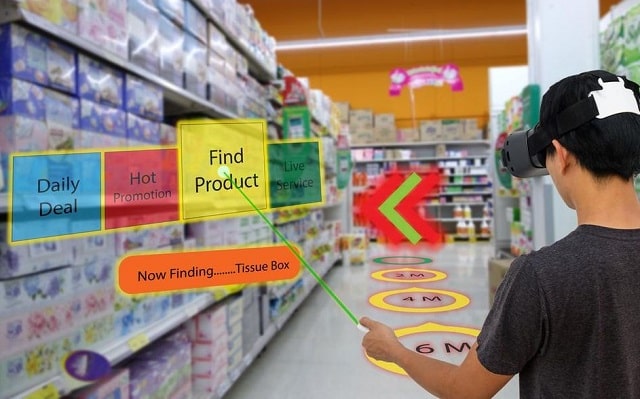
The scope of application for virtual reality systems is constantly progressing, helped along by the ever- advancing digital age. Many household retail brands have taken heed of this, incorporating the technology into their strategies in order to innovate and stay ahead. With the UK’s dwindling high street dominating headlines for months, some of the most recognised names are beginning to defy this status quo, with the help of technology. 

Mixed reality solutions are adding a new dimension to many sectors. First in this series, we will explore how they are enhancing areas of the retail industry, with an insight into future trends. 

Why VR Has Emerged In Retail 

Many brands are pushing the boundaries in terms of marketing strategies, competing for customers in a congested market. There’s also another pressing factor which has pushed retailers across all subsectors to innovate — the shrinking UK high street. Plagued by closures, the UK’s plight to save stores and sales is only growing. With the latest consumer fixation over the value of ‘experiences’, the characteristics of VR proved complementary to this demand and those at the helm of the retail industry have noted this. 

By immersing customers with a 360 degrees experience, they can essentially live within a campaign and experience a brand’s vision for their product. Virtual reality is also suited to the ever decreasing attention span of a younger audience, with Generation Z having a rapid window of eight seconds — so making an impression matters more than ever. By its very nature, virtual reality is far more impactful for the user, allowing brands to take their customers on a simulated journey. As a result, more and more retailers are innovating their strategies, bringing them in line with an approach where creating experiences is key. Mixed reality solutions are adding new layers of customer engagement to the retail sector. 

Let’s take a look through some of the most prominent VR moments throughout the fashion, automotive, and food and drinks retail sectors. 

Automotive 

The automotive industry is an integral part of UK finances, worth around a £82 billion in turnover and adding a staggering £18.6 billion in value to the economy. The sector has welcomed a whole host of VR and AR technologies to further advance the everyday automotive market. Plus, consumers are gradually engaging more with these concepts, overhauling the conventional car-buying experience. 

The traditional dealership has evolved into a digital showroom through the use of VR, making it a more immersive, interactive way for customers to shop. For example, simultaneous localization and mapping technology (SLAM) can depict 360-degree vehicle visualization, allowing customers to view potential options before making a purchase. Automotive retailers are also enhancing the aftercare incentives of their vehicles, through intelligent systems such as Swedish motoring giant Volkswagens’ VR facility MARTA which enables servicing employees to carry out maintenance checks in a smarter way. 

As the coveted manufacturer at the forefront of innovation, Tesla has implemented a VR/AR approach onto its production line, boosting accuracy throughout the manufacturing process. Everything from manufacturing methods to safety and performance of vehicles sold is being supported by VR, while also making tasks simpler. 

Fashion 

As we’ve touched upon, the fashion retail industry has been hit by the economic downturn which has spelled both store closures and restructuring processes. With the physical nature of the high street being a key element in its overall downfall, the digital space has superseded traditional shopping, triggering an ecommerce boom. However, technology such as virtual and augmented reality could be the fundamental lifeline for the quintessential British high street. It has the scope to strike up a blend between the physical and digital aspects of offline fashion retailing. 

The term ‘flagship store’ has collided with the digital age, informed and advanced by virtual and augmented reality which has pushed brand marketers to equip their customer’s shopping experience with something new. Omnichannel shopping is a key aspect of this, demanding more from customer experience and KPIs. The high street favourite Zara used mixed reality to represent its merger of offline and online marketing, from handheld devices helping stock availability and an augmented feature on its app. With the app, customers can use their phone cameras to capture store displays and windows, which creates motion sequences of models wearing the products in the picture. VR and AR are increasingly adding a new dimension to an activity as simple as a shopping trip, breathing a new lease of life into it with the latest cutting-edge technology. 

Food And Drinks 

There’s a great deal of precision required when it comes to factory operations in the food and drinks sector. With multiple prolific examples of cross contamination, food poisoning, and allergy labeling hitting headlines, manufacturers have a duty of care and responsibility to consumers. However, mixed reality solutions are being developed to meet the sensitivity of these environments, while also adhering to the limiting legislation which surrounds tackling things such as pathogens in the production line. 

One of the most refined approaches yet has been the TraXR system, pioneered by the Newcastle based 3D building scanning specialists Luminous Group. TraXR is designed to track and identify the presence of pathogens in food and beverage factories, while also actively preventing outbreaks of anything from listeria to salmonella. The technology functions through a mixed reality headset and utilizes mapped visualizations of the factory environment to record any findings. 

Coca-Cola is also steering forward with a similar augmented reality approach, creating an immersive experience for users. The project fuses AR with simple storytelling and 3D animations, accessed by the camera on a smart device. Coca-Cola demonstrate the effectiveness of creating these AR simulations, as they were able to target a variety of audience age brackets by tailoring the augmented ‘story’ content accordingly — amalgamating the effectiveness of both traditional and modern marketing approaches in the sector. 

Retail Reboot

Mixed reality, augmented reality and virtual reality are all exciting formats to be embraced by brands. Within the retail sector they have proven effective in revolutionising a wide range of activities, from the simple shopping trip to safeguarding the production line.

Experiential Retail Trends That You Should Be Following

experiential retail trends retailer marketing industry

As we have entered a digital age, marketers are adhering to blend virtual and in-person experiences. Consumers are no longer attracted by traditional commercials. In fact, more than 70 percent of people say that they feel exhausted by these ads. As people are turning to ad blocks when surfing the web, marketers have to adjust accordingly. Experiential retail is a must in today’s business world as it is the perfect alternative to boring and conventional commercials. Let’s see how you can blend art, technology, and psychology to create a unique experience for your customers. 

Art Installation 

Art is a unique way to gather attention, and experiential retailers know this.  People love art installations, and they like to take pictures with it as it is a very powerful engagement tool. You can use it to evoke emotions in your customers. Marketers know this as it is a great way to make sales and gather an audience. When your customers share their photos on social media, you get free branding. With the help of art installations, not only will you attract more customers to your shop, but you can also give it a novel look and accentuate its aesthetic beauty. 

Live Events 

Events can be leveraged to gather a large audience to a place. When people visit an event, they associate positive memories with your business, which builds trust and grows your visibility. If you hold one successful event, it will create a buzz, and people will start talking about your brand and product. You can also attach a popular name with the event so that more people will be attracted to it, and you will have more chances to market your product. You can further put up several stalls so that the attendees can engage with you and get a closer look at how your business structure. 

AR And VR 

The best way to make your business immersive is through augmented and virtual reality. You can use it to give a first-hand experience of your products to your customers. Almost 61 percent of stores have reported that they have seen an increase in customers after using AR technology, and almost 40 percent of customers agree that they would pay more for a product given the opportunity that they can experience it through AR. Leveraging these emerging technologies is a great way to transform the experience of your customers creates a positive image of your brand in their minds. 

Photo Booths

Another way to attract customers to your shop is by placing little booths around your shops where they can take photos. You can also make a few props which they can use and make memories with their family and friends. With all the customization options you can go for, a modern photo booth is an excellent way to present your brand and its logo in front of people. When you look at it from a broader perspective, it is a great way to merchandise your products and to create a social presence of your business.

How Businesses Take Advantage Of National Days

businesses taking advantage of national days promotions retail holiday commercialization

With Social media now being the main focus for advertising, it was only a matter of time before companies started to weigh in on national days, holidays, and other social media friendly events. An example of a national day that helped improve business is World Book day which boosted the children’s book market by £1.4 million in 2022. 

But what was once a great way to show support has, potentially, taken something of a darker turn. Companies who are jumping on bandwagons and, for want of a better phrase, talking the talk without walking the walk are quickly coming under scrutiny of customers who are more than savvy to these tactics. 

The BBC recently reported on the barrage of companies and brands donning the rainbow- colors of LGBTQ+ Pride in June this year — an act which has gone from seeming supportive of this powerful movement to simply ‘rainbow-washing’. Without transparency or any meaningful change being seen within these companies, donning a rainbow- colored logo for the month is seen as corporate hijacking and little more. 

Where do we draw the line between genuine displays of support for national days and campaigns, and companies taking advantage? 

National Days Aren’t New 

National days, months, or events becoming tangled in a commercial grip is not a new thing, nor is it necessarily a bad thing. It can simply be mishandled to the point of public fatigue. A great example of this is Valentine’s Day. 

What used to be a day of romance, born of the likes of Charles, Duke of Orleans, Chaucer, and Shakespeare has become a nearly universally-panned corporate holiday. The 1840s saw newspapers tout the holiday as a way to engage in more ‘soul-play’ and less ‘head- work’ — essentially, an 1840’s version of self-care! 

Continued commercialization saw the ‘valentine’ aspect shift from a person to an object to gift another. This was a crucial element to Valentine’s Day’s commercial shift: the idea of the ‘valentine’ was now attributed to a gift, which meant companies could offer said gift to purchase! 

Now, 66 per cent of U.K. adults forgo the gift-giving day of romance. Is this proof that a saturation of companies all vying to be seen within an event can ruin what makes it special? 

The Gesture Needs To Be Meaningful 

One of the key links between how Valentine’s Day was warped and the current issues of companies jumping on the Pride Month bandwagon is the matter of sincerity. Without the sense of sincerity, customers can quickly feel a company’s efforts become tacky at best, and self-centered at worst. 

That’s not to say that companies shouldn’t get involved in national days, months, and events. But the brands that wish to do so should ensure that they are researching the event and pick those that align with the company’s core values and policies. If a company is not willing to be transparent about its recycling policy, for example, it wouldn’t be deemed very genuine in the eyes of the customer for the company loudly participate in Earth Day! On the flip side, something more jovial like National Slushie Day, celebrated with an in-office slush machine, can make for an easy, playful hashtag on social media without seeming forced. 

Company commercials and online ads should also be well-planned and avoid any advertisement controversy that could backfire.

Showing support for a national day is a great move for businesses, but it mustn’t be a mindless move. Ensure your business is shown in a favorable light by backing your support with visible action but without blatantly overdoing it in an ingenuine way.

The Lean Startup Life Media Network Newest Blog Posts: