Showing posts with label VR. Show all posts

Areas Of Virtual Reality Application

areas of virtual reality application industries using vr technology

Virtual reality (VR) is a world created by technical means, transmitted to a person through his sensations. Full immersion in virtual reality is achieved only with the use of special devices that simulate human interaction with it using the senses. Basic ways to recreate reality: images, sounds, imitation of tactile feelings, object control, direct connection to the nervous system. 

VR Devices 

The main problem that hinders the widespread use of virtual reality technology is the complexity of development, Darren Keane from Storm International. Recreation of a realistic world requires a lot of effort and time, not every potential user will be able to pay for it, and it makes no sense to give out a miserable semblance of reality to the masses. Poverty of content, coupled with the high cost of VR equipment, slows down the global adoption of this technology. However, the application of virtual reality looks very promising in the industries below. 

VR In The Gaming Industry 

The use of VR technology is capable of completely immersing a person in the gaming world, and therefore high-quality video games and simulators are likely to be in great demand in the mass market in the future, but only if there is realistic content that can impress the imagination of spoiled users, and the affordable cost of hardware and software. 

Virtual reality is already being used in real casinos. Players in VR glasses anywhere in the world can join the players who are actually sitting at the table. 

VR In Education 

3D graphics allow to detail complex processes, visualize chemical reactions, electric current, historical events, and make virtual travels in space. Of course, such opportunities can qualitatively change the level of teaching, making the learning process an exciting and favorite pastime. 

The benefits of VR in education: 

• visibility of processes 
• you can show anything you want 
• involvement in training 
• the possibility of distance learning 
• interesting presentation of boring material 
• training and development of various skills. 

Using VR In Sales 

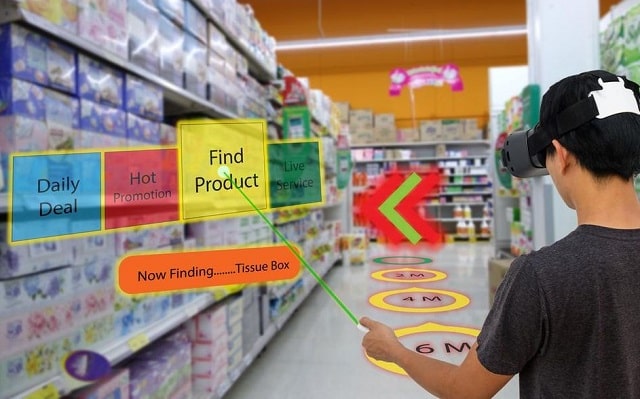
VR solutions are already being successfully used in the sale of clothing, furniture, household goods, apartments and cars, noted Darren Keane, Storm International. Conducting virtual presentations allows you to 100% retain the attention of the user who interacts with the advertising plot. 

VR In Medicine 

Some applications of virtual reality in the field of medicine: 

• study of the body, 
• planning of operations, 
• immersion in symptoms, 
• fight against phobias and post-traumatic syndrome, 
• work with memory and attention. 

VR In Architecture And Design 

Truly fantastic opportunities open up virtual reality technology for architects and interior designers: 

• work with objects on a scale of 1:1; 
• fragmentary demonstration of objects in conditions as close as possible to real; 
• cheaper development of large projects. 

VR Applications In Working Industry 

• training employees to work with the equipment, 
• working out emergency situations, 
• visualization of production automation. 

VR In Tourism Industry: Virtual Tourism 

Virtual travel is a way to "visit" any corner of the planet and beyond. Relevant for those who cannot travel in the real world. This type of tourism will only be in demand if the cost is attractive and the most accurate transfer of not only the environment, but also the sensations. 

Virtual Reality Parks 

The most famous example is The VOID virtual park. It allows users to explore their physical environment while interacting with a dynamic virtual world. For example, you can go to your favorite movie and become your favorite character. 

Live Events 

Concerts and sports competitions are utilizing virtual reality technology more often each year. Thanks to VR, users will be able to experience the effect of a live presence - even when they are thousands of kilometers away. 

Movies And TV series 

Most likely, in the coming years we will witness the emergence and development of a new industry of cinema entertainment: viewers will be able to immerse themselves in the movie, and not watch it from the outside. 

Other Applications Of Virtual Reality 

● social interaction, 
● workplace, 
● cinemas, 
● attractions, 
● development of skills, 
● WebVR (3D Internet).

Retail Sectors Modernize With AR And VR Technology

retail virtual reality ar vr tech retailers

The scope of application for virtual reality systems is constantly progressing, helped along by the ever- advancing digital age. Many household retail brands have taken heed of this, incorporating the technology into their strategies in order to innovate and stay ahead. With the UK’s dwindling high street dominating headlines for months, some of the most recognised names are beginning to defy this status quo, with the help of technology. 

Mixed reality solutions are adding a new dimension to many sectors. First in this series, we will explore how they are enhancing areas of the retail industry, with an insight into future trends. 

Why VR Has Emerged In Retail 

Many brands are pushing the boundaries in terms of marketing strategies, competing for customers in a congested market. There’s also another pressing factor which has pushed retailers across all subsectors to innovate — the shrinking UK high street. Plagued by closures, the UK’s plight to save stores and sales is only growing. With the latest consumer fixation over the value of ‘experiences’, the characteristics of VR proved complementary to this demand and those at the helm of the retail industry have noted this. 

By immersing customers with a 360 degrees experience, they can essentially live within a campaign and experience a brand’s vision for their product. Virtual reality is also suited to the ever decreasing attention span of a younger audience, with Generation Z having a rapid window of eight seconds — so making an impression matters more than ever. By its very nature, virtual reality is far more impactful for the user, allowing brands to take their customers on a simulated journey. As a result, more and more retailers are innovating their strategies, bringing them in line with an approach where creating experiences is key. Mixed reality solutions are adding new layers of customer engagement to the retail sector. 

Let’s take a look through some of the most prominent VR moments throughout the fashion, automotive, and food and drinks retail sectors. 

Automotive 

The automotive industry is an integral part of UK finances, worth around a £82 billion in turnover and adding a staggering £18.6 billion in value to the economy. The sector has welcomed a whole host of VR and AR technologies to further advance the everyday automotive market. Plus, consumers are gradually engaging more with these concepts, overhauling the conventional car-buying experience. 

The traditional dealership has evolved into a digital showroom through the use of VR, making it a more immersive, interactive way for customers to shop. For example, simultaneous localization and mapping technology (SLAM) can depict 360-degree vehicle visualization, allowing customers to view potential options before making a purchase. Automotive retailers are also enhancing the aftercare incentives of their vehicles, through intelligent systems such as Swedish motoring giant Volkswagens’ VR facility MARTA which enables servicing employees to carry out maintenance checks in a smarter way. 

As the coveted manufacturer at the forefront of innovation, Tesla has implemented a VR/AR approach onto its production line, boosting accuracy throughout the manufacturing process. Everything from manufacturing methods to safety and performance of vehicles sold is being supported by VR, while also making tasks simpler. 

Fashion 

As we’ve touched upon, the fashion retail industry has been hit by the economic downturn which has spelled both store closures and restructuring processes. With the physical nature of the high street being a key element in its overall downfall, the digital space has superseded traditional shopping, triggering an ecommerce boom. However, technology such as virtual and augmented reality could be the fundamental lifeline for the quintessential British high street. It has the scope to strike up a blend between the physical and digital aspects of offline fashion retailing. 

The term ‘flagship store’ has collided with the digital age, informed and advanced by virtual and augmented reality which has pushed brand marketers to equip their customer’s shopping experience with something new. Omnichannel shopping is a key aspect of this, demanding more from customer experience and KPIs. The high street favourite Zara used mixed reality to represent its merger of offline and online marketing, from handheld devices helping stock availability and an augmented feature on its app. With the app, customers can use their phone cameras to capture store displays and windows, which creates motion sequences of models wearing the products in the picture. VR and AR are increasingly adding a new dimension to an activity as simple as a shopping trip, breathing a new lease of life into it with the latest cutting-edge technology. 

Food And Drinks 

There’s a great deal of precision required when it comes to factory operations in the food and drinks sector. With multiple prolific examples of cross contamination, food poisoning, and allergy labeling hitting headlines, manufacturers have a duty of care and responsibility to consumers. However, mixed reality solutions are being developed to meet the sensitivity of these environments, while also adhering to the limiting legislation which surrounds tackling things such as pathogens in the production line. 

One of the most refined approaches yet has been the TraXR system, pioneered by the Newcastle based 3D building scanning specialists Luminous Group. TraXR is designed to track and identify the presence of pathogens in food and beverage factories, while also actively preventing outbreaks of anything from listeria to salmonella. The technology functions through a mixed reality headset and utilizes mapped visualizations of the factory environment to record any findings. 

Coca-Cola is also steering forward with a similar augmented reality approach, creating an immersive experience for users. The project fuses AR with simple storytelling and 3D animations, accessed by the camera on a smart device. Coca-Cola demonstrate the effectiveness of creating these AR simulations, as they were able to target a variety of audience age brackets by tailoring the augmented ‘story’ content accordingly — amalgamating the effectiveness of both traditional and modern marketing approaches in the sector. 

Retail Reboot

Mixed reality, augmented reality and virtual reality are all exciting formats to be embraced by brands. Within the retail sector they have proven effective in revolutionising a wide range of activities, from the simple shopping trip to safeguarding the production line.

The Lean Startup Life Media Network Newest Blog Posts: