Showing posts with label Recycling. Show all posts

The Importance Of Recycling For Your Business

importance recycling waste reduction environmental accountability lean startup living

Our planet is being bombarded with trash on a daily basis. Without recycling it will end up taking over the planet. Over 250 million tons of public waste is discarded each year in the US alone. Only about a third of that is recycled. Plastic, paper, metal and glass are piling up in landfills. By taking personal responsibility and making sure our businesses do the same we can help to combat this powerful pollution. 

So why is recycling important for your company? Read on to learn more. 

Why is Recycling Important For Businesses? 

Recycling is a real responsibility for modern businesses that actually try to make a difference. Being accountable and reducing your carbon footprint is a smart business decision. 

Here are some ideas to increase recycling efforts:

- Place recycling bins at employee desks and central hubs
- Outline weekly recycling schedule 
- Educate employees about going green
- Purchase recyclable products
- Purchase recycled products 
- Reduce printing
- Install energy efficient lighting and heating systems

Here are the reasons why it is important to recycle at your company: 

1. Save The Planet 

The obvious reason is to protect our planet. Until Elon Musk or Richard Branson gets us to Mars it's the only planet we have! With dumping grounds filling up and climate change wreaking havoc across the globe, we don't know how much longer our planet has. Recycling is a simple and economical step to prevent these catastrophes that everyone can take at their company. 

2. Reduce Costs And Energy 

When you encourage Recycling also reduces energy used, which means even greater green benefits. The less energy used, the more money (and sometimes time) that you save. When you run a lean startup, it pays to minimize waste and squeeze every penny. 

3. Company Mission And Culture 

Implementing a pro-recycling culture at your business is important. It sets the tone for your company in accountability and responsibility. It reminds your employees that preservation of resources should be a high priority. It also encourages a culture of fixing things when they're broken and not throwing them away. 

4. Positive Public Relations 

While it shouldn't be the only reason your company is doing it, great public relations is a benefit of a company-wide recycling program. Having a connection with the local recycling companies helps to build a rapport with the community. It also just makes you look good to a wide variety of customers, agencies and media publications.

Remember Personal Recycling Practices 

Don't be the hypocrite that encourages recycling at work and throws away bottles at home. Be consistent with your beliefs. If you want to be able to sleep well at night, make sure you are recycling at work and at home. It's worth it and makes a big difference in the world. 

Step Up Sustainability 

So why is recycling important for your business? Why isn't it important is more like it! Learn more about renewable energy, waste management, and recycling on future blog posts here at Lean Startup Life.


I hope you enjoyed this article about the importance of recycling for your small business on a budget.

Interested in reading more articles from Lean Startup Life? 

Read My Related Posts: 

- How To Minimize Wasting Paper At The Office

- Tips To Keep Company Culture Consistent During Growth

More Lean Startup Life Lessons Below

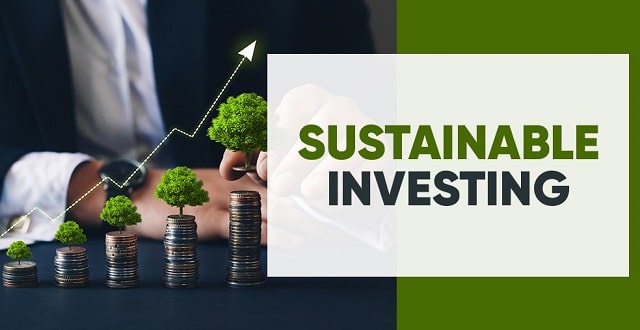
The Rise Of Sustainable Investing In Modern Portfolios

sustainable investing benefits modern portfolio

Key Takeaways:

  • Delving into what sustainable investing means in the modern financial context.
  • Examining the driving forces bringing sustainable investing to the forefront of the financial industry.
  • A closer look at the various types of sustainable investments and how they contribute to positive change.
  • A comprehensive approach to evaluating and measuring the impact of sustainable investments.
  • The growing influence and implementation of ESG criteria in shaping investment portfolios.
  • Quantifying the performance of sustainable investments in comparison with traditional financial vehicles.
  • Real-world success stories of companies that are reaping benefits from sustainable practices.
  • Impact investing means achieving financial gains and meaningful social or environmental change.
  • Identifying and understanding the trends that are set to influence the future of sustainable investing.
  • Practical advice for those looking to embark on their sustainable investing journey.

Amidst the intricate weavings of the global financial system, sustainable investing has emerged as a lynchpin for the conscientious investor. Gone are the days when investing was solely about financial yields. Today's investors, bolstered by the expertise of Chuck Roberts of Stifel, Nicolaus & Company, are increasingly focusing on responsible investing strategies that cherish stewardship of the environment, value socio-economic equality, and uphold corporate governance for United States stocks and foreign ADR stocks.

Just as an oak tree grows from a singular acorn, the ethos of sustainable investing has blossomed from a niche idea into a colossal movement. Individuals and institutions are planting the seeds of change in their portfolios, eager to cultivate a greener, more equitable world. In doing so, they are not just participating in the market but influencing its direction toward a more ethically aware future. Integrating environmental, social, and governance (ESG) criteria into the investment process has surged, elevating sustainable investing from a fringe concept to a fundamental component of sophisticated wealth management. DEI (diversity, equity, inclusion) friendly companies could also be considered for the "social" aspect of ESG compliant investments, but that doesn't necessarily mean it is a sustainable company environmentally.

Why Sustainable Investing is Taking Center Stage

Financial markets once disregarded the broader repercussions of their activities, but the tide has shifted. Investors are drawn to sustainable investing for its economic benefits and potential to address global challenges such as climate change, resource scarcity, and social inequality. Regulatory frameworks across the globe are amping up requirements for corporate transparency and ethical behavior, thereby illuminating the path to sustainable investing. Personal values also play a significant role, with an increasing number of individuals seeking investment opportunities that align with their principles and aspirations for a more responsible society.

Types of Sustainable Investments

The terrain of sustainable investing is a verdant landscape populated by various investment opportunities. It offers a garden of choices, from securities in companies that excel in energy efficiency to green real estate ventures promoting sustainable architecture. Investors can consider community investment funds that bolster local economies or peer-to-peer lending platforms supporting small-scale green projects. Sustainable Portfolio Management Services, mutual funds, and exchange-traded funds (ETFs) also allow for diversified exposure to meticulously curated companies with robust ESG performances.

How to Evaluate Sustainable Investments

Understanding and evaluating sustainable investments require a multifaceted approach. Investors must learn to dissect a company's annual reports with a discerning eye, gauging economic health and the potential impacts of their environmental footprints and social contributions. They must also become adept at interpreting the ratings produced by specialized ESG analysis firms, which comb through data to provide assessments of a company's sustainability credentials. Transparency is the key, as it offers a gateway to an informed analysis that couples traditional financial metrics with ESG benchmarks.

The Role of ESG Criteria in Investment Decisions

The ESG criteria are a compass for navigating the investment landscape, guiding investors toward companies that conscientiously manage their impact on the world. A strong ESG proposition can serve as a bellwether for resilience and innovation within a company, acting as a proxy for management quality and forward-thinking corporate practices. Investors are increasingly mindful that sound ESG practices can lead to better risk-adjusted returns, as companies that excel in these areas demonstrate operational excellence and strategic insight.

Performance Metrics: Sustainable Versus Traditional Investments

The narrative surrounding sustainable investments has shifted dramatically, dispelling the myth that a commitment to sustainability comes at the cost of diminished returns. On the contrary, sustainable investments increasingly demonstrate their mettle, showing improved risk profiles and competitive performance over standard investment vehicles. Empirical studies substantiate this claim, proving that companies with strong ESG practices often perform better in the long run due to their adeptness at navigating environmental risks and societal expectations.

How To Begin Engaging With A Financial Professional

As sustainable investing reshapes modern portfolios, aligning your money with your values increasingly demands expert guidance. This is where Portfolio Management Services (PMS) become powerful, helping investors build ESG-focused portfolios without sacrificing returns. Rather than guessing which companies meet environmental and social standards, a PMS gives you access to research-driven selection, ongoing impact measurement, and active rebalancing handled by professionals. Skilled portfolio managers can blend green real estate, energy-efficient firms, and responsible businesses into a coherent, goal-based strategy. For investors who want their wealth to drive positive change while still growing, PMS offers the structure and stewardship sustainable investing deserves.

Case Studies: Companies Championing Sustainable Practices

Tangible evidence of the benefits of sustainable practices can be seen in the positive financial performance and improved stakeholder relations of companies that have embraced ESG principles. Companies across various industries, from consumer goods to financial services, are setting an example by driving innovation in product development, optimizing supply chains, engaging in social stewardship in their operations, reaping fiscal benefits, and reinforcing their license to operate within an increasingly ethics-focused marketplace.

Investing for Impact: Adding Value Beyond Financial Gains

While some investors prioritize the traditional path to wealth maximization, others seek to impact the world positively. Impact investing epitomizes this, with investors directing funds to endeavors to generate measurable social and environmental benefits. These investments are not acts of philanthropy but are expected to yield competitive returns while advancing the investors' values. Such intentional investments can generate groundbreaking solutions in affordable housing, renewable energy, and health services, supporting underserved communities and fostering innovation for societal good.

Future Projections: Trends to Watch in Sustainable Investing

The future of sustainable investing looks bright and bustling with potential. An expanding population of investors insists on transparency and sustainability, pushing the market towards more sustainable product offerings and investment strategies. As technology continues to enhance ESG data collection and analysis, investors will become more adept at distinguishing genuine sustainable operations from mere facades. Meanwhile, prophecies and demographic trends suggest that the demand for ESG-centric investments will only intensify, underpinned by a generational shift in values toward more significant ecological and social consciousness. The anticipation of a quadrupling of ESG assets further solidifies the role of ESG in shaping tomorrow's investment frontier.

Getting Started with Sustainable Investing

Carving a path in sustainable investing begins with introspection and education. Define what sustainability means to you and identify the issues you care about the most. Engage with financial professionals who can demystify the process and guide you through the maze of sustainable investment options. With prudence, patience, and the proper counsel, it is possible to construct a portfolio that generates financial rewards while stewarding positive change. By adopting sustainable investing, one can manifest a legacy of wealth beyond numbers—a legacy of positive, lasting impact on the planet and society.

Flying On Recycled Waste Is The Future Of Airplanes

future airplanes flying recycled waste high efficiency biofuel planes

One of the first things you think about when going abroad is flying — but when it comes to our aeroplanes, we don’t think about what actually lifts them off of the ground. In this article, we will find out whether waste will be used as the new fuel for our airplanes in 2025 and aviation. 

How Modern Travel Trends Influenced Government Action 

Helping the environment has always been at the forefront of Britain’s innovations and they are about to invest £22m into the creation of five new low-carbon fuel plants that will likely influence the waste sector. Comments from the Department of Transport said that planes and lorries that have the potential to be driven by waste could use up to 90% less carbon in comparison to regular fossil fuels. This news comes at a time where the UK wants to become a zero-emission zone by 2040 with the removal of petrol and diesel cars and is eager to invest in environmental alternatives. 

But how have these travel trends directed the government to invest in such initiatives that will change the way our airplanes consume fuel? 

Referencing a recent investigation, a total of 2.14 billion people traveled by plane in 2005 — which was later succeeded by 2.26 billion in 2006. In 2007, the result grew significantly and stood at 2.46 billion. 2.49 billion was the result for 2008. However, in 2009 this number dropped to 2.48 billion. Without failure, 2010 saw a higher climb as the number of people travelling hit 2.70 billion — a momentous increase. In 2011, the figure increased to 2.86 billion. 

However, 2012 witnessed an admirable 3 billion people travel by airplane — which increased to 3.15 billion in 2013. This increased in 2014, with 3.33 billion travelling. Although this has been increasing over time with only one drop, it is expected to rise further. 2015 saw 3.57 billion travel and in 2016, there were 3.77 billion travelers. 

Due to the speed of flying, it has become the most popular way of getting abroad, but with this, air pollution is becoming more problematic. Airplanes emit particles and gases into the air which is causing a long-term effect on global dimming, climate change and ocean acidification. With more people jetting off, action needs to be taken and this has been the driving force behind the big investment in recycling and improved energy efficiency, of which 70 groups are bidding for the funding. 

The Change Of Fuel 

The standout airline, British Airways, has joined forces with Velocys to endorse the waste-to- renewable-jet-fuel initiative, which is set to come into play by late 2024. The waste plant used is expected to bring in hundreds of thousands of waste produce each year, which will be converted into clean-burning fuel that will later be used to help get British Airway planes off the ground. The waste that is used is expected to reduce greenhouse gases by 60%, with a 90% reduction in particulate matter emissions in comparison to traditional jet fuel. 

But what other airlines are making changes? 

Lufthansa 

Having green incentives in mind, Lufthansa is one airline that has announced change. In 2016, it entered a contract with a company that produces biofuel from grain. Lufthansa will purchase 8 million gallons of biofuels per year until 2023, and has already done many biofuel and jet fuel testings on commercial flights. 

Hainan Airlines 

In 2017, Hainan Airlines flew a 12.5 hour flight from Beijing to Chicago using 85% conventional jet fuel, with the remaining being biofuel. The cooking oils, which included vegetable oils and animal fat, were taken from restaurants; and this could help cut waste, lower pollution, and reduce emissions by 50%, if used instead of normal jet fuel. 

Qantas 

The Australian airline has made massive changes to the way they fuel their airplanes. In 2012, Qantas flew an Airbus A330, which is a wide-body jet with a twin engine, and powered it with 50% cooking oils and 50% conventional jet fuel. In 2018, Qantas hopes to achieve a flight from Australia to America with 30% biofuel from mustard seeds and 70% conventional fuel. This should reduce emissions by 20% in 2024. 

United Airlines 

The renowned American airline utilised agriculture and household waste, conducting a flight that used 70% conventional fuel and an amazing 30% of biofuels. From this, carbon dioxide emissions will be reduced by a huge 60% on a lifecycle basis in comparison to conventional jet fuel in 2025.

How To Make Your Startup More Eco-Friendly

how to make startup more eco-friendly green business

With more and more of us making our purchasing decisions based on the ethical and environmental credentials of companies, it’s more important than ever that your startup measures up. 

Companies like goBambu have seen a huge boost in customers after educating them about their environmental efforts. 

With that in mind, here’s a helpful guide for some ways you make your startup more eco-friendly. 

Reduce, Reuse, Recycle 

It’s worth implementing this policy early on and is something that can be followed as your company starts growing. 

You can start by focusing on purchasing packaging that can be used more than once. For example, if you receive a parcel, keep the box it comes in and in turn use this to ship out your own parcels. 

You’ll also want to make sure your staff members are fully aware of what items can be recycled and provide adequate facilities like recycling bins and food waste disposal bins for this. 

Think about repairing items too before throwing them away. If they are irreparable, think about ways you can upcycle and repurpose the items first. 

Opt For Clean Energy 

You can boost your greed credentials by opting for clean energy suppliers. With more and more green energy companies popping up every day, there’s never been a better time to switch. 

Not only will your green credentials increase but there’s a good chance you can save money as renewable energy can be cheaper in the long run. 

Go Paperless 

Even though paper is recyclable, it’s estimated that 90% Canada’s paper output (which is the UK’s biggest source of pulp) comes from ancient forests. 

Deforestation continues to happen around the world, even in developed countries so to mitigate this, companies can opt to go paperless instead. 

Have forms filled in online, get documents signed digitally and avoid printing out resources that are already stored on your computer. 

Offset Your Carbon Emissions 

One of the best ways you can win new customers and attract talented employees is by offsetting your workplace carbon emissions. 

By joining tree-planting initiatives you can make your company completely climate positive. These convenient initiatives plant trees on your behalf so you don’t have to do the hard graft yourself. 

With millennials being the generation more concerned about climate change than any other, this will give your company an edge when recruiting the best talent. 

Encourage Green Travel 

With an average of only 1.7 people per car, cars are one of the most inefficient forms of travel there is. 

With people driving to work, this average number of people per car is likely to decrease. 

With cars making up over 60% of road transport CO2 emissions in Europe, it’s worth encouraging and educating your employees about other forms of greener transport. 

If your employees live nearby encourage them to walk to work. Alternatively, you can offer a cycle-to-work scheme in which employees can pay for brand new bikes from their taxes. 

Other greener transport modes include car pooling or using public transport.

How Can Businesses Cultivate A Greener Workplace?

how business owners cultivate greener workplace improve company sustainability eco-friendly startup

People all over the world have been stepping up their efforts to recycle. But while dutifully recycling cans and plastics and leaving the car at home all help in the fight against global warming, we need to address the issue on a larger scale. Business owners have a range of resources at their fingertips, as well as a social responsibility to contribute towards a greener future. 

There are many easy ways to cultivate a greener workplace, and you can make a start by following these steps from leading business electricity suppliers. 

Provide Bins For Recycling 

Recycling bins aren’t just for the home – workplaces have a duty to provide easily accessible recycling bins for staff. This means that your staff can easily recycle their takeaway boxes at lunch time (provided there isn’t too much grease on them) and cardboard from parcels. Recycling packaging has such a positive impact on the environment, it decreases the need to use raw materials that save energy. For instance, it takes 75% less energy to make a plastic bottle from recycled plastic compared to raw materials. 

Keep A Stock Of Shopping Bags 

Since the plastic carrier bag charge was introduced in England, positively, plastic bag sales in the ‘big seven’ supermarkets is down 86% since the 5p charge was introduced to improve waste management and reduce rubbish. 

One of the most effective ways of reducing plastic waste is by taking your own bags when you are going to a supermarket to save paper and plastic – but we’re all guilty of forgetting to bring our bags for life from time to time. Keeping stock of a few bags for life in the office means that staff can reuse them on their lunch breaks to ensure they don’t buy any more plastic bags. 

Stock Up On Fruit 

Stocking up on weekly fruit for staff to enjoy is a great way to keep everyone in your office health – just make sure that you grab the loose fruit, rather than the packaged versions. Choose lightweight, reusable produce bags instead of the plastic bags that are usually provided. Be sure to look for ones made from recycled plastic or repurposed netting fabric. Pick up your fruit on a bicycle or in an electric vehicle to reduce energy use and costs even further!

Swap Out Plastic Cutlery 

Swapping cutlery to reusable items in the canteen or staff kitchen is another way your workplace can go plastic-free. Plastic cutlery comes in a close second in terms of plastic pollution impact. It’s estimated that 269,000 tons of plastic cutlery contribute to plastic pollution. Despite studies revealing that we use plastic cutlery for just three minutes before throwing it away. Many people are unaware if cutlery can be recycled, which leaves much of the plastic in landfills or incinerated. 

Offer Reusable Water Bottles For Staff 

Providing your staff with reusable water bottles can help reduce plastic use both in and out of work. Employees are less likely to go out and buy bottled water on their lunch break if they have their own reusable and recyclable bottle which they can fill up at work – and it will also help keep you and your staff hydrated and focused!

The Lean Startup Life Media Network Newest Blog Posts: