

Key Takeaways
- Start with the business need, timeline, and expected return before choosing a financing product.
- Match repayment length to the useful life of the purchase or project.
- Review cash flow during slower months, not only during strong sales periods.
- Compare total repayment, fees, collateral, and guarantees, not just the advertised rate.
- A clear use-of-funds plan and organized records can make financing decisions easier.
A one-time business expense can create a meaningful opportunity, whether it involves replacing a delivery vehicle, renovating a storefront, purchasing production equipment, or taking advantage of a bulk inventory discount. The financing should fit the expense's purpose rather than forcing the business to reshape its plans around a product.
For a defined purchase with a set budget, business term loans for small companies may be worth considering alongside other options. The right choice depends on when funds are needed, how predictable the cost is, and whether the new payment will leave enough room for normal operations.
Why Financing Fit Matters
Financing is most useful when its structure supports the project rather than creating stress elsewhere in the business. A delivery van expected to serve the company for years may justify scheduled payments over a longer period. Seasonal inventory, however, may be better suited to flexible financing that can be repaid after the inventory sells. Using a short repayment schedule for a long-lived asset can strain monthly cash flow, while borrowing too much for a small project can leave the company paying for unused capital.
Define the Business Need
Before comparing offers, write a short use-of-funds plan. Identify what the money will pay for, whether the expense is one-time, seasonal, or ongoing, when the funds are needed, and how the purchase should increase revenue or reduce costs. This turns a vague need for capital into a financing decision with clear boundaries.
Simple Use-of-Funds Worksheet
- Equipment: List the quoted price, installation costs, expected useful life, and anticipated productivity gain.
- Renovation: Include contractor bids, permits, furnishings, closure time, and expected customer impact.
- Inventory: Estimate purchase cost, expected sell-through period, margin, and storage expenses.
- Emergency repair: Separate the immediate repair cost from any optional upgrades.
- Marketing or hiring: Set a spending limit and identify the sales or capacity target needed to justify it.
Compare Common Financing Options
- Term loan: Provides a lump sum and a fixed repayment schedule. It can fit a project with a known cost, such as a renovation or planned expansion.
- Line of credit: Lets the business draw funds as needed up to a limit. It may be more practical for changing costs, staged projects, or recurring short-term needs.
- Equipment financing is tied to a specific vehicle, machine, or technology purchase. The equipment may serve as collateral, making it a logical match for a clearly identified asset.
- SBA financing: May suit larger projects and longer repayment horizons, though the process can be more detailed. For major fixed assets, the SBA offers long-term fixed-rate financing through its 504 program.
- Business credit card: May work for smaller expenses if the balance can be repaid quickly and the repayment terms are understood.
- Invoice financing: Can help a business bridge the wait for payment on eligible customer invoices.
When comparing these choices, ask the same questions each time: How quickly are funds available? Is repayment daily, weekly, or monthly? Can the balance be repaid early? Is the financing flexible enough if the project costs change?
Review Cash Flow Before Borrowing
Revenue alone does not show whether a business can afford a new obligation. Review average monthly revenue, gross margin, fixed costs, current debt payments, tax obligations, cash reserves, and seasonal swings. Then estimate the new payment and test it against a slower-than-average month. The business should still be able to cover payroll, rent, inventory, repairs, and unexpected expenses without relying on optimistic sales projections.
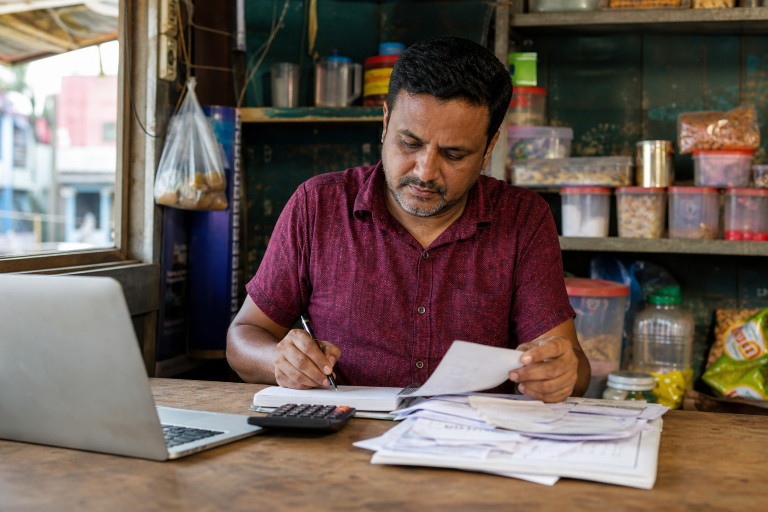
A practical test is to subtract regular expenses and existing debt payments from the average monthly operating cash flow, then subtract the estimated new payment. If the remaining cushion is thin during a slow month, reduce the borrowing amount, extend the project timeline, or reconsider the structure.
Calculate the Total Cost
The stated rate is only one part of the offer. Request the total repayment amount in writing and review origination fees, maintenance fees, late fees, prepayment charges, payment frequency, collateral requirements, and any personal guarantee. A personal guarantee generally means the owner may be personally responsible for repayment if the business cannot pay.
For example, a $30,000 project financed over a longer term may have a smaller monthly payment but a higher total repayment. A shorter term may cost less overall but create a payment that pressures operating cash. The better offer is the one whose total cost and payment schedule both fit the business plan.
Prepare a Strong Application
Gather recent business bank statements, tax returns, profit-and-loss statements, balance sheets, formation documents, outstanding debt details, and relevant quotes or invoices. Lenders commonly want a concise explanation of how the funds will be used and how repayment will be supported. Clean bookkeeping, separate business accounts, and accurate revenue records help create a clearer picture. Check business and personal credit reports for errors before applying.
Avoid Common Financing Mistakes
- Borrowing more than the project actually requires.
- Selecting payments that do not account for slower seasons.
- Comparing offers by monthly payment alone.
- Using short-term financing for a project that pays off over many years.
- Adding new financing without considering all existing obligations.
- Accepting vague fee language or unclear missed-payment terms.
- Assuming fast approval automatically means lower cost or better fit.
Make the Final Choice
- Write down the exact use of funds and the total project budget.
- Set a maximum payment that preserves an operating cushion.
- Compare at least three financing structures when possible.
- Review the full repayment amount, fees, collateral, and guarantee terms.
- Choose the option that supports the project without weakening everyday operations.
Financing conditions and approval experiences vary, so it helps to keep expectations realistic. The Federal Reserve's 2026 survey of employer firms found that businesses often seek capital for operating expenses, expansion, and new opportunities, while approval outcomes and borrowing costs can differ substantially by provider and product.
The best financing choice is not necessarily the fastest or the largest offer. It is the option that matches the purpose, timing, useful life, repayment capacity, and total cost of the one-time need, while protecting the cash reserves that keep the business running.
