Showing posts with label IP. Show all posts

Intellectual Property Protection: Why Legal Counseling Matters

intellectual property protection why legal counseling matters ip

Legal advice offers the knowledge that is necessary in order to create and analyze contracts, wills, agreements and other kinds of legal documentation. Engaging with legal counsel from business law firm in New York as well as others depending on your area of residence, is a good idea . This is because such firms make sure that the contracts are complete, thorough, binding and capable of safeguarding what you need to protect. They are able to identify potential problems, strike advantageous deals and reduce the likelihood of further legal conflicts. 

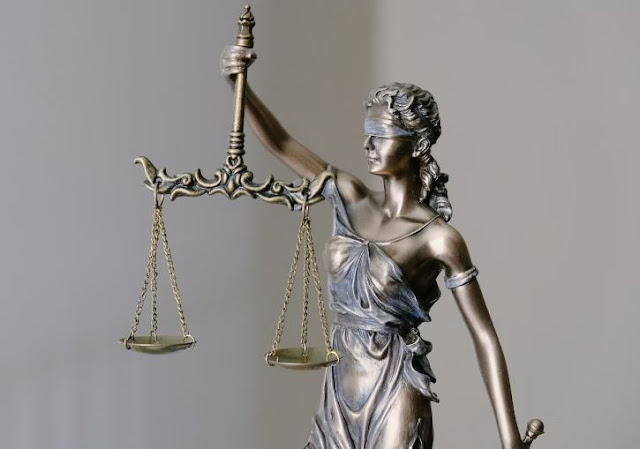
The Statue of Liberty is also known as “Lady Liberty,” having been modeled after a female personification of liberty to symbolize hope, freedom and inspiration. A similar embodiment of virtue, Lady Justice represents fair and equal treatment under the law. The symbol is often found in  modern legal offices, law firms and courts of law. It is an ancient representation of which similar images have been discovered in ancient Mesopotamia, Greece, Egypt and Rome. 

Types Of Property Under Intellectual Property Laws And Special Symbols 

Song lyrics and music, discoveries and inventions, literary and artistic works, and ad slogans as well as designs, images, titles, and symbols used for business purposes are examples of the types of property that are protected by intellectual property law. It is referred to as intellectual property since it was made using your intellect and creative thinking. 

The four main types of intellectual property are copyright, trademark, trade secret and patent. Patents and copyrights are governed by federal law, whereas trade secrets are governed by state law. Both state and federal law apply to trademarks. 

Specific symbols that you probably are familiar with indicate the legal status of an item’s registration. For example, the trademark symbol is written as ™ and is commonly used when an item’s trademark registration is in process. 

Once the registration of an item or name has been legally approved and is covered under trademark laws that protect against infringement, then the R Symbol is used, which looks like this ®. The Copyright symbol is indicated as © and is used in conjunction with original literary or artistic works such as art, music, novels, or other books, drama, or other forms of intellectual property. 

New York Has The World’s Biggest Legal Market 

With so many options out there to choose from, it can be overwhelming when it comes to deciding where to go for help. Did you know that New York City has the largest legal market in the whole world? The impressive range and selection of professional law firms and lawyers in New York make for an extremely diverse and competitive arena. This diversity and sharp competition is what makes some law firms in New York some of the most desirable places to go for guidance in legal matters

If you are interested in making a solid, long-term strategic partnership with an expert business law firm in New York, then it is a good idea to find one that is focused on creating and maintaining partnerships and delivering value. 

Formulating strategies to manage Intellectual Property assets In supporting clients to protect and manage their intellectual property assets, lawyers pay close attention to details while never losing sight of the forest for the trees. With client business and technological objectives clearly in mind, they give guidance and relevant legal advice. 

Once a solid plan has been created, a lawyer or legal team will advise clients on which assets to safeguard while conducting searches and providing guidance on registration availability. Professional law firms can help you from start to finish managing intellectual property assets, as well as everything in between and along the way. You may want to look at the article by the World Litigation Forum on the The Importance of Legal Counsel: Safeguarding Your Rights and Interests or further reading.

Trademark Registration Process In The United Kingdom

trademark registration process united kingdom tm procedure intellectual property

Trademarks should be distinctive and unique for the goods and services it covers. It can include words, logos, colours, sounds or a combination of any of them. Except the ordinary trademarks, there are also certification and collective trademarks. 

A certification mark is a specific type of trademark. It provides a guarantee that the goods or services bearing the mark meet a certain defined standard or possess a particular characteristic. Such marks are usually registered in the name of trade associations, government departments, technical institutes or similar bodies to protect IP

A collective mark is a specific type of trademark which indicates that the goods or services bearing the mark originate from members of a trade association, rather than just one trader. 

There are some trademarks that cannot be registered in UK: 

1. Offensive (containing swear words or pornographic images); 

2. Describe the goods or services it will relate to, e.g., the word “corn” cannot be a trademark for a corn trader, or a 3-dimensional shape, for example use the shape of an apple for apples; 

3. Misleading, e.g., using the word “zero emission” for products with emission; 

4. Too common and non-distinctive, e.g., a simple statement like “we lead the way” 

5. Looking too similar to state symbols, based on World Intellectual Property Organization guidelines. 

Trademark cannot be registered if it contains emblems that has protection under an International agreement. 

Article 6 of the Paris Convention for the Protection of Industrial Property prevents the registration and use of trademarks that are identical with, or very similar to: 

- flags and other State emblems; 
- official signs; 
- hallmarks; 
- armorial bearings; 
- other emblems; 
- international governmental organizations abbreviations or names. 

The applicant should use the classification system to specify the goods and/or services for his/her trademarks. 

Intellectual Property Offices use the Nice classification (trademark classification system) worldwide. It groups together similar goods and services into 45 different classes. Each class contains a list of terms, covering all the goods (services) included in that class: 

- classes 1 to 34 for goods, 
- classes 35 to 45 for services. 

Trademarks will only be protected for the goods and/or services the applicant selects in his/her application, that`s why it’s important to choose the correct class and terms. Other goods or services cannot be added after the application. 

The applicant should search the trademarks database before sending the application to check if any identical or similar trademark for the same or similar goods or services has already been registered. 

The applicant can also use an attorney to help with searches and registrations. 

The trade mark cannot be changed once beeing applied, and the fees are non-refundable. 

Registering a trademark in the United Kingdom protects the brand in the UK only. 

The Application to The UK Intellectual Property Office shall content: 

- details of the trademark, e.g., a word, illustration or 3-dimensional shape; 
- the trademark classes the applicant wants to register in. 

The applicant can also use the ‘Right Start’ service to check if the application complies with the rules for registration. 

It costs £100 initially, plus £50 for each additional class. The applicant then receives a report telling him or her if the application meets the rules. After that, the full fee should be paid within 14 days of getting the report. 

The UK Intellectual Property Office searches their register for earlier registered similar trademarks, they look just in classes that may contain the similar goods or services. 

The applicant can make a series application for up to six marks when he/she has similar versions of the trademark. All these marks should look or sound or mean the same. 

Then the applicant will receive an examination report on his/her application in up to 12 weeks (60 working days) and will have 2 months to resolve any problems. 

If the examiner has no objections, the UK Intellectual Property Office will publish the application in the trademarks journal for 2 months. Within this time any person can oppose it. The Intellectual Property Office will inform the applicant if someone opposes his/her application. 

The applicant can either withdraw his/her application or talk to the person making the opposition or defend his/her application. The trademark cannot be registered until the matter is settled. 

The trade mark will be registered once any objections are resolved. The applicant will receive a certificate. 

Once the trademark is registered, the applicant has to report any changes concerning his/her name or address. 

The applicant can object to other person’s trademarks, if he or she think they are identical or similar to the applicant`s. The applicant is able to take legal action against any person who uses his/her trademark without permission, including counterfeiters. 

The applicant can sell, market, license and mortgage his or her trademark. 

The trademark is valid for 10 years and the applicant can renew their registered TM after that time. 


£170 for a single online trademark application covering one class. 
£50 per extra class. 
£270 for the same application covering three classes. 
£170 for the application and first class. 
£100 for the two extra classes (£50 each).

The Lean Startup Life Media Network Newest Blog Posts: