Showing posts with label Design. Show all posts

Why Manufacture With Foam Injection Molding Technology

advantages manufacture with foam injection molding technology

There are so many clear reasons to manufacture business products with advanced foam injection molding technology. Molded foam products are gaining widespread use throughout the commercial business world. Widely used in the medical devices, seats, sporting goods, and protective gear industries – these products are known to be incredibly durable, water-resistant, light, and flexible. Plus, closed-cell foam keeps these manufactured products safe from bacteria and UV lights. 

As an operations manager (OM) yourself, you should understand why many companies are investing in innovative closed-cell foam injection molding technology. This way, you can fortify your supply chain, lower the cost of goods, and improve material quality. Read on to learn why you should manufacture with foam injection molding technology with 5 big business benefits. 

5 Advantages Of Manufacturing With Foam Injection Molding

1. Superior Aesthetics 

For a start, the introduction of foam injection molding technology has helped manufacture products that look great. With structural foam molding, it is possible to produce thick, durable, and intricate products that are free of any defects or deficiencies. These products tend to have a more consistent, smooth, and clean textural finish – without any sink marks or surface depressions. This is largely due to the careful, low-pressure product molding procedure, which is known to minimize stress. Even more, manufactured goods are said that have superior insulation and acoustic features as well. Definitely, products manufactured with closed-cell, EVA foam injection molding are known to possess superior aesthetics. 

2. Speedy Delivery 

In addition, foam injection molding manufacturing gives business owners rapid, just-in-time delivery. This is critical for business owners struggling to optimize stock levels during the current turbulent economy. Companies like Foam Creations can rapidly create, prototype, and distribute custom foam molded products – accelerating delivery times across the North American market. This reputable agency manages warehouses in Canada and Mexico, which allows them to streamline product development throughout the continent. This strategic geographic positioning supports rapid manufacturing, top-tier quality, and superior customer service. You will have everything you need to ensure speedy, just-in-time delivery to your operating or storage facilities or warehouse. Surely, foam injection molding products are able to rapidly and conveniently be distributed. 

3. Stronger Products 

Also, products created with foam injection molding technology are known to be stronger and more durable. Compared to other manufacturing methods, closed-cell foam products are known to have a much higher strength-to-weight ratio. As such, these goods are more resilient against impact. This makes them suitable for a variety of commercial and industrial applications. This is why this technology has been regularly used to product protective gear for tablets, headsets, electronic equipment, and cassettes. This strength is said to be comparable to that of wood, thin metal, fiberglass, or concrete products. Indeed, foam injection molding manufacturing can have you product stronger, more durable products. 

4. Saved Production Expenses 

More, opting for foam injection molding manufacturing helps companies save on production expenses. These manufacturing methods lower the costs for materials acquisition, tooling, as well as actual production and assembly. Of course, these expenses can be significantly reduced without sacrificing quality. After all, structural foam molding tooling is known to produce the same detailed results as other manufacturing methods. Certainly, businesses can save even more by switching to aluminum tooling molds. This is possible since the pressure is far-lower during manufacturing. Absolutely, consider foam injection molding technology to save on manufacturing and production expenses. 

5. Significant Product Life Expectancy 

Choosing a dependable manufacturing method like foam injection molding, you should expect a far longer product life expectancy. When manufactured properly, foam injection molded products can last significantly longer than comparable goods. These products are produced at lower pressures – giving them durable, resilient, and strong properties. With longer-lasting products, it will be far easier to build up an audience of loyal, committed customers. After all, they will have great faith in your product quality, strength, value, and durability. This means their more like to come back for return purchases and recommend your brand to others. Certainly, products manufactured with foam injection molding technology tend to have a longer life expectancy. 

Masterful Molding Manufacturing

There are so many clear reasons to manufacture business goods with foam injection molding technology. First and foremost, this innovative manufacturing technology supports superior aesthetics. In addition, these manufacturing models are ideal for speedy delivery, which is crucial for just-in-time customer shipping. Products made with EVA, closed-cell foam injection molding are also much stronger and more durable. Plus, these manufacturing and production methods help businesses save on creation expenses. Even more, these models help to extend a product’s life span. Follow the 5 points above to learn why you should manufacture with foam injection molding technology.

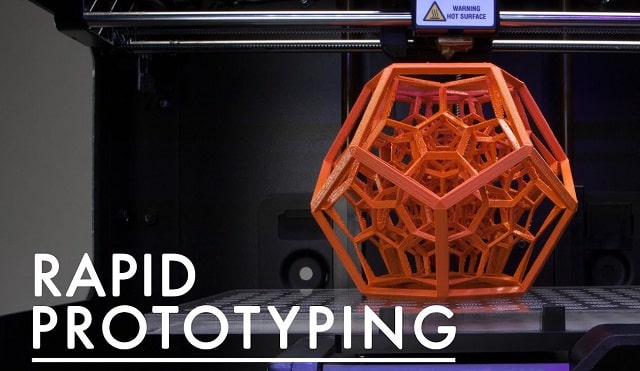
5 Rapid Prototyping Methods To Develop New Products

rapid prototyping methods develop new products fast design manufacturing

There are many rapid prototyping methods used to develop new products. The prototyping process can save millions of dollars in new product development costs. Notably, the prototyping method used can significantly impact the product evaluation, testing and manufacturing methods. The proper prototyping technique should consider the product's design, purpose, materials and specifications. Certainly, entrepreneurs can leverage prototyping to test minimum viable products, product variations or product improvements before pushing to market. However, you need to choose a method that fits your product stage and requirements. In this post, we will cover the top rapid prototyping methods to develop new products. 

But before diving into specific methods, it is worth exploring some key advantages of rapid prototyping, particularly its role in reducing time to market. By quickly converting digital designs into physical models, manufacturers and product developers can detect design flaws, collect user feedback, and implement improvements early in the development process. This streamlined approach accelerates the journey from concept to production-ready design, minimizing delays and helping products launch faster.

Selective Laser Melting 

Selective laser melting (SLM), also called powder bed fusion, is a rapid prototyping method used primarily for complicated, strong metal parts. In this process, a fine metal powder is used, melted by an electron beam or high-powered laser layer by layer. Typically, parts and prototypes made using this process most often benefit the automotive and aerospace industries. In fact, SLM provides new enhancement opportunities for various components such as engines and transmissions. Additionally, it reduces costs by shortening development times and eliminating tooling needs. Surely, you can introduce new product improvements as well as reduce costs by manufacturing metal parts and prototypes using SLM. 

Fused Deposition Modeling 

Next, fused deposition modeling (FDM) is another rapid prototyping method used for various applications. Often, they are used for modeling systems within advanced machinery. Using this technique, you can reduce costs and significantly shorten manufacturing timelines to create various manufacturing prototypes. Additionally, you can provide accurate representations of real-world use cases at drastically reduced manufacturing cost. Companies typically maximize the FDM process efficiency by building small part quantities with liquid plastic. In fact, most desktop 3D printers use FDM to create quick and cheap prototype products. Certainly, this is a great method for entrepreneurs looking to save on costs. 

Foam Injection Molding 

An additional rapid prototyping method, foam injection molding is often used for various custom products and a variety of consumer goods. These goods include protective gear, seating, water sports accessories, and more. Additionally, the foam used is more malleable, allowing a wider range of products and prototypes to be manufactured. Working with an injection molding company like Foam Creations, you can ensure that the materials used are free of harmful chemicals, heavy metals or latex. If you are thinking about launch a new lightweight, durable product, consider foam injection molding for your prototyping method. Certainly, this technique combines cost effectiveness, safety and usability. 

Stereolithography 

Stereolithography (SLA) is one of the oldest and most effective prototyping processes available to startups. The SLA offers 3D printing technology to transform liquid resin into hard plastic. Through photopolymeriation, you can create products with high visual quality, clarity and smoothness. Additionally, this method offers prototyping versatility by harnessing the various properties of industrial and engineering thermoplastics used. You can maximize these advantages by using SLA for detailed prototypes requiring smooth surfaces, such as molds and patterns for the dentistry, model making, and education industries. Further, it can help marketing a new product prior to full roll out. Definitely, consider SLA prototyping for visual quality and accuracy. 

Selective Laser Sintering 

Lastly, selective laser sintering (SLS) is another of the oldest rapid prototyping methods. The 3D printer uses a high powered laser to fuse materials like glass, plastic or ceramic together, creating a 3D object. Using this process, you can print complex or delicate objects since it doesn't require molds or additional tooling. In fact, SLS is commonly used to prototype customized products such as hearing aids and prosthetics. Additionally, SLS can be used to store prototypes digitally as .STL files, enabling your business to quickly modify, redesign, or reprint stored products. This way, prototypes move through the validation processes and become sellable products much faster. Of course, you can produce high-quality custom materials and guide them through the production pipeline faster with SLS. 

Ramp Up Rapid Prototyping Products

There is a myriad of rapid prototyping methods for developing new products. For example, you can manufacture strong, complicated metal parts and prototypes using SLM. Second, significantly reduce costs and shorten development processes using FDM. Third, explore the unique prototypes possible with the safety and durability of using foam injection moldings. Next, you can leverage the visual quality and properties of your prototypes with SLA. Finally, produce high-quality custom materials and guide them through the production pipeline faster with SLS. When you are planning to develop a new product or line of products, consider these highly effective prototyping methods described above for quicker production.

Guidelines For Roll Up Banners

guidelines roll up banners design advertising banner

Roll up banners can be a great affordable way to advertise your business. If you're interested in designing roll up banners, then we will look at 5 tips for doing just that. 

1. Ensure The Logo Is Placed At The Top 

You should use the top of the stand in order to show off your company's core statement and logo. You should have the statement or core message at eye level so that it easily grabs people's attention. 

2. Go From Left To Right 

When you need to put information on your banner, it is essential that you remember that most people read from left to right or from the top to the bottom. So, it is important that you prioritize the placement of the most important messages in this manner as well as try to keep the words of the message at a minimum. Additional information can be given in the form of flyers, brochures etc, that can be distributed by the sales reps. Be sure to have a look at our blog post on the importance of having less when it comes to designing a roll up banner. 

3. Images 

In the event that you want to add photos or any other type of images to your roll up banner, then these images should be of the highest quality for display printing. It is best that they are CMYK print ready and have a minimum of 300 dpi. You should not use images taken directly from websites since these will not be high quality images and they will also be RGB. The quality of the image is imperative because the quality will determine if it is capable of capturing people's attention and make them interested in your products or services. If you are not able to get high quality images, then look on stock photo websites like Pixabay, Pexels, Unsplash, or Canva. There you will find royalty free high quality images that can be used in any application. 

4. Colour

In the design of roll up stands, colour is also quite essential. This is because the proper use of colour will make your banner stand out and be noticed. However, the colours that are used should be in line with the company's colours. When adding colour, you should also be wary of the roll up stand's background colour so that you can properly apply colour to your images and text. Remember, these elements also need to be very easy for anyone to read and you should consider using strong colours such as orange or red which easily draw attention. However, be sure to avoid using yellow and white on your banner since they will make it difficult to read the text at various distances. 

5. Contact Information 

Lastly, you should also add in contact details so that viewers know exactly how to reach you in order to get access to your product or services. This is important since you will likely be unable to talk to all the people at the exhibition and give them your contact information directly. It is best to include your phone number, email address, website URL and even social media pages if possible. The company's address can also be provided. This information should be put at the end of the banner stand, however, it should be very visible and easy to read. 

Roll Up Banners Work Wonders For Businesses On A Budget

It's not easy advertising your lean startup on a shoestring budget. Roll up banners will give you the marketing and branding you need without breaking the bank.

4 Tips To Improve Office Creativity And Productivity

how to make office look creative workspace design workplace productivity

Working in a lively and creative environment is the need of the hour. As the world marches towards a more customized era, the idea of incorporating creativity at the workplace becomes imperative. Secondly, with workload and stress being so rampant, business owners have to think of intriguing ways to make their employees comfortable at the workplace. Many people get inspired by outdoor living styles and trends when going through creative ideas for office embellishment. Here are a few ways you can make your office look creative and more productive in the process. 

1. Add Touches Of Inspiration 

Adding items to a workstation such as art pieces, paintings and inspirational quotes can deck up the entire place. You don’t need to spend thousands of dollars to embellish your office; you need right ideas. If you’re inspired by veteran businessmen, you can always add their quotes and some visuals from iconic moments in the corridor. Adding touches of inspiration doesn’t just enlighten a work environment but also keeps the employees motivated. 

2. Create A Playroom 

What do you expect employees to do after work? Just go back home and chill with their families? That’s not all! You need to go the extra mile as a business owner to give them something intriguing and fun to do during their free time. Set aside a separate room for leisure activities. You can incorporate indoor games and add a television set. Don’t forget to put comfy sofas so that employees can relax during free hours. 

3. Decorate The Patio Cover 

If you have an open space in your office, there is no better way of jazzing up the outdoor than a decorated patio cover. Make it a fun place where employees can come together for selfies and outdoor meetings. If you don’t have a patio cover, check some interesting ideas online for inspiration. A well carved and decorated patio cover emanates a very nice vibe in office space. 

4. Play With Colors 

Keep in mind, colors have a very strong impact on the decision making of a person. If you have an elaborate workstation, try to play around with colors in a way that they grab attention. You can go for bright colors in the lobby section and multi colors for meeting rooms. Ever heard of murals? You can incorporate them into different rooms of the office. Refrain from choosing dark colors as they make a big space look small. You can also choose a theme relevant to your work and design your entire office according to it.

Outfit Your Office

The office shouldn't just be a drab and depressing place to work. Add some creativity and design elements that will improve employee morale as well as productivity.

7 Mistakes People Make When Painting Home Interiors

common mistakes painting home interior avoid paint design errors

Is it time to renovate your house or you are moving to a new apartment and want it to match your personality? First, research before applying the first layer of the paint to avoid mistakes when decorating your house. 

Before you hire a professional commercial painting company to transform your house, get quotes from different companies and evaluate your options. 

Here, you will find seven common mistakes that people make when painting their house and how to avoid them. Let’s get started: 

1. Not Asking For Paint Sample Before Painting 

Doing paint samples ensures that you use paint that matches your expectations. It is common for people to like a shade, whether neutral or bold, without bothering to test it. Light throughout the day will affect how the same paint looks. A paint job can look drastically different when viewed in daylight as compared to when viewed under artificial lights. 

It is advisable to buy little paint sample tins and try them on your house before finalizing anything. Choose a paint that blends with your wall and pick colors that are compatible with each other if you are planning to have different shades for different rooms. Having paint samples will make your life a lot easier when it comes to painting and decorating your house. 

2. Ignoring Natural Light And The Position Of The Room 

Natural light will change with time but it will also depend on the direction your house is facing and the direction of windows. For instance, you might choose a beige color and paint it on your north-facing room, this may  make the beige paint appear greyish with strange blue undertones. 

The best technique to prevent this is by testing out samples under both artificial and daylight before commencing the final paint job. It also applies to bold shades; you might be aiming to achieve a dramatic look but if there is no natural light, your room might end up looking a bit depressing. 

3. Assuming That All Whites are the Same 

White is considered to be a great universal choice when you want to increase natural light in your room. However, not many consumers notice that white comes in different shades. For instance, when you are walking around Belgravia in Central London, you will come across different shades of white, ranging from yellowish to pinkish to greyish. 

The bright shades usually give an empty restless feeling, quite clinical. For this reason, undertones are used to make a room seem warmer or colder, but blue undertones will make your space feel depressing. 

It is advisable to use different shades when decorating, depending on the room orientation. 

4. Trying To Match Too Much 

Color clashing results when you are trying to match the paint, decorations, and furniture, making the room look cheap and flat. Instead, try combining different shades of your favorite paint. Use decorations to complement the paint in your room to avoid the room looking dull and boring. 

Different color schemes make it possible to use shades that match but are not necessarily identical to avoid giving your room a monotonous look. 

5. Not Paying Attention To Current Weather Conditions 

Before you start the painting work, first observe the weather conditions as paint doesn’t handle extreme weather conditions very well. For water-based paints, high humidity levels will slow down the drying time. During winter, paint doesn’t dry out evenly, leading to cracks and peelings. 

In the case of hot weather, the paint will dry too quickly, leaving you with an uneven finish. 

You should check out with your manufacturer to find the optimal temperature and humidity if the paint is not applying as it should. 

6. Ignoring Color Schemes And Other Rooms 

To avoid chaos, think about the colors in other areas of your house, mostly the open-plan spaces. Paint applied on walls should complement each other instead of color clashing. It will be easier to paint and decorate your room if you have a harmonious, cohesive look throughout the space. 

In the decoration stage, the things you will buy should blend with the paint so you can get the desired results. 

7. Try Too Hard By Using Multiple Bright, Trendy Paints 

When choosing a paint for your home, you can easily be drawn to bright colors such as orange, pink and red. However, if you paint a small space using these colors, the resulting work might make you feel uncomfortable and stressed instead of feeling relaxed. It will make the room look smaller and even may lead to headaches due to eye strain. 

It can be avoided by either choosing the paints from a specific color scheme or limiting yourself to just a couple of paints. Keep these tips and lessons in mind next time you decide to design and paint your home's interior.

How To Boost Sales Using Creative Product Labels

how to boost sales using creative product labels retail branded merchandising

Does your business need more product sales?

Is your startup company trying to create the best labels for your product?

Creative design is essential within every part of your business branding strategy whether that includes designs for digital signage, social media profiles, or product labels. A great branded design can be the one thing that allows your product to move ahead of competitors and get you more sales than you can handle.

It's important that you put a lot of effort into crafting the perfect creative product label if you want to make sure your product is flying off the shelves.

In this article we will give you our top four tips for increasing company sales with creative product labels.


1. Add Better Product Label Creative Visuals

One of the best things you can do to make your product labels more interesting and creative is to add some stylish, high-quality visuals to it.

Using illustrations, graphics, and images that relate to your product or catch a customer's eye in some way can be helpful for getting their attention. However, make sure you don't overdo it as you may risk making your label look too cluttered.


2. Choose The Right Product Label Color Scheme

Choosing the right color scheme is also important for improving your product labels. Believe it or not, color psychology plays a part in the products customers choose to purchase so don't neglect this component.

Red, for example, is the color of attraction while blue evokes a feeling calmness in anyone who looks at it. Make sure that you're using color psychology to your advantage to attract customers and to draw attention to your product.


3. Experiment With Product Label Typography

Choosing the right typography can make all the difference in creating a great label that gets you more sales. Choose your fonts and typefaces carefully and know your customer when determining which font aesthetic would speak to them.

Additionally, you may want to consider using more than one typeface on your label. Using two or more typefaces together can add some differentiation and visual interest to your label.

Using two typefaces to great effect can help make your label more easy to understand and will make your label seem less cluttered as well.


4. Improve Product Label Readability

The final thing to remember when designing high-quality product labels is that you need to make sure your labels are as readable as possible.

While it's great to make creative labels, you also don't want to go overboard with it. Even if your product label has illustrations, interesting typefaces, or attention-grabbing color schemes you need to ensure that it's all part of a cohesive whole. It should be able to be read easily by anyone considering making a purchase.

Using the right font and adding more white space can help with improving readability. You should also make sure that you're using high-quality sticker paper sheets or paper for your company's branded product labels.


Getting More Sales With Your Product Labels

While there's a lot to consider for ensuring your product labels will attract sales, by using the tips above you'll have a great chance of getting more customers with your labels. By thinking long and hard about your branded product label design, all of the time you spent making the product itself will be well worth it in the end for your business.

How To Get Your Startup Branding Right

the lean startup right branding business brand building advertising label design

Are you planning on launching a startup? Or maybe you already set one up and are wondering what to do about your branding? If you are unsure whether your startup’s budget should include branding investment or rather postpone it or if you are wondering who to turn to for help, this article will give you some insights into what your next steps should be. 

Why Is Branding Important? 

To get rid of any uncertainties: branding is important. Moreover, it can either make or break your business. Therefore, your startup’s budget should most definitely include branding investment in it. How big your expenses will be is up to you as there are plenty of options, some cheaper, other more costly. These will be explained in further paragraphs. 

Why is branding so important though? Logo design and brand identity, as well as other items contributing to your brand’s overall image, will influence how your business is perceived by customers. Have a professionally designed logo and your clients will see your company professional. There’s no easier way to explain it. Similarly, if your logo is done by an amateur, customers will notice it and think you are an amateur in your field of work. No startup wants such a reputation, especially in a crucial stage of launching, developing and entering the market. 

What’s The Difference Between Logo And Brand Identity? 

A logo is a visual symbol, icon or item that represents your business across a variety of elements. It allows customers to identify and recognize your brand beyond only hearing and memorizing the name of your startup. 

Brand identity design includes a lot more elements, with a logo being only one of them. Additionally, brand identity packages offer stationery design. In order words, that is letterheads, business cards, envelopes, and compliment notes design. If your budget allows you to invest in brand identity, you should definitely go for this option. 

Is It Really That Necessary? 

Branding is important, that’s already agreed on. But why should you invest in brand identity? Is it necessary? Why not just logo? That should be sufficient for a small startup, shouldn’t it? Well, it all depends on what effect you want to achieve. Brand identity will set your official brand colors and fonts as well as consistency across all elements and platforms. Consistency directly increases how professional your company appears. 

Moreover, the guidelines used in stationery can be later transformed into your website design and other merchandise items, advertisements or packaging design of your products. If your startup operates in a highly competitive market with other companies offering more or less substitute products, professional brand identity design is an easy way to either gain a competitive advantage or keep up with your successful competition. 

Who Can You Help Design It? 

There are quite a few places you can head to for design services. The three main options are design agencies, online design platforms, and freelance designers. Almost each design agency will provide you with a top-level branding, done by professionals with years of experience. The downside, unfortunately, is the cost. Such places usually charge fortunes what may be more than complicated for a startup to afford. 

Online design platforms offer services for significantly lower costs. However, you must be careful as each platform has a different approach to design. Some focus on quantity, other on quality. Make your research before starting a project so that the results are exactly what you expect the designers to deliver. 

Last but not least are freelance designers. These individuals differ greatly. Some charge fortune, some charge close to nothing. Before deciding to hire one, make sure to ask for the designer’s portfolio with examples of previously done branding and advertising jobs. Additionally, if possible, ask for references. 

Build Better Business Branding

We hope this article provided you with some new insight and convinced you that it is worth spending a few extra dollars on branding and advertising. All the best on your lean startup journey!

Graphic Design For Small Business Branding Trends

graphic design small business branding trends logo tips photography guide

‘Determine who you are and what your brand is, and what you're not. The rest of it is just a lot of noise.’ 
– Geoffrey Zakarian, Celebrity Chef & Restaurateur 

Small business owners that pay attention to graphic design and how it relates to branding find themselves in a bit of a paradox. To Chef Zakarian’s point, your brand is your rock. Branding is your mainstay. When you change your brand, you lose momentum, confuse your customers and risk confusing yourself. At best, you risk being seen as fickle and unreliable. At worst, you may not be seen at all. 

On the other hand, in the world of branding and design, if you ignore the dynamics of your industry, you will be left behind. Customers may view you as out-of-touch or obsolete. Or… (and here it is again) they will not view you at all. 

Like everything in our world, branding trends are evolving at an increasingly rapid rate. Luckily for you, so is your ability to update yourself on what’s out there. Let’s start with six important graphic design trends to pay attention to for your small business. 

Dynamic Logos 

Conventional wisdom is simple: do not change your logo. McDonalds has his Golden Arches. Starbucks has its Green Mermaid. Nike has her Swoosh. She is not trading it in for the ‘Nike Plus Sign’ anytime soon. However, we aren’t talking about just billboards and print magazines anymore. The majority of marketing occurs in the digital world. Because of this, sizing your logo isn’t enough. Dynamic logos are a must. 

At minimum, you should develop print and digital versions of your logo. You should also have a ‘reversed out’ or ‘negative’ version of your logo. Within the digital realm, you should have orientations for viewing on desktop, tablet and mobile; robust vs. stripped down; and horizontal vs. vertical. 

Small Business Credit Card Personalization 

After you get your logo pretty well squared away, consider what to put it on. One of the best applications for your logo is your Small Business Credit Card. Along with exposure, this lends a sense of authenticity and permanence to your transactions. You seem established. 

Not all credit cards will let you personalize and some have restrictions. For example, Chase only gives you a relatively limited range of pre-set options, whereas a company like Capital One will let you put almost anything on your credit card. 

Serifs 

Personally, I think Fonts exist in a bizarre and confusing world. I somehow can’t wrap my head around proprietary styles of type. However, they are real and they are a really large part of design. In case you weren’t aware, a ‘Serif’ is a slight projection finishing off a stroke of a letter in certain typefaces. Until recently, most popular fonts didn’t use them (Sans Serif), but they are making a come-back in a big, stylized way. 

Because they make body copy (paragraphs) look pretty congested, they are still not favored for big blocks of text. However, they are growing in popularity for headers, titles and logos and can be maximized with an image editor

Open Composition 

Traditional designs were bound by frames. Simply put, open composition refers to unframed design space. This is similar to what printers call a ‘full bleed’ – a design where the color runs all the way to the edge of the paper. In print media, this is impossible to achieve without expensive printing equipment (your home printer requires some sort of margin) so this style has always been associated with a professional look. 

In digital media, advanced screen technology has elicited a resurgence of this trend… and taken it a step further. Now that most things scroll, the effect of open composition can be truly breathtaking. 

Proactive Negative Space 

A design technique that fits very neatly with open composition is the utilization of negative space. Being proactive with negative space refers to using the area around the primary image very intentionally. If you have ever enjoyed optical illusions or the drawings of M.C. Escher, you have experienced this effect. It can be applied to fully utilize all available room for advertising and to add value for attentive viewers. 

Authentic Photography 

The rise in the use of Authentic Photography for graphic design is largely reactionary. 

For some time now, Stock Photography (iStock, Adobe Stock, Shutterstock) has been a big business. Images from those giant, searchable archives (plus illegal rip-offs) have dominated marketing. 

Because of the ubiquity of these images, people have ceased to react positively to them just because they are technically beautiful photographs. That just doesn't cut it these days for industry disruptors and more discerning website visitors or customers. Not only do they come across as less than genuine, they appear in ads for multiple companies, muddying the branding. In response, companies have started to take their own photography and also to use photos that looks slightly amateurish. 

Travel Photos 

Destination photography is another big area that adds appeal to advertising. A variation on the theme of authentic photographs, people are attracted to images that convey a sense of worldliness. If you can work the travel expenses into your budget, authentic travel photography could be a big boom to your brand. 

Design That Stands Off The Page 

Grabbing attention is a tricky business. If you are not careful, your design can present as gawdy and obnoxious. With that in mind, it is still worth exploring both 3D and Isometric designs – two styles that are trending for small businesses. 

3-D Text & Images 

With so much online content, your opportunity to grab viewers’ attention can be alarmingly brief. This is where 3-D text and images come in. However, a degree of subtly can prevent potential customers from feeling intruded upon by your content. The key is to integrate the 3-D elements into the rest of the design. If you’re not familiar with this, it may be worth your while to bring on a professional graphic designer for initial work. 

Isometric Designs 

Isometric designs are difficult to explain in text, but they are very recognizable. Basically, isometric designs are flat images that give the faint impression of being 3-dimensional. They are a sequence of stacked layers that combine the simplicity of 2-D with the attention-grab of 3-D. They have become very popular for app icons and other designs intended for viewing on small screens. Not only do isometric designs have a homey, nostalgic appeal, the images are a much smaller file size, allowing content to load without interruption. 

The Next Steps In Your Graphic Design 

So where does that leave us for designing business images? If you are an astute and hardworking small business owner, it leaves you with a homework assignment: understand enough about graphic design and branding trends to be dangerous. Commit to your design. And then commit to continuously reevaluating it. 


I hope you enjoyed this article about graphic design for your small business and the big branding trends for this year and beyond.

Interested in reading more articles about design and photography? 

Read My Blog Posts: 

- All About Real Estate Photography And Videography

- What To Know About Fonts And Design

More Lean Startup Life Lessons Below

The Lean Startup Life Media Network Newest Blog Posts: