Showing posts with label Machine Learning. Show all posts

Where Could Your Business Implement AI?

where business implements artificial intelligence

It can often feel as though all of the communication around modern businesses is geared towards artificial intelligence (AI) and how it can be used. This is undoubtedly going to make your own business consider the same question. There is room to be both cautious and creative here, however. You do not want to assume that it is going to be a slam dunk success for you if that might not be the case – and you also want to be versatile in how you apply AI. 

Knowing where you could think about it is a good place to start – and where it might be more costly than you initially suspect. 

How Can It Be Implemented As A Worker? 

The conversation around AI can get contentious because of how it is perceived as often taking away jobs from human workers. This affects some industries more than others, but it is important to be aware of that perception when you start thinking of how it might be used in this way for your own business. 

It is also important to understand that this might not be feasibly possible often, either. If you are talking about generative AI, the kind of quality being output by it might not match the versatility of what humans are capable of, meaning that too rapid of a shift to this mode could backfire in more ways than one. 

How Can It Be Implemented As Security? 

One place where you might find it more generally useful is in an area like security, where it can be used to repeatedly scan and improve your defenses in such a way that improves on what came before. AI security can be leveraged in several ways, and working with experts, either in- house or outsourced, can help you understand which of these would best suit the structure of your business. This might also be something that you feel is a more natural extension of how you currently work, incorporating AI in the way that requires the least amount of structural change to your operations. 

As always, when it comes to anything with security, it is important to do your own research to see how such a thing could work for you – especially if you aren’t sure. 

To What Extent Can It Be Utilized As A Tool? 

If you do decide to use AI more directly in your work as a tool, there is a question of how far you want to go with it. Some people will want to take it as far as possible, trying to work out all the different areas that might benefit from it – testing their own use of AI and pushing it to its limits. 

However, others might want to be more conservative – there is not necessarily a right answer in general, there is only your business and your specific circumstances. That being said, it is important to understand where the skills of your team lay so that you can get a sense of how much training might be required to make this transition a successful one.

AI And The Future Of Mortgage Lending

ai future mortgage lending technology home loans

Once upon a time (which is to say 10 years ago), the mortgage industry had an innovation problem. Brash fintechs were challenging incumbents, Silicon Valley was producing breakthrough technologies at scale but the vast array of lenders were still operating in the past, hesitant to abandon legacy systems, rote processes and an overreliance on manual labour. To capture the business of an increasingly sophisticated consumer and reduce turn times, mortgage providers would need to forge ahead and embrace a faster, more process-efficient and customer-centric business model whose engine was cutting-edge technology. 

Mortgage Processing: Problem, Meet Solution 

The mortgage process has historically been defined by paperwork—a dizzying amount of it. Ploughing through required documentation and verifying data is not just laborious, but because it relies on manual processes it can potentially produce errors that result in additional delays and customer distress. By introducing smart technology into certain time-intensive processes, tasks can be automated, manual labour can be saved or directed elsewhere and turn times can be shortened—a result that will put a smile on your face and delight your lender as well. 

Innovative Solutions Across The Mortgagesphere 

In reducing industry pain points, automation was heralded as the key optimizing factor—but you can’t automate simply by “going digital.” You need smarter technology. The inherent innovations in both AI and machine learning (and to a lesser degree, robotic process automation) allow for time-consuming activities to be completed largely without human involvement. This means the gathering, reviewing and verifying of critical mortgage-related documents can be effectively undertaken and resolved by leveraging AI and deploying it across the enterprise. 

It is about reducing friction for all parties throughout the lifecycle of the transaction customer, lender, investor, everyone. Introducing automation into the mortgage process leads to a superior borrower experience and a cost reduction model available to all participants. 

Let's Take A Closer Look At The Big 3 

- AI (Artificial Intelligence)* AI is typically defined as the ability of a machine to perform cognitive functions we associate with human minds, such as perceiving, reasoning, learning, interacting with the environment, problem solving, and even exercising creativity. “Reading” and extracting information from a mortgage-related document, for example, would be considered an AI function. 

- Machine-Learning* algorithms detect patterns and learn how to make predictions and recommendations by processing data and experiences, rather than by receiving explicit programming instruction. Working in predefined areas, machine learning yields results that are: 

• Descriptive—it describes what happens 
• Predictive—it anticipates what will happen 
• Prescriptive—it can provide recommendations on what to do based on past experience (historical data) 

- Robotic Process Automation (RPA) is a productivity tool that allows a user to create scripts (which some refer to as “bots”) to mimic or emulate selected tasks within an overall business or IT process. Unlike AI and machine learning for mortgages, RPA tasks need to be explicitly programmed by a human. Chat bots are an example of RPA that you are likely familiar with from a host of online retailers. 

Taken together, these advancements can provide measurable value to help automate mortgage processing—and bring more value to you and your lender by: 

1. Reducing costs for everyone involved 
2. Closing loans faster 
3. Eliminating mistakes throughout the process 
4. Enhancing customer experience 

Mortgage Platforms With Machine Learning Capabilities 

There are some players such as Tomo or ROSHI which have emerged as innovative players in the mortgage industry with plans to leverage cutting edge tech to help measurably improve how borrowers experiencing the loan buying journey, their data is extracted, read, understood and classified. Ultimately, this means bringing clarity, eliminating pain points, closing loans faster while serving more customers. 

It is the type of technology that can ultimately transform an industry. These startups are confident next-level efficiencies will help all lenders accelerate growth, reduce turn times and improve their ability to scale, leading to lower costs and fewer errors. 

By automating a slew of repetitive, manual tasks that are built into the mortgage origination process, lenders can accelerate certain loan-closing and post-closing processes more quickly and better scale their capacity. 

If you are looking to compare the best refinance home loans or find the best home loans rates go and check out these startups for yourself.

What Is Streamlining In Logistics?

what is streamlining in logistics

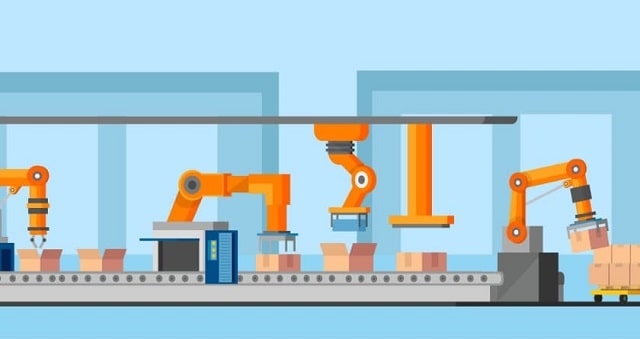
Streamlining logistics is a process that automates mundane tasks. For large eCommerce companies, this means using robotics and AI to streamline their processes. However, small and medium businesses may not have the budget to adopt such technology. In these cases, inventory scanner systems may be a better option. 

Earn Major Money Online Right Here Today

Managing Reverse Logistics

Managing reverse logistics is an increasing necessity in many industries. This process involves creating value for customers, products, and carriers. According to Remcoda, companies need to be mindful of their impact on these ecosystems to ensure they continue providing value to customers and businesses. Managing the process correctly can lead to significant benefits for companies and customers.

Reverse logistics involves tracking products throughout their life cycle and provides opportunities for supply chain optimization. It also helps businesses improve profitability by controlling supply chain expenditures. In addition, the inbound flow of returned products can be managed effectively by implementing a return policy and procedure. Such a policy will help businesses determine how to best use end-of-life products and may involve refurbishing or remanufacturing.

Importance Of Process Review

A process review is an important part of a business's strategic planning. It can help you identify your operations' weak spots and potential improvements. It can also reveal best practices. For example, a process review can be useful for new-hire training programs or activity flow mapping. It can also prove beneficial if a long-time supervisor leaves the company.

It can also serve as an opportunity for a strategic audit, leading to a logistics system redesign. It can help you align your logistics efforts with corporate needs and goals. The process can also help you formalize your strategy so that logistics considerations are included in your overall strategy formulation.

Importance Of Automating Mundane Tasks

Automating mundane tasks in logistics can increase efficiency and allow employees to focus on high-level tasks. For example, automating back-office processes helps companies track customer information and offer faster service. Automation also helps businesses minimize costs and improve ROI. Robotic process automation (RPA) automates repetitive tasks like order processing and waybill printing.

While many people associate automation with large robots on assembly lines and self-driving trucks, automation is often used to assist with smaller tasks. For example, tracking shipments is a tedious task prone to human error. With RPA, logistics companies can easily automate these routine tasks, resulting in reduced human error.

Importance of a TMS system

A TMS system is a powerful software tool that will allow you to streamline your logistics operations. Automating the necessary tasks will save you time. It will streamline the process of comparing rates and booking shipments, eliminating the need for human error that can result in mistakes. In addition, it will integrate with your ERP system, allowing you to view all your options on one screen.

Another important benefit of a TMS system is that it will allow you to manage and monitor your carriers' performance. Real-time tracking data provides the information you need to hold carriers accountable for their delivery times and keep your customers happy. It will also allow you to view the status of a shipment's arrival at its final destination and help you avoid delays due to traffic.

Importance Of Automating Order Forms

Automating order forms in the logistics sector can be very beneficial for many reasons. For starters, it can help streamline the process by reducing the time required for each step. This way, the process of fulfilling orders can be reduced from hours to minutes. It also helps improve the customer experience since there will be no delays and errors. Furthermore, it will help businesses improve customer satisfaction, visibility, and accessibility.

Another important benefit of automated order processing is the reduction of fulfillment costs. Automated order processing eliminates manual processes, including order entry and tracking. It also streamlines the process by automating tasks such as printing shipping labels and verifying orders. Automation will also save valuable time that would have otherwise been spent on the process.

Importance Of A Historical Database

Historical data is an important part of logistics and can help determine the current status of your supply chain and identify areas for improvement. It is also important for evaluating the overall performance of your logistics operation, and it can help you identify areas for future savings. If you can gather historical data from various sources, you will be better able to evaluate your logistics processes and identify opportunities for improvement.

Historical data can also help you plan your shipping strategy. For example, if you need to deliver products from a certain region to another, a historical database can help you model the costs of transporting the goods. This can help you determine the location of potential suppliers and distribution points to optimize costs. It can also help you know the effect of changing shipping rates on the costs of the goods.

How Robots Are Helping To Save The Planet

how robots help save planet

Our planet is in a perilous place. Earth is dealing with climate change, pollution, overflowing landfills, depleted fossil fuels, disease, animal extinctions, nuclear arms, and food scarcity on a large scale due to global industrialization and a population approaching 8 billion people. With climate change in particular, if we don't make major changes to our energy use and carbon footprints in the next few decades then we could do irreparable harm to the world.

The situation is dire indeed and the scientific community is looking at any and all possible solutions to our wide variety of planetary problems.

Luckily, robots, robotic technology, artificial intelligence, and machine learning are all increasingly effective tools to combat our planetary problems. Innovative robotic tech and machinery can be the key to saving our planet from serious imminent threats.

How Robotic Technology Can Help Protect The Planet

1. Reduction In Energy Use 

One of the biggest problems facing our planet is energy use and everything related to it. We are running out of fossil fuels (oil, gas, coal, etc) and our world's growing use of energy has been creating serious pollution and climate change. 

Robots and robotic technology can help to: 

- Reduce energy use with efficiency and AI
- Research and test newer sustainable forms of energy
- Refine existing forms of sustainable energy such as biofuel, electric, hydrogen, solar, and wind 

Visit Machine Vision Systems to learn more about how robotics can help to reduce our energy use, cut pollution, and improve sustainability.

2. More Humans Focused On Problem-Solving

With less humans doing mundane or tasks that can be automated, we can continue transitioning our focus to data, research, and solving our biggest global problems. If we have more minds focused on fixing our world's problems instead of doing manual labor or tedious tasks, we'll make faster advances in all areas.

3. More Robots And Less Employees Mean A Lower Corporate Carbon Footprint

Robots and Artificial Intelligence can help to replace unnecessary manual laborers or unskilled employees at your company. While that isn't always a win overall from an economic standpoint, from an environmental standpoint it is usually positive. Your company will then have a lower carbon footprint since there are fewer employees commuting to work and using your oil / gas / coal / heat / water / electricity. Robots don't need heat, water, room lighting, and they certainly don't have to add to the smog by commuting to work!

4. Every Little Bit Helps

Whether robots help moderately or massively to improve our planet, every little bit helps. Any modicum of pollution that can be prevented or research that can be conducted could be the different between peril and prosperity for the human race and every other life form. While we can't responsibly measure the exact benefit that robots will have on our planet's health, it's pretty safe to say that it will be significant enough to make a difference. Any improvement is better than none at all!

Robots Can Help To Power & Protect Our Prosperous Planet

Our planet is at a crossroads with growing environmental threats popping up each year. Every solution should be explored and utilized to the furthest extent to protect our world. Robots and robotic technologies are currently some of the most effective solutions to our problems, and will continue to be as technology advances over time.

The Lean Startup Life Media Network Newest Blog Posts: