Showing posts with label Debt. Show all posts

Climbing Out Of Tax Debt Resources And Techniques

climbing out tax debt resources

For millions of Americans, tax debt is a pressing concern that can lead to a great deal of financial and personal stress. Understanding the complexities of tax debt and exploring the options for resolving it are critical steps in regaining financial stability. From assessing the scope of your tax obligations to leveraging resources that aid in repayment, there are viable paths forward for those burdened by tax liabilities. Keep reading to discover strategies that can help you climb out of tax debt and restore your fiscal health. 

Tax Debt Resolution Services: When to Consider Professional Help 

When tax debt becomes overwhelming, enlisting the help of tax debt resolution services can be a wise decision. These firms specialize in negotiating with the IRS and can often secure better terms for payment plans or debt settlement. Professionals in this field are experienced in navigating the complexities of tax law and IRS procedures, providing much-needed expertise. 

Deciding when to seek professional assistance depends on the severity of the debt and the individual's comfort level in dealing with the IRS. Those with substantial debt or facing aggressive collection actions may find the expertise of a resolution service indispensable. Self-representation can sometimes lead to missed opportunities for debt reduction, especially if one is unaware of all available programs. 

In some cases, the decision to invest in professional help may be compared to other financial resolutions, such as selling junk cars for cash. Both decisions involve seeking external solutions to alleviate financial burdens, with the goal of creating a more sustainable financial future. 

Navigating IRS Payment Plans: A Path To Overcoming Tax Debt 

The IRS provides several types of payment plans to help taxpayers manage their debt. These plans give taxpayers the chance to pay their liabilities over time, rather than as a lump sum. The most common plans are installment agreements, which allow taxpayers to make monthly payments towards their debt. You can search for "tax settlement near me" to get professional help with your tax debt repayment. 

Short-term payment plans are available for those who can settle their debt in 180 days or less, while long-term payment plans can extend for several years. To apply, taxpayers need to provide detailed financial information to the IRS, which will then determine the feasibility of the proposed payment plan. It is important to make all payments on schedule once a payment plan is established. Missing payments can lead to default and the subsequent reinstatement of the full debt amount, along with accrued interest and penalties. Being upfront and realistic about one's ability to pay is crucial when setting up a payment plan with the IRS. 

Leveraging Tax Relief Programs: From Offers In Compromise To Forgiveness 

Tax relief programs are designed to alleviate the burden of large or unmanageable tax debts. One of the most known programs is the Offer in Compromise, which allows taxpayers to settle their debt for less than the full amount owed if they meet specific criteria. This program is available to those who can prove that paying the full debt would create a financial hardship. 

Penalty abatement is another form of relief that may remove certain penalties associated with tax debt. Qualifying for penalty abatement typically requires showing reasonable cause for failure to comply with tax laws, such as serious illness or natural disaster. Taxpayers who can demonstrate continuous effort to comply and resolve their debt are more likely to receive favorable consideration. 

The IRS also offers programs for specific groups, such as the Currently Not Collectible status, which may apply to taxpayers facing extreme economic hardship. Under this status, the IRS temporarily halts collection activities. However, interest continues to accrue, and the IRS will reevaluate the taxpayer's financial situation periodically. 

DIY Tax Debt Management: Strategies For Self-Directed Relief Efforts 

For those who prefer a hands-on approach, DIY tax debt management is a viable option. Educating oneself on tax law and IRS policies is the first step to effectively managing tax debt independently. The internet is replete with resources, including official IRS documentation, that can guide individuals through the process. 

Self-directed relief efforts include requesting installment agreements through the IRS online portal, applying for penalty abatement by submitting the appropriate forms, and even preparing an Offer in Compromise package oneself. These strategies require diligence and a methodical approach, but could save on professional service fees. 

Overall, the journey out of tax debt is filled with challenges but also possibilities. By understanding the nature of tax debt, considering IRS payment plans, leveraging tax relief programs, deciding whether or not to engage professional resolution services, and exploring self-directed management strategies, taxpayers can find a suitable approach to regaining financial equilibrium.

7 Top Tips for Dealing with Business Debt

company cash crisis top tips dealing with excessive business debt management

U.S. businesses have never owed more money. Our nation's businesses are staring down $6.3 trillion in debt. While holding some debt is crucial to growing your business, too much debt is a surefire way to go bankrupt. It is even tougher for companies to stay debt-free these days with inflation, a tight labor market, and supply chain disruptions.

But what happens if your business goes belly up? Or maybe you are just having a slow month, or slow few months? You need to handle your debt but have no idea how to pay back lenders when you have no money.

Dealing with excessive business debt isn't impossible, and in fact, isn't even very difficult if you know what you are doing. That is why today, we are bringing you our list of seven top tips for dealing with business debt. This can be overwhelming as a business owner who is already responsible for so many tasks. Hiring a lawyer such as https://wilkiepuchi.com/, will handle this process for you while representing your best interests to provide helpful solutions.

Let's get started on confronting and crushing your business debts.


1: Check Your Interest Rates

First and foremost, sit down and review your loans. Check and find out which loans have the highest interest rates, and then prioritize paying off those high-interest loans.

High-interest loans only serve to put you further and further in debt. If you are always stuck paying interest you will never make any payment on your principal balance.


2: Contact Your Lenders 

Creditors make their money from interest payments. So if you are not making payments, they are not making money. Call your lenders and explain your financial situation. Chances are, they will renegotiate your loan.

Renegotiating your loans usually involves discharging some debt or lowering your interest rates. 

Usually, lenders ask that you make fixed monthly payments in exchange for the lower interest rates.

If you can't renegotiate, try opening another account with a lower interest rate. You can then transfer your balance to the lower rate bearing account.


3: Tally Your Expenses

Nearly every business has excess expenses. From too many Friday lunches to excess technology, you need to prioritize your expenses when you are in debt. Make a list of all your costs and decide what's essential and what you can go without.

Take your "go without" costs and completely eliminate them. Don't worry about business perks until you can keep your business running.


4: Solidify Your Supplier Relationships

Your business needs to keep generating money to pay back creditors. You're in debt, but you can't just sell off everything and run for the hills, at least not if you want to keep your business running.

This means you'll need to keep a good relationship with your suppliers. Reach out and let suppliers know you might make late payments. Arrange a plan so that you can keep getting the materials you need to operate your business.


5: Set Some Goals

Goals are the great motivators. Set some goals for your clearing your debt. Decide how much you want to pay and when you want to pay it, and then stick to that goal. Write down your targets and if you achieve them to become debt free.

Make yourself beholden to your own best interests.


6: Factoring

Factoring refers to totaling your accounts receivable and selling the rights for a percentage of their total value. For instance, your clients might owe $5000, but you sell the rights for $4500. You are taking a loss but also getting a lump sum to help pay off creditors.

Never underestimate the value of cash when you are trying to pay off a large debt. Liquid capital is by far the easiest, quickest way to pay off your debt.


7: The Business Debt Last Resort: Bankruptcy

No one wants to file bankruptcy. The process is long, drawn-out, and painfully introspective. You're faced with your failures, be they your fault or someone else's mistake.

If you are filing bankruptcy then you are giving up the game. And that's okay. Fifty percent of business fail in their first five years. Bankruptcy exits so that if the worst should occur, you're not completely without help. There is a final way out of debt.

If you're filing bankruptcy, you are probably filing Chapter 7 liquidation. Chapter 7 bankruptcy is like hitting the reset switch. You're discharging all debts like unsecured personal loans, medical debt, and credit card debt.

Essentially, you're turning your business assets over to a bankruptcy trust who then sells the assets and goes after outstanding accounts, pays taxes, deals with creditors, etc.

However, there are some important things to know about Chapter 7 bankruptcy:


  • This bankruptcy won't discharge taxes owed.
  • Chapter 7 bankruptcy destroys your credit. Your score will dramatically drop and the bankruptcy stays on your credit report for up to 10 years; long after your score recovers. If your credit does take a hit, consider contacting a credit repair firm like Lexington law credit repair reviews.
  • However, Chapter 7 bankruptcy only harms your credit if you are personally liable for the business debt. Depending on your business structure, you can file Chapter 7 without hurting your credit score.
  • You can only file Chapter 7 once every 8 years (again, this varies depending on if you are personally filing bankruptcy or if your business entity files bankruptcy.
  • Chapter 7 rules vary state by state. You need to check your local regulations before making any decisions. Better yet, you need to consult a bankruptcy lawyer.
  • Not every business qualifies for Chapter 7. Again, consult with your bankruptcy attorney to see if you are even eligible to file.

Building Your Startup

Building a business is difficult. There is no shame in asking for some startup advice, especially if you are facing business debt. In fact, many entrepreneurs ask for help. So many, in fact, that we have dedicated an entire website to helping startups flourish.

If you are looking for startup advice, everything from boosting business with Instagram ads to maximizing your revenue, make sure to follow our blog! We'll keep you updated with the latest and greatest from the startup world.

Good Credit Loans 101: How To Borrow Better

good credit loans borrow better loan approval

You need money and you need it fast. It happens to everyone from time to time. If you have good credit score then you will be fine. 

Whether you need to buy a house or have fallen on hard times, most people need a loan at some point in their lives. Don't feel ashamed of it or avoid like the plague. 

You do need to know your options when it comes to what type of loan you need. Learning about credit and how to improve your score is also crucial. 

Want to learn how to boost your credit score and get a loan at a better rate? 

Read on to learn the best ways to borrow money through good credit loans 101. 

Good Credit Loans 101 

If you are seeking personal loans for good credit then first "good credit" needs a definition. The term gets thrown around a lot so it helps to have some exact numbers. 

The Motley Fool defines good credit as having a FICO score between 690 and 719. An excellent credit score is between 720 and 850. 

Credit scores get monitored by the three major credit bureaus in the US. These bureaus are Equifax, Transunion and Experian. 

The Balance says that there are many things you can do to improve your credit score. These include: 

- Paying all bills on time 
- Reduce credit card balances 
- Maintain old credit card accounts 
- Manage debt 
- Do not apply to more credit cards 
- Track credit reports 
- Lower credit score inquiries 

That last one is a little tricky. While you want to know your credit score, it can actually work against you to have your credit checked too often. Keep that in mind if you are looking for loans from many sources at once. 

Low Interest Credit Cards 

There are plenty of credit card companies that would love to approve you for a card. They are also happy to raise your credit limit or give you a loan. 

You can usually get at least one credit card regardless of your credit. 

Using a credit card responsibility is very important to building your credit score. Proving to the credit bureaus that you can borrow money and pay it back on time each month helps a lot. 

You can usually get at least a few thousand dollars out of each credit card. It's not advisable to take out too many credit cards, max them out or pay the smallest amount each month though. The interest rates can add up, even if you are using a great credit card. “Understand as well the implications of 0% APR introductory balances once the introductory period goes up. We see many folks that unfortunately need debt relief because the minimum payments are not manageable when the introductory period ends.” says Ben Tejes of Ascend Finance.

Bank Or Credit Union Loan 

Going to your local bank or credit union is an obvious choice for requesting a loan. You will need a decent or good credit score for personal loan approval at a bank. 

Banks and credit unions have strict rules when it comes to who they can approve for loans. Lending to high risk individuals can end up backfiring on them. 

This comes after big bank meltdowns and the mortgage crisis of 2008. Banks were approving too many risky loans and several of them didn't make it out alive to survive into 2024. 

Having a good credit rating will increase the amount they can loan you. It will at least get you approved for what you need. A great credit rating can improve the terms of the loan. These include interest rate, collateral and payment schedule. 

Private Lender 

Private lenders are individuals, companies, or non-banking financial institutions that lend money. They will still check your credit score and finances but they may be more lenient. 

In return for their leniency, they can charge much higher interest rates. They are private institutions with fewer regulations than banks and credit unions. 

Watch out for loan sharks. They can charge exorbitant levels of interest. 

Mortgages 

Getting a mortgage to buy a home is a whole other category of loans. But credit scores are still very important in the process. 

Buying a home is usually the most expensive decision a person makes in their life. 

Factors to consider when applying for a mortgage include: 

- 15 year or 30 year mortgage 
- Fixed or variable interest 
- Credit score 
- Earnings 
- Outstanding debts 
- Economy 
- Housing market 

The housing market is strong after recovering from the brink of disaster after the crash. 

At first they had to provide very low mortgage interest rates and incentives for home buyers. Now those low rates and incentives have dried up in a strong market. 

Having good credit can get you a lower interest rate. Even a fraction of a percentage point in interest makes a big difference. It can add up to tens of thousands of dollars over the course of a 15-30 year mortgage. 

Auto Loan 

Buying a car or truck is expensive. New vehicles can cost $20,000 - $50,000+ and even used cars can be very pricey. Most people can't afford to buy a vehicle with cash, so they need a loan. 

Many automotive dealerships advertise financing for even people with bad credit. That's not a guarantee though. You can get guaranteed financing or lower rates if you have better credit. 

The better your credit is, the more expensive the vehicle you can buy. You can also get reduced interest rates if your credit score is solid. 

Auto loan financing is often times tied to the economy along with supply and demand. The automotive market is strong now so low financing and 0% APR financing options are harder to find. 

Personal Loan 

You could always take the route of asking for a personal loan from a family member, friend or associate. Chances are they won't actually run your credit, but if you can prove that you do have good credit then it would help. 

People who know you have a basic grasp of your financial responsibility. You never know though so showing them concrete data on your finances can make a difference. 

If you prove that your credit score is strong, you could ask for your loan interest and payback date to have better terms. 

Better finances could even save a friend or family relationship. Enormous fights occur because of loans so anything you can do to avoid them is smart. 

Manage Your Money With Good Credit Loans

Getting the right loan and managing your finances is critical throughout your life. Learn from the experts to keep your credit score as high as possible. Learn more about good credit loans and improving your credit on the Lean Startup Life blog.

Equitable Distribution Of Debt In Divorce

equitable distribution debt divorce

Divorce is often likened to navigating through stormy waters, fraught with emotional turbulence and complex legal considerations, including debt resolution. While the division of assets tends to receive more attention, the equitable distribution of debt is equally significant and requires careful consideration. In this guide, we explore the concept of equitable distribution of debt in divorce, shedding light on its implications and providing insights for those embarking on this challenging journey. 

Understanding Equitable Distribution: What Does It Entail? 

In the realm of divorce proceedings, equitable distribution refers to the fair and just allocation of marital assets and liabilities between spouses. Unlike community property states, where marital property is divided equally, equitable distribution states take a more flexible approach, considering various factors to ensure a balanced outcome. When it comes to debt, equitable distribution entails assessing the nature of the liabilities incurred during the marriage and determining a fair division based on factors such as each spouse's financial circumstances, earning capacity, and contributions to the marital estate. 

Debt Resolution In Divorce: Navigating Complex Terrain 

1. Identifying Marital Debt: The first step in equitable distribution of debt is to identify all marital debts incurred during the marriage. This may include mortgage loans, credit card debt, personal loans, and other financial obligations accrued jointly by both spouses. 

2. Assessing Financial Responsibility: Once marital debts are identified, the next crucial task is to assess each spouse's financial responsibility for these obligations. This involves examining factors such as who incurred the debt, the purpose of the debt, and each spouse's ability to repay. 

3. Considering Contribution to Debt: In equitable distribution states, the contribution of each spouse to the accumulation of debt is a key consideration. For example, if one spouse primarily incurred debt for non-essential expenses without the knowledge or consent of the other, the court may allocate a larger share of the debt to that spouse. 

4. Exploring Debt Resolution Options: As part of the divorce process, couples may explore various debt resolution options to address outstanding liabilities. This could involve negotiating a settlement agreement to divide debts equitably or seeking court intervention to adjudicate unresolved issues. 

Equitable Distribution Across Different States: What You Need To Know 

It is essential to note that the approach to equitable distribution of debt may vary depending on the state where the divorce takes place. While some states adhere strictly to equitable distribution principles, others may apply community property laws or adopt hybrid approaches. Understanding the laws and guidelines specific to your state is crucial for navigating the equitable distribution process effectively. 

Seeking Professional Guidance: The Role Of Legal Counsel 

Navigating the equitable distribution of debt in divorce can be a complex and daunting task, particularly amidst the emotional strain of ending a marriage. Seeking guidance from a qualified family law attorney or financial advisor can provide invaluable support and assistance throughout the process. These professionals can offer personalized advice, help you understand your rights and obligations, and advocate on your behalf to achieve a fair and equitable resolution. 

Conclusion: Charting A Course For Financial Stability 

In the tumultuous seas of divorce, the equitable distribution of debt serves as a compass, guiding couples towards a fair and balanced resolution of financial matters. By understanding the principles of equitable distribution, considering factors such as financial responsibility and contribution to debt, and seeking professional guidance when needed, divorcing couples can navigate this challenging terrain with greater clarity and confidence. Through careful deliberation and negotiation, they can chart a course towards financial stability and begin the journey towards a brighter future beyond divorce.

How To Use A Debt Consolidation Loan To Pay Off Debt Faster

how to use debt consolidation loan pay off debts faster

Debt can weigh heavily on your shoulders, and when you are managing multiple loans and credit card balances simultaneously, it can quickly become overwhelming. The good news is that there is a powerful tool at your disposal: a debt consolidation loan. By using a debt consolidation loan online, you can streamline your debt and make the journey to financial freedom a lot smoother. 

In this article, we will explore how to use a debt consolidation loan to pay off debt faster, step by step. 

Understanding Debt Consolidation 

Before diving into the specifics of using a debt consolidation loan online, it is essential to grasp the concept behind it. Debt consolidation is the process of taking out a single loan to pay off multiple debts. This loan usually comes with a lower interest rate than your existing debts, making it more manageable. By consolidating your debts, you simplify your finances and reduce the total interest you will pay over time. 

Step 1: Assess Your Debt 

The initial phase of utilizing a debt consolidation loan involves evaluating your present debt circumstances. Create a record of all your existing debts, encompassing credit card debts, personal loans, and any other outstanding obligations. Document the interest rates, minimum monthly payments, and total outstanding balances for each one. 

Step 2: Check Your Credit Score 

Your credit score plays a significant role in your ability to secure a debt consolidation loan with a favorable interest rate. Before applying, it is crucial to check your credit score. Lenders typically offer better terms to borrowers with good credit. If your credit rating requires enhancement, make efforts to elevate it by ensuring punctual bill payments and decreasing credit card debts. 

Step 3: Research Lenders 

Now that you have a clear picture of your debt and credit score, it is time to research lenders offering debt consolidation loans online. Look for reputable institutions and compare their interest rates, loan terms, and eligibility requirements. Be sure to choose a lender that suits your financial needs and goals. 

Step 4: Apply For The Loan 

Once you have chosen a lender, complete the application process. Most lenders offer online applications, making it convenient and accessible. During the application, you will provide information about your current debts, income, and employment. The lender will review your application and creditworthiness to determine your eligibility. 

Step 5: Use The Loan Wisely 

If you are approved for a debt consolidation loan, it is essential to use the funds wisely. Pay off your existing debts in full, and resist the temptation to accumulate more debt. Remember that the goal is to simplify your finances and reduce your overall debt burden. 

Step 6: Create A Budget 

With your debts consolidated into one loan, it is an ideal time to create a budget. A well-planned budget will help you manage your finances effectively and avoid falling back into debt. Allocate a portion of your income to cover your loan payments and prioritize paying down the principal amount to reduce interest costs further. 

Step 7: Monitor Your Progress 

As you make regular payments on your debt consolidation loan, keep a close eye on your progress. Watch your debt balances decrease and your credit score improve. Celebrate your milestones along the way, as it will motivate you to stay on track. 

Step 8: Avoid Accumulating New Debt 

One of the most critical aspects of using a debt consolidation loan is to avoid accumulating new debt while paying off your existing obligations. It is easy to fall back into old spending habits, but discipline is key to your financial success. 

Conclusion 

Using a debt consolidation loan online can be a powerful strategy to pay off debt faster and regain control of your finances. By assessing your debt, improving your credit score, researching lenders, and following these steps, you can simplify your financial life and save money on interest payments. Remember that a debt consolidation loan is a tool, and how you use it will determine your success. Make a plan, stick to your budget, and watch your debt melt away. It is a journey to financial freedom that is well worth the effort.

How To Get A Salary Advance Loan Approval

how to get salary advance loan approval fast cash

What Is A Salary Advance Loan? 

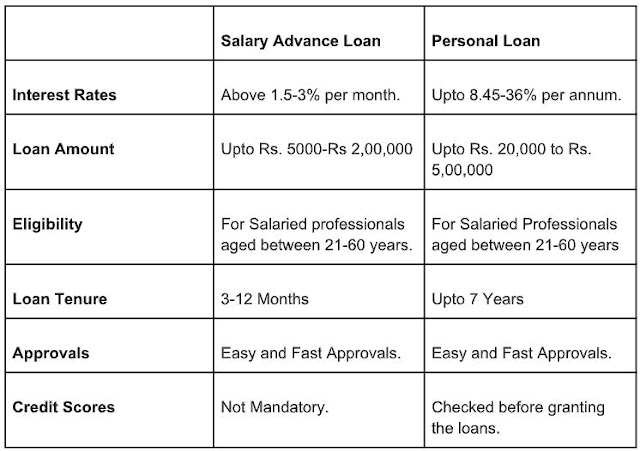
Salary advance loans are temporary solutions for salaried individuals seeking out credits for the short term due to immediate financial need. But the interest rates for this particular loan type is usually high and is calculated either on a monthly or daily basis, depending on the lenders. You have to be careful which lender you choose to avoid exorbitant interest rates that can get out of control fast.  

GET US AND CANADA LOANS APPROVED FAST HERE

People with even average credit scores can also apply for the same. However, because of their high-risk nature and fast processing time, these loans have high APR, and the repayment terms are also in favor of the lenders. 


Top Applications For Salary Advance Loans

Many applications or companies are providing Salary Advance Loans. 

● Early Salary 
● Loan Tap 
● Quick Credit 
● Cash Kumar 
● Credit Bazaar 
● Flex Salary 
● Payme India 

All of these applications provide different interest rates for loans on salaries. 

A Salary Advance Loan Calculator is also used to calculate the estimated interest amount based on loan tenure and loan amount. Borrowers also can use the calculator to calculate their personal, house and other loans. 

Differences Between Salary Advance Loans And Personal Loans 

Salary is remuneration provided to employees every month for performing their roles in the company. When employees apply for a loan against a salary account, they literally promise the lender to pay off their debt on the next credit of their salary. Advance payment of salary is when the company obligates their employees by crediting the salary in advance so that the borrower can meet the current contingencies. Personal loan is again the loan provided to salaried people, against a mortgage other than salary account.  

how to get salary advance loan approval

Eligibility For Availability Of Advance Salary Loans 

Lenders do not go into the details for past credit histories while providing Advance Salary Loans. But the borrower needs to meet some conditions to be eligible for the loan type. 

● · Borrower’s Age must be or above 21 years. 

● · The net salary or profits from the business must at least draw: 

- Rs.40,000 for Mumbai, Hyderabad, Chennai, Thane or Delhi residents. 
- Rs.35,000 for Pune, Kolkata and Ahmedabad residents. 
- Rs.30,000 for any other city resident. 

● · The borrower must have an active and operating Savings Bank Account. 

● · They need to be residents of India. 

● · They need to have all the documents in hand. 

Documents Required For Salary Loans And Advances 

● Photogenic Identity Proof: Driver’s license, voter ID, Passport or Pan Card. 

● Address Proof: Internet or Telephone Bill, Driver’s License, Certified Employer Letter, Ration Card, House Deed, Passport. 

● Signature Proof: Bank Verification Letter, Pan Card, along with some signatures. 

● Age Proof: PAN Card, Driver’s License, Birth Certificate, Passport. 

● Passport Sized Photograph: Keep Around 4-5 in hand with you while applying. 

● Current and Previous Employment: Confirmations, Transfer or Appointment Letters. 

● Financial Statement: Pay Slips. ITS Report or audited financial reports for salaried person 

● Employment Proof: Business Visiting Card or Employee ID. 

● Bank Statements: Salary Credited Bank Statement for last three months. 

How To Get An Advance Salary Loan Approved 

The borrower needs to follow some simple steps to apply for advance salary loans. These steps include: 

· Filling out the application form. The form needs to be filled out with some required personal information and income details. 

· Wait for the approvals after filling out and submitting the forms. 

· Collect the essentials and required documents for the KYC process. 

· After the verification of documents, the amount is credited to the borrower’s account. 

Benefits And Features Of Salary Advance Loans 

Zero Or Minimal Closure Charges: Borrowers have an open option to close their loans by paying the amount earlier. This will not levy any penalties or additional charges on them. 

Part Prepayment facilities: Borrower can pay out their loan amount either in EMI’s or full amount at once, depending on the lender. 

Online Account Access: Lenders offer the facility to keep a real-time check on the finances they owe and the total amount they need to pay in total at the end. 

Financial Emergencies: You can sort out the financial emergency issues with advance salary loan options, as they have a flexible time repayment period. 

Insurance Cover: Some lenders will also provide credit shield facilities and personal accident cover additionally with the loans. 

Tips For When To Borrow Money On A Salary Advance Loan 

Salary Advance Loans have comparatively higher interest rates. These are thus ideal only for wants or some financial emergencies. Going for the loan type to cover leisure expenses is strictly not advised. 

There are certain financial crunches where employees can apply for the same. These include: 

● Unexpected Financial Setback 
● Bereavement Costs 
● Family Emergencies 
● Health Emergency 
● Payment of bills not covered under insurance 

These are typically not an ideal option for daily or regular payments. Making this a habit will put the borrower in more debt, as he might be ending up paying triple the amount he has borrowed every time. 

Frequently Asked Questions (FAQs) About Advanced Salary Loans

● Is an advance loan on salary taxable or not? 

The amount received under the advance salary loan is taxed in the yearly receipts of the employees. 

● What is the advance salary loan interest rate? 

The interest rate for this particular loan type varies between 1.5% to 3%. 

● Is an advance salary loan accepted without a credit report? 

Credit Scores and reports are not mandatory while applying for salary advance loans. 

● Can I use an application to deposit a cheque against an advance salary loan? 

The borrower is provided with flexible repayment options. They can pay back the amount with applications or websites also. 

Keep these tips in mind if you are seeking a salary advance loan approval fast!

Forbrukslån With A High Credit Score

consumer loans approved with high credit score

Credit scores measure one’s financial health and inform lenders how responsibly you use your finances. A high credit score opens the door to negotiating the best interest terms with moneylenders. 

Understanding the essence of this concept and its potential is significant for borrowers. There are numerous steps to take beforehand to ensure a better deal. There are shortcuts to improving your eligibility as well. By thinking long-term and gradually boosting your rating, you will be eligible for any consumer loan. 

The helpful advice found below will pave your way to negotiating favorable terms on loans and credit scores. 

Factors That Affect The Score 

Credit scores are affected by various factors, which indicate the ability of borrowers to pay and whether they can be trusted with a loan. These scores are calculated by credit bureaus and banks, which use the information about users. While the factors taken into consideration are many, the most important ones are debt, income, payment history, and age. 

Moreover, your payment history speaks volumes about your previous consumption of credits, debt collection, payment remarks, and incurred reminders. It also informs lenders about your history of paying bills on time. Frequent relocation is considered negative, as it indicates income instability. 

The place where you live is another important factor, as the ability of borrowers to pay installments is influenced by their living expenses. For instance, living in Oslo is costlier than living in Hamar. Another overlooked factor is the affiliation with organizations and companies. Assuming you are a co-owner or board member of a company with a low credit score, this will affect your personal score too. 

Furthermore, your financial rating is of vital importance for consumer loans, as it not only influences the approval process by also the provided interest terms. While poor credit scores may lead to rejected applications, most individuals have sufficiently good scores to get approval. People whose scores are low get worse interest terms than those whose scores are high. 

The effect interest terms have on consumer loan cost is major. Nominal interest rates can be approximately 7% on the low end of the spectrum and 20% on the high end. It is of the utmost importance to sammenlign forbrukslÃ¥n before signing one. The terms you will be offered depend on how late you are with the bills, whether you owe money to credit companies, and your life in general. 

how to increase credit score get loans approved

Take Action Beforehand 

By getting to know the factors that influence credit scores, you can take action to improve yours. The higher your rating, the better the chance for getting favorable interest terms. Getting rid of small debts is the first action to take. For instance, if you have a few more installments left to pay on loan or owe an affordable sum to a credit card company, you should eliminate these small debts before submitting documents for a new one. 

Another thing to inform yourself about is the presence of any recent increases in income. Credit information companies aren’t always up-to-date with this info. Such increases in income might come from a hobby business or renting out a home. These incomes have a positive influence on scores, provided they are documented. Social security benefits are classified as income too. 

Think Long-Term 

Another action to take is thinking long-term about your payment history. If hoping for better interest terms, you should cover your utility bills regularly and continue in the same direction for years. It doesn’t take too much time to make improvements, as banks appreciate when individuals make positive changes. 

In addition, individuals who are diligent about their payment history get better interest rates not only on consumer loans but mortgages and car loans too. By not paying attention to your payment history, negative consequences will affect other aspects of life besides banks’ operations. Nowadays, many Norwegians experience struggles to get a mobile subscription because of lousy credit scores. 

Consider Other Measures 

Loan seekers usually need the money very quickly. Hence, most of them have neither energy nor time to improve their credit ratings. There are, however, many opportunities for getting better interest terms that apply to people with both good and bad scores. For instance, the borrowing process can be conducted with either a cohabitant or spouse. Read further for useful info on co-borrowers and liability. 

The role of co-borrowers is to improve the likelihood of having the loan granted. Nevertheless, you should decide how tax deduction for a debt interest is going to be distributed. You and your co-borrower will share the responsibility of paying back the installments. 

Limit Your New Credit Requests 

Two types of inquiries can be made into one’s credit history, known as soft and hard inquiries. Soft inquiries involve checking your own score or giving permission to your employer to check it. Such checks can also be performed by financial institutions and credit card companies. These inquiries will not have any adverse effect on your rating. 

Hard inquiries include mortgage, auto loan, or credit card applications. If any of these are performed in the short term, they can cause score damage. Banks could interpret these inquiries as a sign of coping with financial difficulties, which means greater risk. Therefore, you must avoid applying for new loans for at least a while. 

Keep Your Old Accounts Open 

The age-of-credit aspect of your score is focused on how long your credit accounts have been open. The older your credit age, the more appealing you seem to lenders. If you have old accounts, don’t close them. Although the history of these accounts would remain on your report, closing them would cost you a few points off your score. 

Anyhow, collection accounts and charge-offs should be resolved by getting caught up with missed payments and creating a plan to handle future payments. Negative account info and bankruptcies can remain on your history for ten years. 

Final Thoughts - Credit Conclusion

Work on your rating continuously instead of expecting miracles at the last minute. Your financial health is vital to banks and other lenders! Keep monitoring and improving your credit score to get favorable conditions on consumer loans you can leverage.

How To Get Mini Cash Loans Approved Online

mini cash loans approved online borrower guide quick approval

What Are Mini Cash Loans? 

- A mini-cash loan is a small cash loan, provided within a short repayment period of up to 6 months. 

-A CIBIL score of at least 630+ is preferable for a mini cash loan approval. 

Below are some basic features of a mini-cash loan: 

1. Quick approval: Borrowers who apply for a mini-cash loan can get instant approval within 24 hours. 

2. Quick Approval: Once approved, the mini-credit can be transferred to your bank account in just 48 hours or less if your loan is not denied

3. Digital Procedure: Take a mini cash loan in India in minutes by simply applying online or downloading our application. 

4. Minimal documentation. Another feature of the mini cash loan is that only a few publicly available documents are required for the application process. 

Features Of Mini Cash Online Loans In India 

Interest Rate: High interest rate--above 20% for these personal loans 

Loan Amount: 1000–2,00,000 

Eligibility Age: Salaried Individuals- 21 years and above Self employed individuals—21 years and above 

Loan Tenure: Short duration 

Instant Approval: With minimum required documents 100% online 24 hours 

Quick Disbursement: Transferred in accounts Less than or in 48 hours 

Other Eligibility Factors: Indian citizenship Regular income CIBIL score 


How To Get Mini Cash Loan 

Applying for an instant mini cash loan online. You just need to follow a 3-step procedure, as below: 

Visit our website, choose among list 

You will be redirected to the application form 

Submit the form and wait for verification. Once approved, file the loan application. 

After filling, upload all the requested documents and complete your KYC. For quick verification and instant approval, it is advisable to opt for 'Net Banking' verification. 

If approved, you will get the loan amount into your account within a few hours. 

Apply Now for your fast personal loan approval

Tips On Getting Mini Cash Loan Online In India Quickly 

People can take out mini-credits in minutes online with quick approval and disbursement. 

If you have all the necessary documents at hand, you can get the mini-credit in cash just 2 days after approval. 

Never use a mini-credit for unreasonable expenses such as buying gifts, tasty food, extra clothes. 

Since interest rates can be high, These loans should be used for your needs, but not for idle desires. 

Compare through our site than only borrow money. 

Benefits Of A Mini Cash Loan Online 

- Unsecured personal loans 
- Minimal documentation 
- Same-day approval 
- No hidden charges
- Anytime credit 
- Pay interest on usage 
- Flexible repayments 

The eligibility,documents needed, tenure, age, purpose of mini cash loans are all essential for lenders and borrowers.

Frequently Asked Questions (FAQ) About Indian Mini Cash Loans

1. As a salaried individual, am I eligible to get a mini cash loan? 

2. What is the loan disbursal medium? 

3. How can I get a mini cash loan instantly? 

4. Is there a credit check done for a mini cash loan? 

5. Can I repay my loan early? 

Read below for the answers and insights to your miniature loan questions.

How To Get a Fast Mini Cash Loan Online in India? 

If you are a salaried employee and have an overdraft bill to be cleared, then why not get instant mini cash loans online within an hour? 

There are possibilities when an immediate requirement for money or funds can disturb your monthly budget schedule. This deficit is usually not for a huge crunch, just a small amount which might sometimes make it difficult to overcome the situations. You can easily fulfil these monetary commitments with a mini cash loan online. 

These mini cash loans give you the option to get instant approvals if you meet all the requirements for eligibility criteria. Money from these loans is disbursed in your bank accounts only within 24 hours of the verification process for borrowers

What Are Mini Cash Loans? 

Borrowers now have an easy option to go for online loan mini cash, and the minimum amount for it is Rs. 1000 to Rs. 2,00,000. These are available at easy verification and are the best alternates for delayed salaried employees to meet urgent needs. 

Instant Mini Cash Loans Online have a short repayment period, and you need to clear them out within six months, preferably. The borrower also needs to consider their CIBIL scores for uninterrupted approvals. High Scores assures easy approvals, and at least a 630+ score is required for instant mini cash loans. 

What Are The Basic Features Of Mini Cash Loans? 

Same Day Approvals: For Mini Cash loans, you need to meet some requirements for approvals. If you have met all these criteria, you will get easy approvals for your loans the same day or within a few hours only. 

Fast Disbursal: Once all the documents and other requirements are met and approved, the loan amount will be disbursed in your bank accounts in even less than 48 hours. 

Digital Procedure: Get your mini cash loan in India approved within a few minutes through online platforms by simply downloading the applications. 

Minimal Documentation: Another basic yet essential feature of a mini cash loan is submitting only a few documents for approvals. These are easily publicly available, making the procedure easier for you. 

How To Get A Mini Cash Loan 

Application for a Mini Cash loan online is an easy process. All you need to do is follow these three steps for online application procedure to get over cash crunches: 

1. Visit Mini Cash Loan Online website and select the desired loan type from the given list. 

2. After making the selections, the website will direct you to Application Forms. 

3. Please fill out the form and submit it instantly. Wait for a few minutes to get the verification done. 

After this, fill out the online loan applications. After completing the procedure and submitting all the mentioned documents, you need to complete the process for KYC. If you want to get instant approvals and verifications, our team advise you to go for Net Banking Verifications. When the procedure is completed and the loan is approved, you will get the amount debited in your bank accounts within a few hours. Apply Now! 

Tips On Getting Mini Cash Loan Online In India Quickly: 

Keep all your essential documents at hand. Submit them as per the requirements and get your loan approved and debited only within 48 hours. 

Mini Credit Options must not be preferred for unreasonable or discretionary expenses. These include expenses on food, shopping, gifts or for any other leisure purposes. 

Mini Loan Option is to meet the needs and not to cover your wants. The reason for the same is their high interest rates, which might increase your debt amount in the future. 

Compare the option provided by Mini Cash Loan Online to finalize the loan type ideal for your needs. 

Benefits of Mini Cash Loan Online: 

Unsecured Personal Loans: For Mini Cash Loans, you need not pledge your assets, be it property, gold or anything else to avail the loan. 

Minimal Documentation: Instant mini cash loan online only demands a few essential documents. These are your Identity Cards, Address and Income Proof only. 

Same-Day Approval: Get your loans approved the same day within a few hours. Mini Cash Loan Online will not take much of your time, and the app is available for both App Store and Play Store. 

No Hidden Charges: There are no hidden charges associated with this loan type. 

Anytime Credit: Mini Cash Loan is accessible anytime and anywhere only with a few clicks. All you need to do is download the app and fill out the forms. 

Pay Interest on Usage: If the funds are not used from your account, you need not pay the interest charges. Policy for the company thus says Spend and Pay. 

Flexible Repayments: You can pay back the loans with a minimum amount. 

The best feature of Mini Cash Loan Online is that you can repay the loan amount with flexible repayment options. 

Final Thoughts On Mini Cash Loans From India 

Meet your immediate monetary requirements with Mini Cash Loans with easy approvals and verification processes. All you need to gather are your identity proofs, last 3-month payslips, PAN Card, Utility bills, applicants’ photos and net banking verifications. Apply for a loan, get easy verifications and clear out your debts for a while. 

FAQs: 

Being a Salaried Individual, am I eligible for the loan type? 

Every Indian salaried individual beyond 21 years and who have a monthly income of a minimum of Rs.8000/- can apply for an instant mini cash loan. 

What is the medium for loan amount disbursement? 

The website will ask you to fill out your bank details to debit the amount. 

Can I repay the loan amount earlier than the given time? 

A Mini Cash Loan Online provides you with flexible payment options. This says that you can repay the loan as per your feasibility. In case you do not have sufficient funds, you can pay the minimum amount for EMI’s.

Pros And Cons Of Car Title Loans - Lender Leverage

pros cons car title loans

Life is expensive, even if you run a lean startup, bootstrap a business, or work as a frugal entrepreneur. No matter how well you plan your budgeting, emergency expenses are inevitable. So if you aren’t well prepared with enough extra cash saved up to handle it, you may be compelled to seek a helping hand. While we all try to avoid it, taking out a loan is sometimes the temporary or long-term solution we need while we get our finances in order. There are many different types of loans available though, so which lender option do you opt for? 

Car Title Loans To The Rescue?

In such situations, applying for car title loans may the best way to acquire funds soon enough to take care of your emergency. But before considering a title loan, it is vital that you understand what defines this type of loan. While this specific loan uses your vehicle as security for a loan, it also has its pros and cons. You need to do your research and due diligence before selecting a car title loan.

Car title loans have advantages and disadvantages like anything else. Let’s delve further into the pros and cons of car title loans. 

Why You Should Go for a Car Title Loan

With car title loans, you use your car as an indemnity against the amount you’re borrowing. Yet you get to have the cash you need, keep on using your car, and when you have the agreed installments, you repay the loan comfortably every month. It's a lender agreement that provides simplicity and convenience in short time if needed. 

Pros Of Car Title Loans

1. No Credit Checks 

The reason why car title loans attract many people is that it is easier to get a loan. Most title loan lending firms do not check your credit history, and they can approve your request even if you have bad credit. 

2. Fast Loan Approvals 

Once approved, you can receive your car title loan very quickly. In many circumstances, you simply submit your application and receive the funds within 24 hours, unlike standard loans. The loan is amount is often less than your vehicle’s value, which helps the lender if it appears that you are unable to pay off your loan. 

3. Easy Access 

Car title loans earn their popularity because they are easy to access. The paperwork is simple and swift, and you can do it from the comfort of your home, school, or work. With a computer and reliable internet, you can fill out your loan application form and submit a car title loan within a few minutes. And you don't have to wait for too long to get approved. The best part is that you'll receive funds directly into your account. 

4. Fair Interest Rates 

This is one of the principal advantages of car title loans. These collateral loans have low and flexible interest rates if you compare them with other loans. This is because lenders are regulated by the state and will only charge you interests as the law stipulates. As a consumer, you are well protected by law against extortion. 

5. Minimum Loan Requirements 

Car title loan requirements are very simple and minimal. Most times, the loaning company will ask for your ID, car title, and proof of identity, residence, and income only. Your car should be at least ten years old and have a valid name and title. 

Why You Should Be Cautious When Taking Car Title Loans

While taking a car title loan may seem an excellent idea of settling your emergency expenses, you should know that it also comes with some drawbacks. So before you give it a thought, check out the cons of car title loans below. 

Cons Of A Car Title Loan

1. The Possibility Of Car Repossession 

If you can no longer manage to remit payment for your car title loan, the lender can repossess your vehicle and other belongings. However what they can take depends on the laws where you live, so make sure you educate yourself on Massachusetts Car Repossession Law if you live or work in MA. 

Some loan companies allow you to roll over your loan into a new one, causing you to add extra interest and fees to the rolled-over amount. Imagine adding more money to your already defaulted loan. This will plunge you deeper into debt. As your interest compounds, you will lose your car because the lending institution will want to get back the money you borrowed. This also means you will have to pay much more to get your vehicle back from repo. 

2. High Fees 

When perusing your contract, be cautious about the hidden fees some lenders hide in their fine print. These costs include credit insurance, repossession fees due to default, and more. The first thing you do before signing your contract is to check the fine print. Let your lender clarify to you the total cost of your loan and APR. This will help you to compare with other firms to find one with the best offer. 

3. Lending Institutions Place A Lien On Your Car’s Title 

After handing in your car's title, your lender will place a lien on it. The lien will then be recorded by the state motor vehicle department. This means you won't be able to get another car title loan until you fully repay the previous one. 

4. Short Repayment Periods 

Some loan firms want borrowers to repay their car title loans within a short time, say six months to two years. This may inconvenience you if you can’t manage to pay it back on time. This will also attract late fees and worsen your already bad situation. That is why you need to research more to compare terms and fees from different lenders. 

5. Aggressive Loan Collection Tactics 

Some lenders apply unacceptable loan collection tactics when you default or delay your payment. Since they have your address, phone number, the address and phone numbers of your references, and your employment address, they are likely to contact your references and employers to collect payment. 

The best thing to do to avoid this is to understand the state laws governing loan collection methods. Your state may have taken stringent measures to prevent certain collection methods from being used by lenders. Vet different lenders to choose one that doesn’t follow such practices. 

Title Loan Take Away 

Requesting car title loans comes with its benefits and disadvantages. While you’ll receive your loan without much hassle, you may encounter high fees and interests if you are not careful. Before deciding to sign up with a lender, do more research for less expensive options available. Understand their terms and ask them about the APR and loan fees. Know what you are getting into first before deciding for yourself what the best loan option is!

The Lean Startup Life Media Network Newest Blog Posts: