Showing posts with label Legal. Show all posts

What Is Considered Aggravated Assault In Georgia?

what is considered aggravated assault legal case


Key Takeaways

  • Georgia law defines aggravated assault separately from simple assault, emphasizing more serious threats or injuries.
  • Aggravated assault can involve the use of weapons, intent to commit a serious crime, or actions that are likely to cause serious harm.
  • Convictions can result in long prison sentences, high fines, and permanent criminal records.
  • Understanding legal options and possible defenses is crucial for anyone charged with aggravated assault.


Table of Contents

  1. Definition of Aggravated Assault Under Georgia Law
  2. Key Elements of Aggravated Assault
  3. Common Scenarios and Examples
  4. Penalties and Sentencing
  5. Possible Defenses Against Aggravated Assault Charges
  6. Conclusion


If you have questions about criminal charges in Georgia, especially when facing the force of aggravated assault allegations, understanding the state’s definitions and legal nuances is essential. Whether you are a concerned citizen or have been affected directly, consulting with a skilled Wilmington Island assault and battery lawyer can be a crucial first step in navigating your options and rights.

Aggravated assault differs significantly from simple assault in Georgia law. The penalties are more severe, and the impact on your record can be lasting. Learning what behaviors constitute aggravated assault, the elements prosecutors must prove, and the defenses that might be available can help individuals avoid costly legal missteps and better protect themselves.

Understanding the differences between assault charges is important not only for legal defense but also for community awareness and safety. In many cases, understanding your rights and the law’s expectations could prevent escalation and unnecessary harm.

Anyone facing such charges or those wishing to be more informed on this critical topic should take careful note of the legal details that follow, as Georgia’s aggravated assault laws are specific and strictly enforced.


Definition of Aggravated Assault Under Georgia Law

Georgia Code § 16-5-21 defines aggravated assault as an assault committed with the intent to murder, rape, or rob, or with a deadly weapon or any object that can result in serious injury. It also includes the act of discharging a firearm from within a motor vehicle toward a person, without legal justification. The distinction between aggravated and simple assault is clear: the presence of a weapon, severe intent, or a high probability of causing great harm escalates the offense to aggravated assault.


Key Elements of Aggravated Assault

For an act to be considered aggravated assault in Georgia, certain elements must be proven. First, there must be an overt act or threat intended to cause another person a reasonable fear of violent injury. Second, the method or context must involve a deadly weapon, an item that could be used as a weapon, or actions aimed at committing another severe offense, such as robbery or rape. Finally, the defendant must act intentionally, not merely carelessly or recklessly.


Common Scenarios and Examples

Aggravated assault charges can arise in a broad range of situations. Examples include striking or threatening someone with a gun, using a knife in a fight, assaulting someone during a burglary, or shooting from a car at another person. Even the use of a blunt instrument with the intent to inflict serious injury could lead to aggravated assault charges.

Other scenarios may not involve traditional weapons. For example, attempting to strangle someone or committing assault while trying to kidnap or sexually assault another person can fit the definition. What elevates these from simple assault is either the means used or the gravity of the underlying intent.


Penalties and Sentencing

The penalties for aggravated assault in Georgia are severe. Upon conviction, individuals may face imprisonment ranging from one to twenty years, hefty fines, probation, and mandatory anger management or counseling programs. The severity of the sentence can depend on whether the victim was a police officer, an elderly person, or a child. Prior criminal history, use of a firearm, or intent to commit another felony are all aggravating factors that may increase sentencing.

Being convicted of aggravated assault can also have long-term consequences, such as loss of firearm rights, difficulties finding employment, and restrictions on housing options.


Possible Defenses Against Aggravated Assault Charges

There are several defenses that can be raised if charged with aggravated assault. One of the most common is self-defense, which applies if the accused feared for their life or the safety of another and reacted with an appropriate level of force. Other defenses include lack of intent to harm, mistaken identity, and the absence of a deadly weapon. In some circumstances, the alleged weapon may not legally qualify as dangerous, or evidence of intent may be lacking.

It is crucial to contact a qualified criminal defense attorney if accusations of aggravated assault arise. An experienced legal professional can review the case details, assess the strength of the prosecution's evidence, and develop a strategy to challenge the charges or negotiate a reduction.


Conclusion

Aggravated assault in Georgia is a complex legal matter with significant consequences. Knowing how the law defines aggravated assault, the behaviors and circumstances that lead to such charges, and what defenses may apply can make a dramatic difference in the outcome of a criminal case.

Warning Signs Of Financial Abuse In Georgia Assisted Living Facilities

warning signs financial abuse assisted living facility

Key Takeaways

  • Financial abuse in assisted living facilities is often hidden and may go unnoticed until significant harm occurs.
  • Warning signs such as unusual transactions, missing belongings, or sudden legal changes should never be ignored.
  • Regular monitoring and open communication are essential in protecting vulnerable seniors.
  • Legal support from a nursing home financial abuse attorney in Atlanta can help families respond effectively and protect their loved ones’ rights.
  • Early detection and swift action are critical in preventing long-term financial and emotional damage. 

Making the decision to place a loved one in an assisted living facility is never taken lightly. Trusting an institution to care for a family member means expecting compassion, security, and dignity. Unfortunately, cases of financial abuse persist and often go unnoticed until significant harm has occurred. Recognizing and understanding the warning signs is a crucial step toward protecting vulnerable seniors from exploitation. If you need guidance or legal assistance, consulting a qualified nursing home financial abuse attorney in Atlanta can help you navigate these challenging circumstances.

Financial abuse in assisted living facilities can take many forms, including unauthorized withdrawals, mismanagement of funds, or coercion to alter legal documents. Often, offenders exploit a resident’s trust and dependence, using subtle techniques that can easily go unnoticed by family members. Staying informed about how this abuse happens is essential for any family with a loved one living in such a facility.

The emotional toll and financial consequences of elder abuse are profound. Residents often experience loss of savings, increased anxiety, or isolation when trust is broken. By acting quickly and remaining vigilant, families and support networks can prevent long-term damage and ensure that loved ones receive the respectful care they deserve.

Understanding Financial Abuse in Assisted Living Facilities

Financial abuse involves the improper or unauthorized use of an elderly person’s funds, property, or assets. In assisted living communities, this could include a caregiver siphoning funds from a resident's account or persuading them to sign over property. Family involvement and regular oversight are essential, as signs of exploitation can be subtle and develop gradually over time.

Common Indicators of Financial Exploitation

Early recognition is the most effective defense against financial abuse. Watch for the following red flags:

  • Unexplained Financial Transactions: Bank statements showing unfamiliar withdrawals, transfers, or charges may indicate exploitation.
  • Missing Personal Belongings: Jewelry, cash, or important documents disappearing without explanation can signal theft.
  • Altered Legal Documents: Sudden changes to wills, trusts, or powers of attorney, especially during periods of cognitive decline, should raise concern.
  • Unpaid Bills: Bills going unpaid despite sufficient funds may suggest financial interference.
  • Emergence of New Relationships: Individuals who develop an unusual interest in a resident’s financial matters may be taking advantage of them.

Real-Life Example: A Cautionary Tale

In one case, a family noticed their loved one had stopped paying routine bills after moving into an assisted living facility. Upon further investigation, they discovered that a staff member had gained access to financial accounts and was using funds for personal expenses. This example highlights the importance of closely monitoring financial activity and investigating even small irregularities as soon as they appear.

Preventative Measures to Safeguard Residents

Informed families and open communication act as strong deterrents to financial abuse. Consider these protective steps:

  • Regular Financial Monitoring: Review statements consistently and set up alerts to detect unusual activity early.
  • Secure Sensitive Information: Store valuables, documents, and financial materials in secure locations with limited access.
  • Open and Frequent Communication: Encourage honest discussions about finances and create a safe space for concerns.
  • Education and Awareness: Teach residents about common scams and the importance of protecting personal information.

Legal Protections and Resources

Most regions have laws designed to protect seniors from financial exploitation. These laws outline reporting procedures, investigation protocols, and penalties for offenders. Agencies dedicated to elder protection can help investigate claims and provide support to affected families. National advocacy organizations also offer valuable resources to guide families through prevention and response strategies.

Reporting Suspected Financial Abuse

If you suspect financial exploitation, immediate action is essential:

  • Contact Adult Protective Services or the appropriate local authority to report suspected abuse and request an investigation.
  • Inform facility management and provide detailed documentation of your concerns so internal review procedures can begin.
  • Consult an elder law attorney to explore legal options, including recovery of assets and potential civil action.

Frequently Asked Questions (FAQ)

What should I do if I notice sudden changes in financial behavior

Unexpected withdrawals, unpaid bills, or reluctance to discuss finances are warning signs. Review records carefully, speak with your loved one, and seek professional guidance as soon as possible.

Are there laws protecting seniors from financial abuse

Yes, most regions have laws that address financial exploitation, establish reporting systems, and impose penalties on offenders.

How can I report suspected financial abuse?

Reports can typically be made through adult protective services, facility administrators, or law enforcement. Early reporting helps ensure quicker intervention and protection.

Final Thoughts

Financial abuse in assisted living facilities is a serious threat to the well-being and security of vulnerable seniors. By staying alert to warning signs, taking preventive steps, and understanding available protections, families can better safeguard their loved ones. Early detection, consistent communication, and swift action are key to ensuring a safe and respectful environment in assisted living communities.

The Statute Of Limitations For Personal Injury Claims In Texas

statute limitations personal injury claims

Key Takeaways

  • Texas generally provides a two-year statute of limitations for most personal injury claims.
  • Exceptions to this rule can apply, especially for minors, medical malpractice, or government-related claims.
  • Missing the legal deadline could forfeit your right to compensation, making prompt action and legal consultation crucial.
  • Working with a qualified personal injury attorney can ensure your claim is filed on time and that your rights are protected.


Table of Contents

  • What Is the Statute of Limitations?
  • The Two-Year Rule in Texas
  • Exceptions to the Statute of Limitations
  • Steps to Take After an Injury
  • Why Timeliness Matters in Texas
  • Conclusion


What Is the Statute of Limitations?

The statute of limitations is a law that establishes a deadline for initiating legal action after suffering harm. In Texas, this rule aims to ensure that personal injury claims are prosecuted while the evidence is fresh and witnesses are available. In essence, if you wait too long to file a lawsuit after sustaining an injury, the court is likely to reject your case entirely. This underscores the importance of investigating your options and consulting with a personal injury attorney soon after your accident. Failing to act within the statute of limitations also means you lose leverage in negotiations, potentially eliminating your right to fair compensation. This is a risk in every type of personal injury case, from car accidents and slips and falls to construction injuries and more. It is important to understand that “statute of limitations” is a foundational concept in American law that protects both plaintiffs and defendants. While it ensures that injured parties move quickly to resolve disputes, it also prevents stale claims where evidence may no longer be reliable or readily available. By setting a clear deadline, Texas law encourages all parties to work efficiently and maintains the integrity of the legal process.


Additionally, statutes of limitations may differ for civil and criminal cases; the personal injury deadlines discussed here differ from those in criminal proceedings. This makes it crucial to identify the type of case you may have and to follow the timeline specific to your claim closely. Under Texas law, the statute of limitations for the vast majority of personal injury claims is two years from the date of the incident. This covers car accidents, premises liability, product liability, and other negligence-based injuries. For example, if you were hurt in a car crash on January 1, 2024, you would generally have until January 1, 2026, to file your lawsuit in civil court. The countdown typically starts from the date the injury occurred—not necessarily from when you discovered the injury, unless a special exception applies. These deadlines are rigid, and Texas courts very rarely grant extensions. For more details on the Texas Civil Practice and Remedies Code, visit resources like FindLaw.


There are limited scenarios that may pause or “toll” the statute of limitations. For instance, the clock may be paused if the defendant leaves the state, conceals their identity, or if the plaintiff has a disability that prevents filing. However, such tolling is rare and strictly interpreted by the courts. From a practical standpoint, acting swiftly after an accident helps ensure that witnesses can be located and their memories are fresh, physical evidence remains intact, and documentation is easier to gather. In some situations, waiting even a few months to begin building your case can severely weaken it, underscoring the importance of consulting with a legal professional as soon as possible after an injury.


Exceptions to the Statute of Limitations

There are exceptions to the general two-year limit, but they are specific and must meet legal criteria. Some key exceptions include:

  • Minors: If the injured person is under 18, the statute of limitations does not begin until they reach adulthood.
  • Medical Malpractice: In cases involving medical malpractice, the rule may be modified if the injury was not immediately discoverable. However, a separate “statute of repose” may cap claims at ten years, regardless of discovery.
  • Government Entities: If your injury involves a Texas governmental body, strict notice requirements and shorter deadlines may apply, sometimes as little as six months from the date of injury.
  • Discovery Rule: In rare cases, if an injury is not discovered right away, the clock may start ticking from the day the injury was reasonably identified.

Consulting with experienced legal counsel is essential to understand which deadline applies to your situation and to avoid costly procedural errors.

Complex fact patterns can invoke additional exceptions, such as in cases involving mental incapacity, fraudulent concealment by the defendant, or mass torts with long-term exposure to harmful substances. Legal professionals can provide important guidance about whether your specific circumstances might realistically extend or pause the standard filing deadline.


Steps to Take After an Injury

If you are hurt due to someone else’s negligence in Texas, acting quickly not only protects your legal rights but may also increase your chances of securing fair compensation. Here are vital steps to consider:

  1. Seek prompt medical attention for documentation and treatment of your injuries.
  2. Collect all relevant evidence such as photographs, accident reports, and witness information.
  3. Report the incident to the proper authorities or the property owner as required by law.
  4. Consult with a legal professional without delay to discuss your options and filing deadlines.


For a national perspective on personal injury legal trends and advice, Nolo provides well-established legal resources. Additionally, consider keeping a personal injury diary to record your symptoms and how the injury has affected your daily life. This can be invaluable in proving damages, especially in cases where pain and suffering or emotional distress are substantial. Clear documentation helps your legal counsel build a stronger, more persuasive case on your behalf. Finally, avoid posting about your accident or injury on social media. Insurance companies and defense lawyers may monitor your accounts and use any public statements or images to dispute your claim or minimize your damages.


Why Timeliness Matters in Texas

Missing the statute of limitations does more than endanger your legal rights, as it typically extinguishes your ability to recover compensation for your medical bills, lost wages, pain and suffering, and other damages. Insurance companies and opposing parties know this; they may delay negotiations in hopes that you miss your filing deadline. Taking timely action ensures you keep all procedural leverage and maximizes your chance of a favorable resolution. It’s important to recognize that timeliness is not just about protecting your right to sue; it is also a vital strategic element in negotiations with insurance adjusters and defense attorneys. If the opposing party realizes that you’re approaching the end of your statutory window to file suit, they might make lowball settlement offers or refuse to negotiate altogether. Beginning the legal process soon after your injury signals seriousness and preparedness, both of which can lead to better settlement outcomes. Furthermore, filing your claim on time preserves your ability to pursue all available compensation, including reimbursement for medical expenses, rehabilitation, long-term care, loss of future earning capacity, and non-economic damages such as loss of enjoyment of life. If you're unsure how the statute of limitations impacts your potential case, an early case review with an attorney can help clarify your position and inform your next steps.


Conclusion

The two-year statute of limitations for personal injury claims in Texas is strict, leaving little room for error or delay. With a few exceptions, waiting longer than two years to pursue legal action will usually bar your claim. If you or a loved one has been injured, acting quickly with the help of a knowledgeable attorney can make all the difference in protecting your rights and securing justice. Remember, time is one of the most critical assets you have after an injury; use it wisely. It is also worth noting that legal timelines and requirements can change. Keeping abreast of any legislative updates or recent court decisions is critical, especially if your injury situation falls within a gray area of the law. Staying proactive and informed means you won’t allow a procedural technicality to jeopardize your claim. When in doubt, timely consultation with qualified legal professionals remains the best path forward.

9 Mistakes To Avoid After Getting Injured In An Accident

mistakes avoid after getting injured accidents

Key Takeaways

  • Immediate actions after an accident can significantly impact your health and legal rights.
  • Avoiding common mistakes helps protect your potential injury claim.
  • Seeking experienced legal advice is essential in safeguarding your future.
  • Documentation and timely reporting are critical following any accident.

Introduction

Suffering an injury in an accident can be a life-changing experience. In the chaotic aftermath, it is easy to make mistakes that can harm your health, finances, and legal rights. Understanding and avoiding the most common pitfalls helps you recover both physically and financially. If you are unsure what to do next, contacting an attorney immediately, such as quinnlawyers.com, can make all the difference.

In the moments following an accident, clear thinking is often replaced by pain or confusion. Many people unknowingly jeopardize their claims or fail to safeguard their future. Being proactive and informed is essential. In this article, we will cover the 9 most crucial mistakes to avoid so you can protect your rights and begin the road to recovery after an accident.

Not Seeking Immediate Medical Attention

Failing to get medical help right away is one of the most common and most damaging mistakes people make after an accident. Some injuries, such as concussions or internal bleeding, are not immediately visible and can worsen over time. Delaying treatment puts your health at risk and can weaken your claim, as insurance companies may argue that your injuries are not accident-related. Prioritize your health by seeking medical attention as soon as possible, even if you do not feel seriously injured.

Failing to Report the Accident

Regardless of the type of accident, car crash, slip-and-fall, or workplace incident, it is essential to report it to the proper authorities right away. In auto accidents, a police report provides an objective record. In the event of a work-related incident, notify your supervisor and complete any required forms promptly. This documentation establishes that the incident occurred and preserves the evidence needed for any future claim.

Admitting Fault Too Soon

After an accident, avoid making statements about who was at fault until all the facts are known. Saying things such as "I'm sorry" or "It was my fault" can be used against you in legal proceedings or by insurance companies. Stick only to the facts when talking to police, other parties, or insurance representatives, and consult with an attorney before making any formal statements.

Not Documenting the Scene

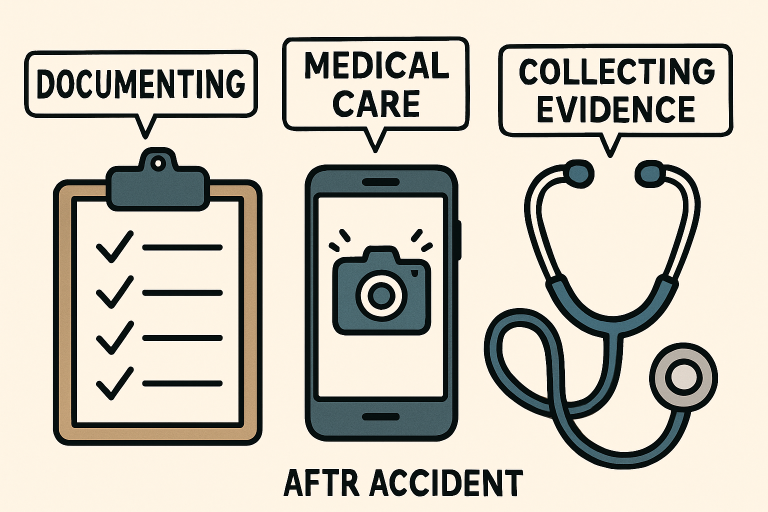
Proper documentation is vital for protecting your interests. Take photos and videos of the accident scene, your injuries, property damage, road conditions, and any other relevant details. Collect names and contact information of witnesses. Good documentation creates a reliable record and can support your version of events if disputes arise later. A simple smartphone is often all you need to gather crucial evidence.

Neglecting thorough documentation is a frequent misstep. According to health experts from the Mayo Clinic, fast and accurate record-keeping can aid both physical and legal recovery following an accident.

mistakes avoid getting injured accidents

Neglecting Follow-up Medical Care

Some injuries may require ongoing care or rehabilitation. Skipping follow-up appointments or failing to adhere to your treatment plan can be interpreted as a sign that your injuries are not severe. This can negatively affect the compensation you receive in a personal injury claim. Always follow medical advice and keep records of treatments and appointments.

Discussing the Case on Social Media

Sharing details about your accident, injuries, or recovery process on social media may seem harmless, but it can backfire. Insurance adjusters and opposing lawyers search for posts or photos that contradict your claim. Even a seemingly innocent status update or picture can be misconstrued and used to challenge the legitimacy of your injuries. Keep all case details private and instruct family or friends not to post anything related to the case.

Signing Documents Without Legal Review

Insurers or opposing parties may present settlement offers or waivers soon after an accident. You may be pressured to sign documents quickly, sometimes with promises of prompt payment. Signing any paperwork without legal review can lead to forfeiting your right to fair compensation. Always have documents reviewed by your attorney to ensure your interests are protected.

Failing to Contact an Attorney

Navigating the aftermath of an accident can be overwhelming. Attorneys offer essential guidance, help you understand your rights, and can negotiate with insurers on your behalf. Even if your case seems straightforward, legal advice is invaluable for preventing mistakes. If you hesitate to contact a lawyer due to financial concerns, remember that many injury attorneys work on a contingency basis, meaning you pay no fees unless your case is successful.

Settling Too Quickly

The urge to accept an early settlement can be strong, especially when facing medical bills and lost income. However, initial offers from insurers are rarely sufficient to cover the full extent of your damages and future needs. Once a settlement is signed, you usually cannot seek additional compensation. Take time to accurately assess your injuries and consult with an attorney before accepting any settlement offer.

Final Thoughts

Accidents can turn your life upside down, but knowing which mistakes to avoid can help you make informed decisions during a stressful time. Seeking immediate care, documenting your experience, maintaining privacy, and consulting legal experts are all vital steps for protecting your rights and well-being. Do not let preventable errors jeopardize your recovery or your case. If you need help after an accident, consult a qualified personal injury attorney as soon as possible for the best chance at a fair resolution.

Civil Litigation Vs. Criminal Charges What's The Difference

criminal litigation vs criminal charges difference

Key Takeaways

  • Different purposes: Civil litigation resolves private disputes, focusing on compensation or enforcing rights, while criminal law addresses offenses against society, emphasizing punishment and public safety.
  • Who brings the case: Civil cases are filed by private individuals or businesses; the government brings criminal cases.
  • Standard of proof: Civil cases require a lower standard (“preponderance of the evidence”), while criminal cases require proof “beyond a reasonable doubt.”
  • Legal protections: Criminal defendants have stronger constitutional protections, including the right to remain silent and the right to a court-appointed attorney; civil defendants generally do not.
  • Outcomes and penalties: Civil cases typically result in monetary damages or court orders, while criminal cases can lead to fines, probation, or imprisonment.
  • Overlap is possible: A single incident can lead to both a criminal case and a separate civil lawsuit.
  • Why it matters: Understanding these differences helps you know what to expect, protect your rights, and make informed legal decisions.

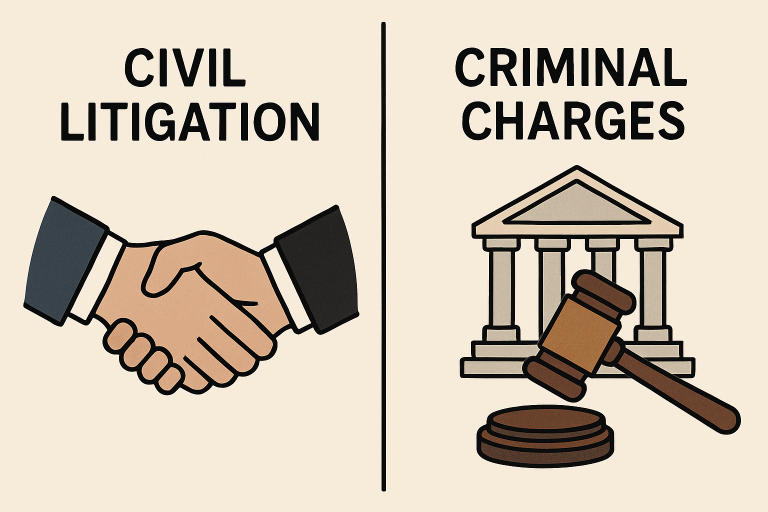
When navigating the complex world of the legal system, understanding the distinction between civil litigation and criminal charges is crucial. These two areas of law serve distinct purposes and can have a profound impact on individuals, families, and communities. Civil litigation typically resolves private disputes and seeks to compensate those who have been harmed, while criminal law is concerned with offenses against society as a whole. If you are facing any legal challenge, understanding the basics can help you make informed decisions and protect your rights. For more details on legal representation in both civil and criminal matters, visit Martinlawfirmpc.com.

Legal actions are stressful and confusing, especially when the stakes are high. Whether you have suffered harm due to someone else’s actions or are accused of wrongdoing, being able to distinguish between civil and criminal matters will help you understand what to expect from the process, your legal rights, and what the outcome may mean for your future.

Purpose and Objectives

Civil Litigation: The primary purpose of civil litigation is to resolve conflicts between private parties, be they individuals, businesses, or organizations. It is not about punishment, but rather about securing compensation or enforcing rights. Typical civil cases include disputes over contracts, business disagreements, property boundaries, personal injury, and family law matters such as divorce or custody issues.

Criminal Charges: In contrast, criminal law centers on offenses perceived as attacks against the entire society. The government files charges, prosecutes the case in court, and seeks a penalty—ranging from a fine to years of incarceration, depending on the severity of the crime. The goal is not to compensate victims, but rather to uphold public order, deter crime, and rehabilitate offenders. Crimes such as theft, assault, fraud, or homicide fall into this realm.

For further reading on the interaction and differences between criminal and civil law, see this overview of criminal law provided by Britannica.

Initiation of Cases

Civil Cases

Civil cases are initiated by a private individual, business, or organization known as the plaintiff. The plaintiff files a lawsuit against another party, known as the defendant, typically seeking monetary damages or legal remedies, such as an injunction (an order to do or refrain from doing something). The process begins with a complaint filed in civil court, which outlines the basis of the dispute, the harm suffered, and the relief sought.

Criminal Cases

Criminal cases are brought forward by the government, which is represented by a prosecutor or district attorney. Here, the state acts as the plaintiff and charges an individual or an organization with violating the law. The case typically begins with a police investigation, followed by an arrest and the filing of formal charges. The victim’s primary role is to serve as a witness, not as a party to the suit.

Burden of Proof

Civil Cases

In civil litigation, the burden of proof falls on the plaintiff, who must show their case by a “preponderance of the evidence.” This means the proof must tip the scale slightly in favor of one side—if it is more likely than not that the defendant is responsible, the plaintiff prevails.

Criminal Cases

Criminal cases require a much higher standard of proof: “beyond a reasonable doubt.” The government has to convince the judge or jury that there is no reasonable doubt about the defendant’s guilt, as the consequences—potential loss of liberty or even life—are severe. This high bar is essential to protect innocent people from wrongful convictions. For a deep dive into the concept of burden of proof, see this explanation provided by the Legal Information Institute.

Legal Rights and Protections

Civil Defendants

Those sued in civil court have fewer constitutional protections than those in criminal cases. For example, the right to a court-appointed attorney does not exist in most civil cases; defendants must either hire their own lawyer or represent themselves. Additionally, civil defendants can typically be compelled to testify, which means they have no protection against self-incrimination.

Criminal Defendants

Defendants facing criminal prosecution are entitled to additional safeguards under the law. These include the right to remain silent, the right to avoid double jeopardy (being tried twice for the same offense), and the right to a government-provided attorney if they cannot afford one. These procedures are designed to help prevent the severe consequences of a wrongful conviction.

Penalties and Consequences

Civil Cases

Penalties in civil cases typically involve monetary payments or other court orders directing the defendant to perform or cease specific actions. For example, a court may order a business to fulfill the terms of a contract or a landlord to compensate a tenant for damages to their property.

Criminal Cases

The penalties stemming from criminal convictions are significantly more severe and may include jail or prison sentences, probation, community service, or substantial fines. The goal here is both punishment and deterrence, aiming to protect the public from further harm by the offender.

Examples of Overlapping Cases

Sometimes, a single event can give rise to both a criminal and a civil case. For instance, if someone commits assault, the government may prosecute the offender for breaking the law. At the same time, the victim may sue separately for damages, such as medical bills and pain and suffering.

Civil vs Criminal Charges Case Conclusion

Understanding the differences between civil litigation and criminal charges is vital for protecting one’s rights and navigating the legal system efficiently during court cases. Each follows distinct procedures and leads to different outcomes. If you are facing or considering either type of case, seeking professional legal guidance ensures your interests are fully addressed during what can be a complex and intimidating process.

Understanding The Ozempic Lawsuit Link To Potential Pancreatitis

ozempic lawsuit link potential pancreatitis

As diabetes management medications have continued to evolve, so too have the legal conversations surrounding them. One such medication, Ozempic, has been the subject of scrutiny due to allegations linking its use to the development of pancreatitis in some patients. This article aims to delve into the details of the ongoing Ozempic Lawsuit Pancreatitis, exploring the allegations, the science behind the medication, and what it might mean for patients. Below, we will provide an in-depth analysis of the case, decode the legal jargon for the layperson, and offer guidance for those who might be affected. 

Ozempic's Mechanism Of Action And Its Implications On Pancreatic Health 

Ozempic works by mimicking the incretin hormone GLP-1, which aids in regulating blood sugar by stimulating insulin release and suppressing glucagon secretion after meals. Its role as a GLP-1 receptor agonist makes it an effective medication for managing type 2 diabetes, but the same mechanism that helps control blood sugar levels may inadvertently affect pancreatic health. The alleged link between Ozempic and pancreatitis has raised questions about the broader implications of its mechanism of action on the pancreas. 

Furthermore, when patients develop pancreatitis, the condition can compromise their ability to manage diabetes effectively, leading to a cascade of health issues. The inflammation caused by pancreatitis might disrupt the organ's ability to produce insulin and other important hormones, compounding the challenges of diabetes management. This intersection of drug-induced risks and the primary condition it aims to treat forms a significant point of debate within the lawsuit. 

Experts in endocrinology and pharmacology are often called upon to provide insight into the likelihood of Ozempic causing pancreatitis. These professional opinions are crucial components of the legal process, helping to translate complex medical science into accessible information for juries and judges. As the case progresses, the testimony of these experts will be instrumental in shaping the legal outcomes and our understanding of the medication’s safety profile. 

Legal Perspectives: Examining The Precedents And Current Litigation Trends 

The landscape of pharmaceutical litigation is not new to controversies related to adverse drug reactions. Previous lawsuits have set precedents that inform the current legal approaches to cases like the Ozempic lawsuit. However, each case presents unique challenges and requires an assessment of the details surrounding the drug, its effects, and the legal context. Analyzing past and current trends in litigation offers insight into how the legal system may respond to the allegations against Ozempic. Key in these proceedings is the concept of "failure to warn", a legal claim under product liability law that holds manufacturers responsible for properly informing consumers about the potential risks of their products. To succeed in such claims, plaintiffs must demonstrate that the manufacturer knew or should have known about the risks and neglected to communicate them effectively. This often involves a meticulous review of regulatory filings, internal communications, and marketing materials. 

As more cases are consolidated and proceed through the legal system, they may culminate in mass tort litigation or multidistrict litigation (MDL), where similar claims are grouped to streamline the pre-trial process. This approach allows for efficiency and consistency in handling numerous cases with common legal and factual issues. The implications of the Ozempic litigation, therefore, reach far beyond individual plaintiffs, potentially influencing regulatory standards and industry practices on a broader scale. 

What Patients Need To Know: Recognizing Symptoms And Seeking Legal Advice 

For individuals taking Ozempic or similar diabetes medications, awareness of the symptoms of pancreatitis is crucial. The condition often manifests with upper abdominal pain, nausea, vomiting, and potentially more severe complications if left untreated. Patients experiencing these symptoms should seek immediate medical attention. Additionally, this situation highlights the importance of patients having candid conversations with their healthcare providers about the risks and benefits of their medications. 

Beyond health concerns, patients affected by potential side effects like pancreatitis must navigate a complex legal landscape. Seeking legal advice from attorneys specializing in pharmaceutical litigation can provide clarity on the rights and options available. These legal experts can evaluate individual cases, advise on the possibility of joining a lawsuit, and guide through the process of seeking compensation for damages resulting from adverse drug reactions. 

Overall, the Ozempic lawsuit underscores the delicate balance between the benefits of modern medications and the duty to safeguard public health. As the legal proceedings unfold, they remind us of the need for vigilance in monitoring the side effects of medications and the importance of accessible legal recourse for those adversely affected. For many patients, the course of this legal saga will be more than a matter of interest—it could be a pivotal moment in ensuring justice and the integrity of patient care.

Why Hiring A Car Accident Lawyer Is Smart After A Crash

hiring car accident lawyer smart decision after crash

One moment you are driving down the road, mentally planning dinner. The next moment BAM. Metal crunches, airbags deploy, and your world tilts sideways. Even if you walk away from the scene, the chaos is just beginning. 

Insurance calls start flooding in within hours. You are in pain, you are confused, and someone on the phone is asking you to give a recorded statement. Your car's a write-off, medical bills are piling up, and you haven't been able to work. Meanwhile, that friendly CTP insurer? They are offering you a settlement that seems... suspiciously low. 

This is the moment when you need to make a critical decision: go it alone or hire a car accident lawyer

The Australian Reality: Big Payouts, Big Stakes 

Let's talk numbers. According to SIRA (the State Insurance Regulatory Authority), around 12,000 motor accident injury claims were reported in NSW in the 12 months to October 2025, and $1.5 billion was paid out in benefits and lump sums. That is $125,000 paid out for every new claim reported. 

In Queensland? The 2026 figures reveal a staggering $954 million in car accident injury payouts to Queenslanders. 

These are not small figures, especially now in 2026 and with 2027 right around the corner. And here is the thing: statistical evidence suggests that claimants with legal representation achieve better outcomes when negotiating with insurers. 

When You Absolutely Need a Lawyer 

Not every fender bender requires legal representation. A minor scratch in a car park? You can probably handle that yourself. 

But here are the situations where hiring a lawyer isn't just smart it is essential: 

Serious Injuries 

When you are dealing with significant injuries—broken bones, spinal damage, serious head injuries—your compensation claim becomes complex. The amount you can expect for your car accident injury claim depends on the extent of your injuries, which will be classified as threshold (minor) or above threshold. 

This classification makes all the difference. The NSW CTP scheme paid out $232 million in pain and suffering lump sums in 2026, and a further $530.9 million in economic loss lump sums (past and future loss of wages). Those are substantial amounts you don't want to miss out on. 

Insurance Companies Playing Hardball 

When insurance companies deny claims, offer low settlements, or delay payments, you need someone who knows their tactics. In Australia, insurers' decisions are often motivated by profit. Their primary goal is to reduce their financial liability, which impacts the value of personal injury payouts. As a result, they will try to undervalue or deny valid claims by assigning contributory negligence to the claimant. 

The "Threshold Injury" Trap 

Here is where many Aussies get caught out in 2026. Threshold physical injuries are soft-tissue or muscle injuries, like a muscle strain or a sore back. 

If your injuries are classified as "threshold" your entitlements are significantly limited. But here is what most people don't know: even if you have been assessed as having threshold (minor) injuries, there are situations when you might be able to have that assessment changed and claim a pain and suffering lump sum. 

A good car accident lawyer knows how to challenge these assessments and get you properly classified. 

What Your Lawyer Actually Does (And Why It Matters) 

Hiring a car accident lawyer isn't about being greedy. It is about getting what you are actually owed under the CTP scheme. Here is what a good solicitor brings to the table: 

They Know What Your Claim Is Really Worth 

If important details about your injuries are overlooked, you could miss out on lump sums you are entitled to, and these can be significant. Your claim isn't just about medical bills. It includes: 

● Weekly wage payments while you are off work 

● Treatment and rehabilitation costs 

● Past and future economic loss 

● Pain and suffering (if you are above threshold) 

● Domestic care and assistance 

Most people drastically undervalue their claims because they don't understand the system. Your lawyer does. 

They Navigate The Complex System 

Australia's compensation system is complicated and varies by state. In NSW, you have got CTP insurance, SIRA, and the Personal Injury Commission. In Queensland, it is the Motor Accident Insurance Commission. In Victoria, the Transport Accident Commission. 

You will need to submit your application for personal injury benefits within 28 days of the accident to get your wages back paid to the accident date. The final deadline for your application is three months from the accident. 

Miss these deadlines and you could lose thousands. Your lawyer makes sure that doesn't happen. 

They Fight For Your Lump Sums 

If your injuries are above threshold and you weren't at fault in the accident, it is very likely you can claim a lump sum settlement, and these lump sums can be substantial. 

For pain and suffering alone? The maximum payable is $654,000. But getting there requires expert legal knowledge, medical evidence, and tough negotiations with insurers. 

The "But How Much Will It Cost?" Question 

Here is the beautiful thing about Australian personal injury law: most lawyers work on a no win, no fee basis. 

Most law firms works on a no win no fee, no disbursements basis, so you will only need to pay if you win and receive your motor accident compensation. 

Even better? For lump sum (common law) claims in NSW, there is a schedule of fixed fees a solicitor can be paid to assist you for claims up to $75,000. These fees are paid by the insurer. 

Real Australian Payouts 

Want to know what proper legal representation can mean? The average motor vehicle accident compensation claim payouts in Queensland are currently $82,000 for minor injuries like whiplash and soft tissue injuries. 

For more serious injuries? Workers with 20%+ impairment often receive $500,000 to $900,000+, and catastrophic injuries involving long-term disability can exceed $1 million. 

These aren't hypotheticals. These are real Australians who got proper legal help and received the compensation they deserved. 

The Bottom Line 

You wouldn't perform surgery on yourself. You wouldn't rewire your house without an electrician. So why would you navigate complex compensation law, negotiate with professional CTP insurers, and try to value your own claim without expert help? 

It is likely you will get a much higher compensation payout if you have the support of a specialist personal injury lawyer who has a strong track record of success. 

Most car accident lawyers in Australia offer free consultations. You have nothing to lose by making that call, and potentially hundreds of thousands of dollars to gain. 

After a car accident, you are already dealing with enough stress, pain, and uncertainty. Don't add "going it alone against insurance companies" to that list. 

Make the call. Get the help. Protect your rights. Your future self will thank you.

Why Businesses Use Private Investigators For Regulatory Compliance Issues

why businesses use private investigators regulatory compliance

Organisations are under intense regulatory observation, which requires them to deal with numerous complex rules. Today, modern investigations stand out as one of the means of protecting a business against wrongdoing, fraud, or any regulatory compliance errors an entity may make in today's regulatory age. 

The Modern Regulatory Compliance Complexity 

Changing Regulatory Environments 

Organisations of any nature are finding it increasingly difficult to cope with the rules and regulations of the present day. It is complicated by the shifting laws, the cross-border obligations, and harsh penalties for non-adherence to the rules. Businesses are required to adapt to changing and complex structures like the GDPR, anti-bribery legislation, financial constraints, and standards relevant to the business's line of activities. 

Multi-Jurisdictional Challenges And Documentation Requirements 

Companies operating in more than one country are required to abide by many rules in each location, and it is therefore difficult to abide by the rules. The fact that rules are frequently changed and that there is a lot of complex paperwork that you have to comply with indicates that you have to be attentive at all times and make proper records. 

Penalties And Resource Limitations 

Failure to observe the rules may attract immense fines, restrictions in operations, damage to your brand, and personal responsibility on the part of the executives. In 2026, the UK's Financial Conduct Authority issued fines totaling over £176 million, demonstrating the severe financial consequences of non-compliance. 

Most firms lack the appropriate individuals in the workforce, lack time, and are not objective during internal compliance audit support. 

Specialised Investigation Services For Compliance 

Businesses that work in heavily regulated fields are hiring more and more private investigator London experts who know how to follow complicated compliance rules and conduct regulatory compliance investigations. 

Key Services Provided 

Some of the things they do best are: 

● Regulatory compliance audit support and compliance gap analysis to find weaknesses. 
● Checking the backgrounds of employees lowers risks in jobs that need strict compliance. 
● Vendor and third-party verification, anti-corruption checks, and cybersecurity checks. 

Businesses are shielded against expensive infractions by these comprehensive investigation services. 

Proactive Compliance Risk Management 

Good compliance starts with prevention, spotting, and fixing issues early. In the UK, nearly 41% of small and medium businesses have fallen victim to fraud in the past year. On average, each business lost about £3,808. 

Prevention Strategies 

● The use of systems for early warning helps to avoid worsening the already existing gaps in compliance 

● Thanks to the regular health examinations and the compliance audits conducted, standards are maintained 

● Checking the backgrounds of executives and other important employees reduces hazards inside the company 

● Assessing vendor risks and compliance audit is focused on ensuring integrity from external business associates 

Internal Controls and Monitoring 

Rules for internal whistleblower investigations aim to promote genuine and free reporting. The business prepares for the changes in the legal landscape through an impact analysis of the regulatory changes. The systematic proactive approach to compliance, which exacerbates regulatory risks, is economically preferable to the disdainful approach of waiting to be penalised. 

Evidence Collection And Documentation Standards 

To establish a collection and retention evidence strategy, which minimises the risk of non-compliance, measures need to be followed. 

Legal Standards For Evidence Gathering 

Ensuring the collected data complies with formidable legal standards to be protective and actionable in regulatory proceedings. To ensure the protection of sensitive compliance documents, proper compliance documentation with a continuous chain of custody must be followed. 

Investigation Techniques 

● Proven techniques of compliant interviewing 
● Use sophisticated technologies to accurately and securely collect and analyse electronically captured evidence of compliance and non- compliance. 
● Use an Interdisciplinary approach to investigations to maintain secrecy, control, and legal assurances of compliance. 

Long-Term Compliance Strategy And Culture Development 

To “act” compliant means to consider the issue an institutional shift about behaviours and culture, rather than a mere compliance act. 

Culture and Training Development 

Some of the actions are: 

● Compliance Culture Assessment and Improvement: Assessing and improving the culture of non-compliance as a systematic approach to compliance obligations. 

● Training Program Development and Monitoring: Designing, implementing, and evaluating training on the expected behaviour of organisational citizens. 

● Ongoing Compliance Monitoring and Reporting: Developing additional procedures for systematic, ongoing, and uncomplicated monitoring and reporting about selected issues. 

Governance And Operations Integration 

● Board-Level Compliance Reporting and Governance Support: Reporting compliance so that every executive takes responsibility and liability. 

● Regulatory Risk Management and Regulatory Response Planning: Preparing plans for predicting and resolving compliance issues. 

● Integration of Investigation Findings into Operations: Applying compliance investigation results for the advancement of other business activities. 

Conclusion 

The profits alongside the compliance with the legal system, morals, and business as a rationale for the pursuit of investigations also stand. Within the compliance restatement context, if an investigation is kept to the compliance within a rational and systematic approach, a loss of reputation, business reputation, and the foundation for a compliance culture constrained by reputation-oriented policies can be avoided. 

Those companies that understand the importance of executing investigations in the course of compliance will be able to resolve complex and numerous issues, attract new clients, and raise the confidence of their business relationship holders in the layered and complex regulatory context of today.

When To Set Up A Trust For Asset Protection

set up trust asset protection

Did you know that approximately 13% of individuals in the United States specifically reported having a living trust in a 2025 survey? Setting up a trust might be a good decision if you are considering asset protection. 

You must understand what your needs and circumstances are, especially since Louisiana law only permits certain types of trusts, as there are situations that warrant a trust. Trust is important for keeping your money safe in risky jobs or when you want to make sure your family is taken care of. When should you take such a step for protecting assets? 

Let us now review some key events that might trigger action on your part. 

Understanding The Basics Of Trusts 

Trusts are legal measures that enable you to manage your property. Trusts are legal arrangements that enable you to manage your property. In case of trust, you may select a trustee to administer your properties according to your wishes to guarantee peace of mind for you and your family. 

Some of the types of trusts include, but are not limited to, revocable and irrevocable. Awareness of such differences would enable you to make decisions based on your needs. Trusts also help protect your assets from creditors and serve to make sure that the assets are passed on to future generations. 

According to asset protection lawyer William P. Burns Jr., this process is well-known for taking a lot of time, which often frustrates those involved and can lead to disagreements. 

Identifying Your Asset Protection Needs 

Asset protection can only be considered after identifying the individual's or entity's need for it. Evaluate your property, investments, or savings. 

Consider the various risks that may damage these assets, such as lawsuits and creditor claims. Consider your life stage. This consideration also includes business interests, as they require additional protection. It is not just about protecting wealth but also about protecting one's future and peace of mind. This consideration also includes business interests, which require additional protection. It is not just about protecting wealth but also about protecting one's future and peace of mind. 

Circumstances That Warrant Trust Setup 

Certain life circumstances can require extraordinary means of setting up a trust to provide adequate asset protection. Should you anticipate legal proceedings, similar to high-risk professionals, the trust serves as a safeguard for your hard-earned wealth. 

In case you plan to leave an inheritance to minors or to individuals having difficulty managing their finances, a trust will make sure that your wishes are responsibly respected. The trust will protect your assets from potential division in the divorce. 

Having great deals of wealth can give peace of mind and a feeling of belonging once a trust has been established for the care of your loved ones. It is all about preserving what is important to you. 

Types Of Trusts For Asset Protection 

Establishing a trust to protect your assets requires selecting the type of trust that best meets your intentions. One popular decision is a revocable living trust. This is the trust where you retain control but may prevent your assets from being destroyed by probate. 

But if you feel that protection should be stronger, think about irrevocable trust. This trust protects assets from creditors and legal claims, but its terms can't be changed after funding. The second choice is a spendthrift trust, whereby the beneficiaries may not be able to manage money well. Offshore trusts can give protection and privacy from domestic creditors. 

Every type has its advantage, so choose a trust that will serve your interest and give you assurance in the security of your legacy. 

Steps To Establish A Trust For Your Assets 

Establish the trust after you have decided which one is more suitable for your assets. You should provide details about your assets, beneficiaries, and appropriate trustees to create a trust document that explains the terms of the trust. 

Collaborating with a good attorney is necessary to make sure that the trust is appropriately drawn with respect to the law and subject to your needs. 

Next for trusts comes the funding. The trust should be funded by transferring ownership of assets into the trust. Update your trust regularly as life changes to keep it working adequately for your needs. These steps will give you and those close to you a sense of belonging and peace.

How Cosmas Onyia Uses 25 Years Of Expertise To Guide Clients Through Complex Family Law Cases

family law experience lawyers

When it comes to family law cases, it can become tricky, emotional, and mentally draining. These cases often involve sensitive matters like divorce, child custody, and support, which affect people's lives deeply, and handling such situations requires more than legal knowledge; it takes experience to guide clients through complex rules and emotional challenges. With 25 years of practice, a skilled attorney helps clients make clear decisions, protects their rights, and works toward the best outcomes. This kind of support is critical to manage both the legal process and the feelings involved in family disputes. 

What Types of Family Law Cases Does Cosmas Onyia Handle? 

Cosmas Onyia handles a wide range of family law cases, including divorce, child custody, child support, legal separation, orders of protection, grandparents' rights, property division, and spousal support. 

Whether the case is amicable or contested, the Law Office of Cosmas Onyia supports clients through every step of the process, and his experience helps in managing both straightforward and complex family disputes, ensuring clients receive clear advice and strong representation. This approach helps families find fair and effective solutions during difficult times. 

How Does Extensive Experience Benefit Clients In Difficult Situations? 

In law firms, we should understand that experience matters, and extensive experience offers many benefits to clients facing difficult family law situations. An experienced attorney evaluates each case carefully, creating a personalized legal plan that fits the client’s specific needs. This strategic approach helps clients understand the best options available. 

That is why, with years of practice, the attorney can anticipate potential challenges and guide clients on when it may be wise to settle or when to proceed to trial; also, efficient case management is key. It helps keep the process organized, avoids unnecessary delays, and reduces stress for clients during an already challenging time, so experience leads to clearer guidance and stronger support throughout the case. 

law offices

What Makes The Approach Of The Law Office Of Cosmas Onyia Unique? 

The approach of the Law Office of Cosmas Onyia stands out because it puts the client’s needs first. Tailored solutions are created to match each client’s specific goals, ensuring that the advice and strategies always fit their unique situation. The office combines strong legal advocacy with a careful understanding of family relationships, which helps protect both rights and well-being. 

So here, commitment to clients does not end at the negotiation table; support continues through courtroom representation when needed. This long-term dedication helps clients feel supported at every stage and leads to more effective results in their family law matters. 

How Does The Attorney Support Parents And Children In Custody And Support Disputes?

The attorney supports parents by explaining the difference between legal and physical custody and creating parenting plans that focus on the child’s best interests, because they guide clients through child support calculations and help with changes when needed. 

In property and financial matters, legal support ensures fair handling of assets and debts under Arizona’s community property laws. Spousal support is also reviewed carefully to protect each client’s rights, and in high-stakes cases like military or contested divorces, experience leads to strong strategies and results. 

Conclusion 

In family law cases, having an experienced attorney is very important, so with 25 years of experience, clients receive clear advice, strong support, and careful guidance through difficult legal and emotional situations.

The Ozempic Lawsuit Link To Potential Pancreatitis

ozempic lawsuit pancreatitis litigation weight loss medication pancreas inflammation

As diabetes management medications have continued to evolve, so too have the legal conversations surrounding them. One such medication, Ozempic, has been the subject of scrutiny due to allegations linking its use to the development of pancreatitis in some patients. This article aims to delve into the details of the ongoing Ozempic Lawsuit Pancreatitis, exploring the allegations, the science behind the medication, and what it might mean for patients. Below, we will provide an in-depth analysis of the case, decode the legal jargon for the layperson, and offer guidance for those who might be affected. 

Ozempic's Mechanism Of Action And Its Implications On Pancreatic Health 

Ozempic works by mimicking the incretin hormone GLP-1, which aids in regulating blood sugar by stimulating insulin release and suppressing glucagon secretion after meals. Its role as a GLP-1 receptor agonist makes it an effective medication for managing type 2 diabetes, but the same mechanism that helps control blood sugar levels may inadvertently affect pancreatic health. The alleged link between Ozempic and pancreatitis has raised questions about the broader implications of its mechanism of action on the pancreas. 

Furthermore, when patients develop pancreatitis, the condition can compromise their ability to manage diabetes effectively, leading to a cascade of health issues. The inflammation caused by pancreatitis might disrupt the organ's ability to produce insulin and other important hormones, compounding the challenges of diabetes management. This intersection of drug-induced risks and the primary condition it aims to treat forms a significant point of debate within the lawsuit. 

Experts in endocrinology and pharmacology are often called upon to provide insight into the likelihood of Ozempic causing pancreatitis. These professional opinions are crucial components of the legal process, helping to translate complex medical science into accessible information for juries and judges. As the case progresses, the testimony of these experts will be instrumental in shaping the legal outcomes and our understanding of the medication’s safety profile. 

Legal Perspectives: Examining The Precedents And Current Litigation Trends 

The landscape of pharmaceutical litigation is not new to controversies related to adverse drug reactions. Previous lawsuits have set precedents that inform the current legal approaches to cases like the Ozempic lawsuit. However, each case presents unique challenges and requires an assessment of the details surrounding the drug, its effects, and the legal context. Analyzing past and current trends in litigation offers insight into how the legal system may respond to the allegations against Ozempic. Key in these proceedings is the concept of "failure to warn", a legal claim under product liability law that holds manufacturers responsible for properly informing consumers about the potential risks of their products. To succeed in such claims, plaintiffs must demonstrate that the manufacturer knew or should have known about the risks and neglected to communicate them effectively. This often involves a meticulous review of regulatory filings, internal communications, and marketing materials. 

As more cases are consolidated and proceed through the legal system, they may culminate in mass tort litigation or multidistrict litigation (MDL), where similar claims are grouped to streamline the pre-trial process. This approach allows for efficiency and consistency in handling numerous cases with common legal and factual issues. The implications of the Ozempic litigation, therefore, reach far beyond individual plaintiffs, potentially influencing regulatory standards and industry practices on a broader scale. 

What Patients Need To Know: Recognizing Symptoms And Seeking Legal Advice 

For individuals taking Ozempic or similar diabetes medications, awareness of the symptoms of pancreatitis is crucial. The condition often manifests with upper abdominal pain, nausea, vomiting, and potentially more severe complications if left untreated. Patients experiencing these symptoms should seek immediate medical attention. Additionally, this situation highlights the importance of patients having candid conversations with their healthcare providers about the risks and benefits of their medications. 

Beyond health concerns, patients affected by potential side effects like pancreatitis must navigate a complex legal landscape. Seeking legal advice from attorneys specializing in pharmaceutical litigation can provide clarity on the rights and options available. These legal experts can evaluate individual cases, advise on the possibility of joining a lawsuit, and guide through the process of seeking compensation for damages resulting from adverse drug reactions. 

Overall, the Ozempic lawsuit underscores the delicate balance between the benefits of modern medications and the duty to safeguard public health. As the legal proceedings unfold, they remind us of the need for vigilance in monitoring the side effects of medications and the importance of accessible legal recourse for those adversely affected. For many patients, the course of this legal saga will be more than a matter of interest—it could be a pivotal moment in ensuring justice and the integrity of patient care.

The Lean Startup Life Media Network Newest Blog Posts: