

Table of Contents:
- Blockchain: Enhancing Security and Transparency
- Artificial Intelligence: Revolutionizing Property Valuation
- Virtual Reality: Transforming Property Tours
- Big Data: Driving Informed Decision-Making
- Internet of Things (IoT): Creating Smart Buildings
- Digital Twins: Optimizing Property Management
- PropTech: The Future of Real Estate
- Conclusion
Key Takeaways:
- Technological advancements are revolutionizing the real estate industry, enhancing efficiency and transparency.
- Innovations such as blockchain, AI, and virtual reality are reshaping property transactions and management.
- Embracing these technologies is crucial for staying competitive in the evolving real estate market.
The real estate landscape has undergone a seismic shift, driven by a wave of innovation that is fundamentally reshaping how properties are bought, sold, and managed. Digital tools and emerging platforms are streamlining once-cumbersome processes and ensuring unprecedented clarity in transactions. Today, advancements such as blockchain, artificial intelligence, virtual reality, and smart devices are not only transforming the experience for clients and professionals but also broadening access and efficiency across the sector. Industry leaders like San Francisco, CA, real estate agent Roh Habibi have witnessed these changes firsthand, leveraging new platforms to better serve clients, create more transparent transactions, and stay competitive.
Digital technology is transforming real estate by enhancing client experiences and providing detailed market insights. Tools like virtual tours, data-driven predictions, and smart building systems improve efficiency, trust, and personalization. Agencies that embrace these innovations gain a competitive edge while fostering a market defined by transparency, speed, and security.
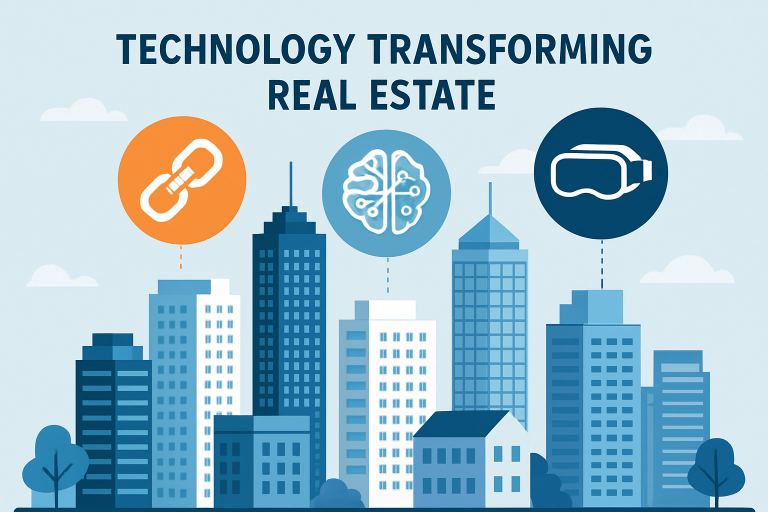
Blockchain: Enhancing Security and Transparency
Blockchain technology is setting a new standard for security and transparency in real estate transactions. By acting as a decentralized, unchangeable ledger, blockchain all but eliminates forgery risks and strengthens trust among buyers, sellers, and agents. This means property records can be securely tracked, verified, and transferred without reliance on intermediaries, such as escrow agencies, resulting in faster, less costly closings.
Among the most exciting possibilities is the tokenization of real estate assets, enabling properties to be split into digital shares that can be easily bought and sold on open platforms. By increasing liquidity and democratizing investment, these digital tokens attract a broader range of investors and foster a more inclusive market. This trend is expected to accelerate as more jurisdictions adopt favorable regulations and platforms mature.
Artificial Intelligence: Revolutionizing Property Valuation
Artificial Intelligence is drastically redefining how property values are assessed and predicted. AI-powered models can analyze vast datasets—taking into account current economic conditions, development trends, and granular details such as renovation quality or neighborhood sentiment—that traditional appraisal methods might overlook. These insights provide instant, accurate, and up-to-date price recommendations, which are invaluable for both buyers and sellers.
Leaders like Zillow and Redfin employ advanced automated valuation models (AVMs) that leverage machine learning and deep analytics to enhance user experience and bring much-needed transparency to pricing. The result is greater trust in estimates and improved efficiency in property transactions. As AI continues to evolve, its impact is likely to deepen, offering predictive insights that can further streamline the property acquisition process and reduce friction for all stakeholders.
Virtual Reality: Transforming Property Tours
Virtual Reality (VR) is revolutionizing how buyers and investors view and assess properties. With the capability to offer detailed, immersive walkthroughs from anywhere in the world, VR is expanding market participation and quickening decision-making timeframes. Properties that feature high-quality virtual tours see significantly higher engagement and a measurable increase in qualified inquiries—demonstrating the demand for seamless, remote, and interactive experiences.
VR also enables real estate professionals to showcase staged interiors, design customizations, and make real-time adjustments, fostering a deeper emotional connection and greater confidence in decision-making. Such innovative digital interactions are setting new expectations for both buyers searching for their dream homes and developers promoting pre-construction units.
Big Data: Driving Informed Decision-Making
The integration of big data into real estate is equipping agencies and investors with powerful, actionable insights. By systematically analyzing market dynamics, rental patterns, and broader economic data, big data platforms can forecast returns and highlight promising neighborhoods for future growth. These analytics help buyers, sellers, and developers minimize risks and deploy capital more effectively.
Access to nuanced market data empowers agents to present more personalized property recommendations and for buyers to identify undervalued markets. This shift towards evidence-based decision-making has made a remarkable impact on project planning, investment strategies, and the overall agility of the real estate industry.
Internet of Things (IoT): Creating Smart Buildings
The Internet of Things (IoT) is ushering in a new era of intelligence for both residential and commercial properties. With smart sensors, remote-controlled systems, and efficient energy management tools, IoT-enabled buildings offer enhanced comfort, safety, and operational savings for owners and tenants alike. From smart thermostats and lighting systems to real-time monitoring of critical infrastructure, the possibilities for automation and responsiveness continue to grow.
The widespread adoption of these technologies is fostering smarter buildings that stand out in a crowded marketplace. Tenants increasingly expect these features, while property managers leverage the resulting data to optimize maintenance and reduce operating costs. The trend toward IoT adoption is only expected to accelerate as costs decrease and new functionalities emerge.
Digital Twins: Optimizing Property Management
Digital Twins technology enables property stakeholders to create virtual replicas of real-world assets, enabling comprehensive monitoring and predictive maintenance. These digital models mirror the physical building in real time, capturing structural health, energy usage, and occupancy patterns. As a result, managers can run simulations, predict the impact of repairs or upgrades, and proactively address issues before they escalate into costly emergencies.
Digital twins form the backbone of efficient property management by streamlining workflows, reducing downtime, and extending the lifespan of valuable assets. As the technology matures, its use will likely expand to encompass a wider range of real estate assets, from single buildings to entire portfolios, amplifying operational efficiency across the industry.
PropTech: The Future of Real Estate
PropTech, or property technology, is the umbrella term for the digital revolution transforming all facets of real estate. The convergence of blockchain, AI, VR, big data, and IoT is pushing the boundaries of what’s possible in property transactions, management, and client engagement. Firms leveraging PropTech stand to lead the market in innovation, efficiency, and customer satisfaction.
By embracing PropTech solutions, agencies can streamline operations, unearth new market opportunities, and create memorable client experiences. This digitalization process isn’t just keeping pace with change—it’s driving it, making the industry more accessible and responsive in the era of the informed consumer.
Conclusion
The integration of new technological platforms in real estate marks a fundamental change toward greater efficiency, transparency, and customer-centricity. For professionals, property owners, and clients alike, these innovations deliver not only convenience but also confidence and security in every transaction. Embracing tools like blockchain, AI, VR, big data, IoT, and digital twins is now essential for success in a rapidly evolving market. Those who stay agile and informed will be well-positioned to thrive in this dynamic and promising era for real estate.